
In this biography
Quick facts
- Born
- 1878
- Died
- 1931
- Birthplace
- Stillorgan, County Dublin
- Country
- Ireland
- Nationality
- Not independently established
- Known for
- Society portraiture, self-portraits and paintings of war and the Paris peace settlement
Why this life matters
His portraits and large interiors make public representation itself part of the questions raised by war and political authority.
Timeline
Key moments
Birth in Dublin
Orpen was born in Stillorgan.
War work in France
Official painting extended his portrait practice into wartime subjects.
Paris peace commission
He began the separate conference and signing paintings.
Memorial canvas exhibited
The Unknown British Soldier work introduced a different public response.
Early talent and professional training
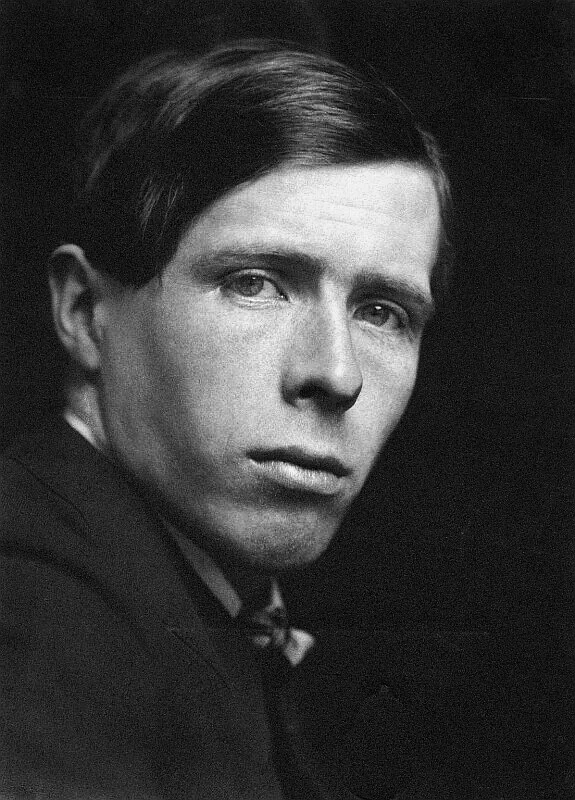
William Orpen was born in Stillorgan, County Dublin, in 1878. He trained in Dublin before studying at the Slade School of Fine Art in London under Henry Tonks. Drawing and the study of the figure became a strong professional foundation. He worked among artists including Augustus John, yet his career developed through a distinctive combination of portraits, self-portraits and more elaborate figure scenes. Those forms allowed him to examine both a sitter’s public appearance and the setting through which an identity was presented.
A successful portraitist with other ambitions
Orpen became a highly sought-after portrait painter in Britain while maintaining artistic connections with Ireland. Irish landscapes and allegorical subjects extended the practice beyond fashionable commissions. He also taught and supported younger artists, including Seán Keating. The variety of this work matters because the later war paintings did not emerge from an artist without experience of staging figures and interiors. A portrait could satisfy a client and remain a complex arrangement of posture, surrounding objects and the relation between sitter and viewer.
War changes the public task
As an official war artist Orpen worked in France, making portraits and images of the Western Front. His subjects included military leaders, ordinary people and damaged settings. He was knighted in 1918, and his wartime work became a major public record. The commission altered the purposes and audiences of his painting without removing his established skills. It also placed the polished portraitist in contact with forms of suffering and destruction that could not be contained within an account of professional advancement alone.
Peace paintings and an unsettled legacy
Orpen remained in France for the Paris peace settlement and was commissioned to make large commemorative works. A Peace Conference at the Quai d’Orsay and The Signing of Peace in the Hall of Mirrors use group portraits within grand interiors. The later To the Unknown British Soldier in France took a radically different course, replacing expected public figures with a memorial subject and undergoing further alteration. Orpen continued portrait work after the war and died in 1931. The peace commission remains a revealing endpoint to his public work: paintings made to commemorate authority could also invite questions about its scale, ceremony and relation to those who had suffered.
Quick answers
Frequently asked questions about William Orpen
- Was Orpen an Irish or British artist?
- He was Irish-born and trained in Dublin and London; much of his professional career developed in Britain and France.
- Are his peace paintings one work?
- No. The conference, signing and memorial canvases are distinct works within a related commission.
Keep exploring
Lives connected to this story
- Seán Keating
Read an artist who studied with Orpen and developed a separate approach to public subjects.
- Gwen John
Compare another Slade contemporary whose interiors served different artistic purposes.
Sources and further reading
Explore the evidence
These references support the biography and offer further reading. Official records, first-person accounts and independent reporting provide different perspectives; image records document attribution and licensing.
- 1. Dictionary of Irish Biography, Lawrence William WhiteOrpen, Sir William Newenham Montague
- 2. National Portrait Gallery, LondonSir William Orpen
- 3. National Gallery of IrelandDear Sir William
The NGI record’s archival descriptions were read; the underlying private letters and complete scrapbooks were not inspected.
- 4. RTÉ Century IrelandWilliam Orpen: Ireland’s painter of war and peace
- 5. Imperial War Museums / UK governmentAnnual Report and Accounts 2019–20
The later loan list establishes object identity and a display event, not the painting’s original date of making.