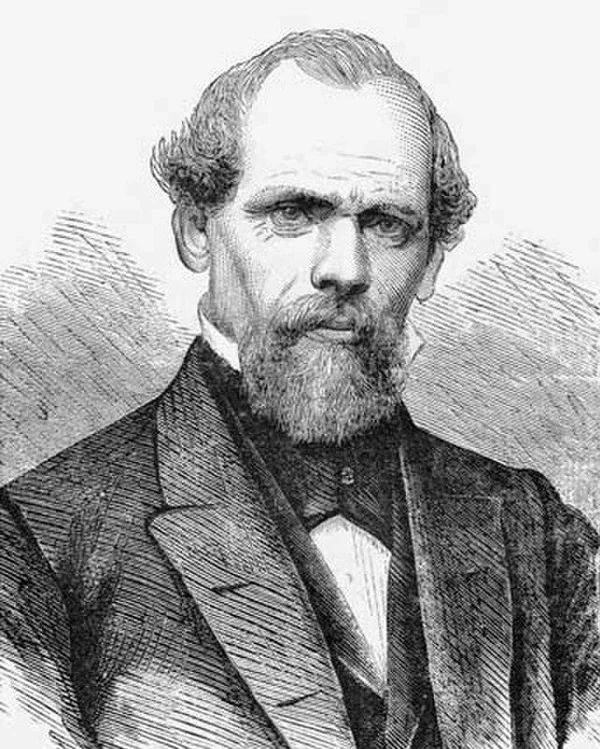
In this biography
Quick facts
- Born
- 1837
- Died
- 1926
- Birthplace
- Saxonburg, Pennsylvania, United States
- Country
- United States
- Nationality
- Not independently established
- Known for
- Directing construction of the Brooklyn Bridge after John Augustus Roebling’s death
Why this life matters
Directing construction of the Brooklyn Bridge after John Augustus Roebling’s death.
Timeline
Key moments
Birth
Washington Roebling was born in Saxonburg, Pennsylvania, United States.
Brooklyn Bridge: Caissons and Direction
Directing construction of the Brooklyn Bridge after John Augustus Roebling’s death.
Death
Washington Roebling died in 1926.
Education and practical work before Brooklyn
Washington Augustus Roebling was born at Saxonburg, Pennsylvania, on 26 May 1837. His family later moved to Trenton, where his father John developed the wire-rope business. Washington graduated from Rensselaer Polytechnic Institute in 1857 and worked with his father on bridge construction. Service in the Union army during the Civil War added engineering and reconnaissance responsibilities. These experiences preceded the appointment for which he is best known. He was not simply a relative placed in charge of a finished design: his career already involved structures, organisation and the practical requirements of work in the field.
Rensselaer’s archive preserves lecture notes from his student years, including work in mechanics and physics. These are evidence of a technical education, distinct from the later correspondence and construction records through which his bridge responsibilities can be studied.
Foundations brought a new engineering challenge
Washington and Emily Warren Roebling travelled in Europe while he examined pneumatic caisson methods. After John’s death in 1869, Washington became chief engineer of the Brooklyn Bridge. The foundations required workers to excavate within pressurised caissons beneath the river. Work in that environment carried severe health risks, and Washington’s illness eventually restricted his presence on site. The story is therefore both an engineering and a labour history. An enclosed underwater workspace made foundation construction possible, but it did not remove danger or make the workforce’s experience incidental to the project.
Direction continued through a team
Washington continued to direct the undertaking while Emily carried information between him and the people executing the work. Assistant engineers had defined responsibilities, and the 1883 opening publication lists Washington formally as chief engineer. Its address also acknowledges Emily’s communications contribution and the labour of unnamed workers. The bridge opened in 1883, but Washington lived until 1926 and retained interests beyond that project. His significance includes the sustained direction of a complex undertaking under changed personal circumstances. Recognising the team is essential to that account: rather than treating illness as the disappearance of all engineering leadership, the records show how communication and professional responsibilities helped maintain it.
Quick answers
Frequently asked questions about Washington Roebling
- What is Washington Roebling known for?
- Directing construction of the Brooklyn Bridge after John Augustus Roebling’s death.
- Did Washington cease being chief engineer when ill?
- The 1883 publication still lists him as chief engineer and describes continuing direction supported by Emily and assistant engineers.
Keep exploring
Lives connected to this story
- Robert Stephenson
Read Robert Stephenson’s related career in locomotive manufacturer and civil engineer.
- Isambard Kingdom Brunel
Read Isambard Kingdom Brunel’s related career in consulting civil engineer for railway, bridge, dock and steamship enterprises.
- John Augustus Roebling
Compare John Augustus Roebling’s documented work in Niagara 1855: A Railway Suspension Bridge.
- Emily Warren Roebling
Compare Emily Warren Roebling’s documented work in Emily Roebling: Communication and Engineering Credit.
Sources and further reading
Explore the evidence
These references support the biography and offer further reading. Official records, first-person accounts and independent reporting provide different perspectives; image records document attribution and licensing.