In this biography
Quick facts
- Born
- 31 May 1819
- Died
- 26 March 1892
- Birthplace
- West Hills, Long Island, New York, United States
- Country
- United States
- Nationality
- American
- Known for
- Leaves of Grass, Civil War poetry and experiments in democratic literary voice
- Early occupations
- Printer, schoolteacher, typesetter and newspaper editor
- Major book
- Leaves of Grass, first published in 1855
- Wartime service
- Unpaid visitor and caregiver in Washington military hospitals
- Civil War poems
- Drum-Taps, 1865
- Political prose
- Democratic Vistas, 1871
- Final authorized Leaves
- The 1891–1892 edition, assembled under his oversight
Why this life matters
Whitman's poetry enlarged the language of bodies, work and democratic belonging, but his racial prejudices also expose the distance between that inclusive poetic ambition and his politics.
Timeline
Key moments
Born on Long Island
Born in West Hills, New York, before a working life in printing, teaching and newspapers.
Leaves of Grass appears
Published the first edition, a book containing twelve poems that he would repeatedly expand and revise.
From searching for George to hospital visiting
Searched for his wounded brother after Fredericksburg, then began sustained volunteer work in Washington hospitals.
Drum-Taps
Published poems shaped by the Civil War and its soldiers, suffering and bereavement.
Stroke and Camden years
A stroke impaired his health; he relocated to Camden, New Jersey, where he continued writing and revising.
Death in Camden
Died after overseeing the 1891–1892 version of Leaves of Grass.
Learning a public language in print
Walt Whitman was born on 31 May 1819 in West Hills on Long Island. Before becoming known as a poet, he earned his living in occupations that brought him close to the production and circulation of language: printing, typesetting, schoolteaching and journalism. He taught in rural Long Island schools and later edited the Brooklyn Eagle. Newspapers made politics, street life and the voices of working people part of his daily material.
His literary formation also extended beyond the printed page. Theater, opera, ferries and city streets supplied models of movement and address. Rather than retreating from ordinary American speech, he collected and reshaped it. The eventual breadth of his poems grew from these encounters with public life as well as from solitary writing.
Leaves of Grass as a changing book
The first Leaves of Grass appeared in 1855 with twelve poems. Its frontispiece presented Whitman in working clothes, while the title page omitted his name. These choices helped introduce a poetic speaker who claimed intimacy with ordinary people rather than distance from them. Long lines, accumulating lists and an unusually expansive first person challenged familiar expectations of poetic form and decorum.
Leaves was not a single text left unchanged after a successful debut. Whitman added poems, revised language, altered titles and reorganized groups across successive editions. He also attended closely to typography and the book's physical appearance. Reading an early edition beside a late one therefore reveals an evolving literary project: the structure of the book changed along with its author's account of himself and the nation.
The Civil War at the bedside
In December 1862 Whitman learned that his brother George had been wounded at Fredericksburg. He traveled south to find him and encountered the human consequences of battle. After locating George, he accompanied wounded men to Washington and began visiting military hospitals. His unpaid work involved companionship, letters written for patients, small gifts and supplies, and watches beside the dying.
This was sustained practical attention rather than service as a combat soldier. The hospital wards also changed the scale of his writing: national conflict became inseparable from particular bodies and individual losses. Drum-Taps, published in 1865, carried the war into poetry through grief, comradeship and care. His literary response joined public questions about the Union to the intimate labor of remaining with someone who suffered.
Democratic aspiration and racial exclusion
Whitman's democratic imagination sought a literature large enough for workers, bodily experience and forms of affection that conventional poetry could marginalize. Yet the inclusiveness of his poetic voice did not make his political outlook consistently egalitarian. His opposition to slavery's expansion was closely connected to his defense of opportunities for free white labor, and he criticized radical abolitionists as threats to national unity.
The Whitman Archive's account of his political views makes the contradiction explicit: even after emancipation, he did not embrace political and social equality between Black and white Americans. That limitation belongs within his biography, not outside it. His poetry's expansive possibilities and his own racial exclusions must be considered together when assessing what democratic belonging meant in his work.
Sources for this section: [6]
Camden, revision and a lasting argument
A stroke in 1873 impaired Whitman's health, and he relocated to Camden, New Jersey. Friends, companions and caregivers supported him through later illnesses. He bought a home on Mickle Street in 1884, but physical limitations did not end his literary activity. He continued composing, arranging manuscripts and revisiting the book that had occupied him since the 1850s.
The 1891–1892 Leaves of Grass was the final version produced under his oversight. It retained the main arrangement of the 1881 edition while adding later material. Whitman died in Camden on 26 March 1892. His legacy is consequently both a body of poems and a record of revision: an influential attempt to imagine a national voice whose reach, exclusions and unfinished promises remain open to argument.
Quick answers
Frequently asked questions about Walt Whitman
- What is Walt Whitman best known for?
- He is best known for Leaves of Grass, first published in 1855 and expanded and revised throughout his life. Its long lines and expansive poetic voice helped change American poetry.
- Did Whitman serve as a soldier in the Civil War?
- His important wartime role was as an unpaid hospital visitor and caregiver in Washington, not as a combat soldier. He brought supplies, wrote letters for patients and offered companionship.
- Why do editions of Leaves of Grass differ?
- Whitman repeatedly added, revised, renamed and rearranged poems. The 1855 book and the final 1891–1892 version represent different stages of the same continuing project.
- Were Whitman's democratic politics racially inclusive?
- Not consistently. His poetry's broad democratic ambitions coexisted with racial prejudice and resistance to Black political and social equality, a contradiction documented by Whitman scholars.
Keep exploring
Lives connected to this story
- Langston Hughes
Compare another American poet's engagement with ordinary speech, national belonging and racial inequality.
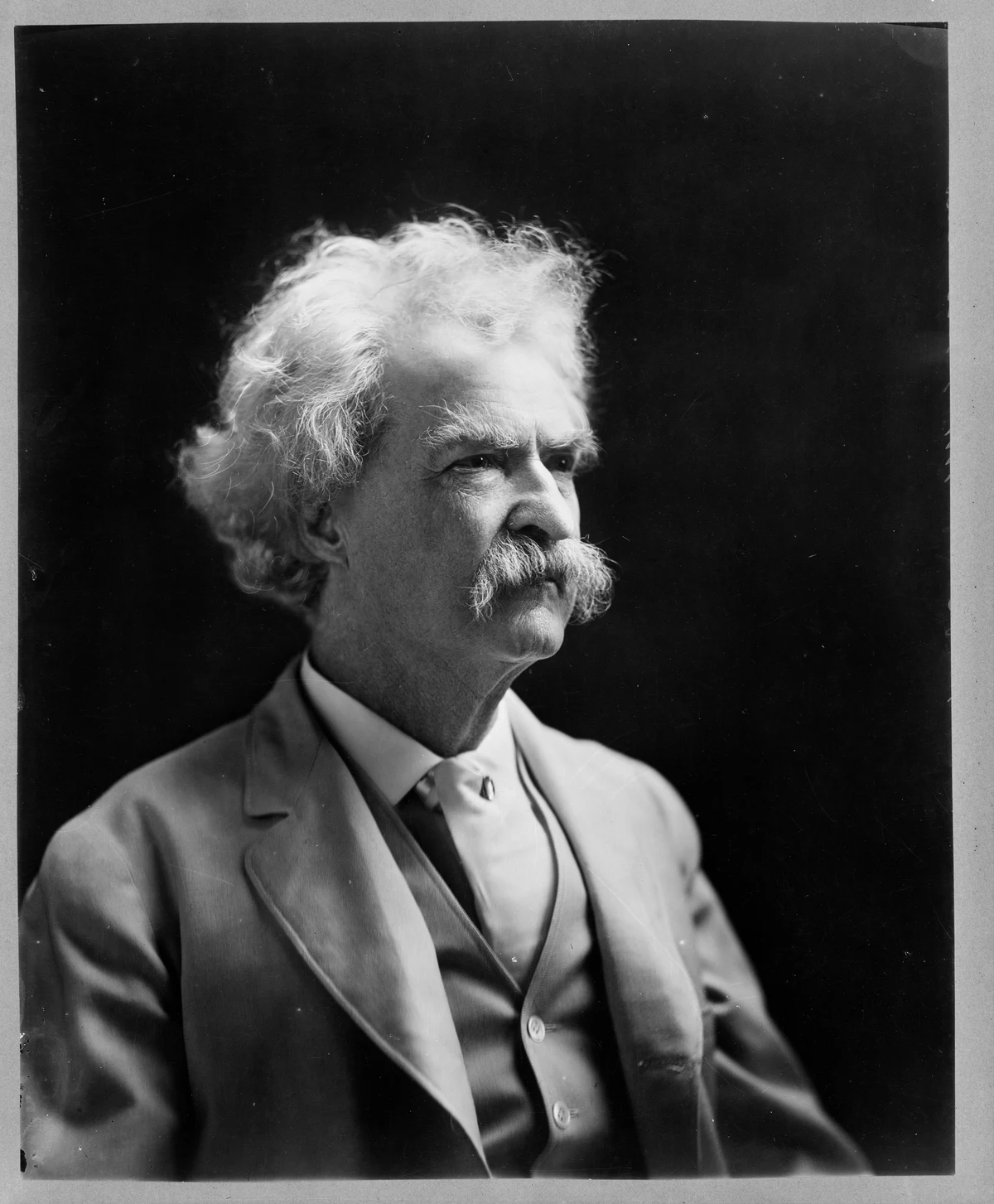
- Mark Twain
Read a different nineteenth-century experiment in American literary voice and public criticism.
Sources and further reading
Explore the evidence
These references support the biography and offer further reading. Official records, first-person accounts and independent reporting provide different perspectives; image records document attribution and licensing.
- 1. Library of CongressWalt Whitman (1819–1892): chronology
- 2. Library of CongressRevising Himself: Journalist and Teacher
- 3. Library of CongressRevising Himself: Leaves of Grass
Used for textual revision and book design; avoided a fixed total-editions claim because bibliography counts vary by definition of an edition.
- 4. Library of CongressRevising Himself: Wound Dresser
- 5. Library of CongressRevising Himself: Poet of the Nation
- 6. The Walt Whitman ArchiveBernard Hirschhorn: Political Views
Bernard Hirschhorn's institutional encyclopedia entry supports the specific racial-equality contradiction; indexed article text read after fresh page access returned 403.
- 7. Library of CongressRevising Himself: Sage
- 8. Library of CongressDiscovering Walt Whitman at the Library of Congress
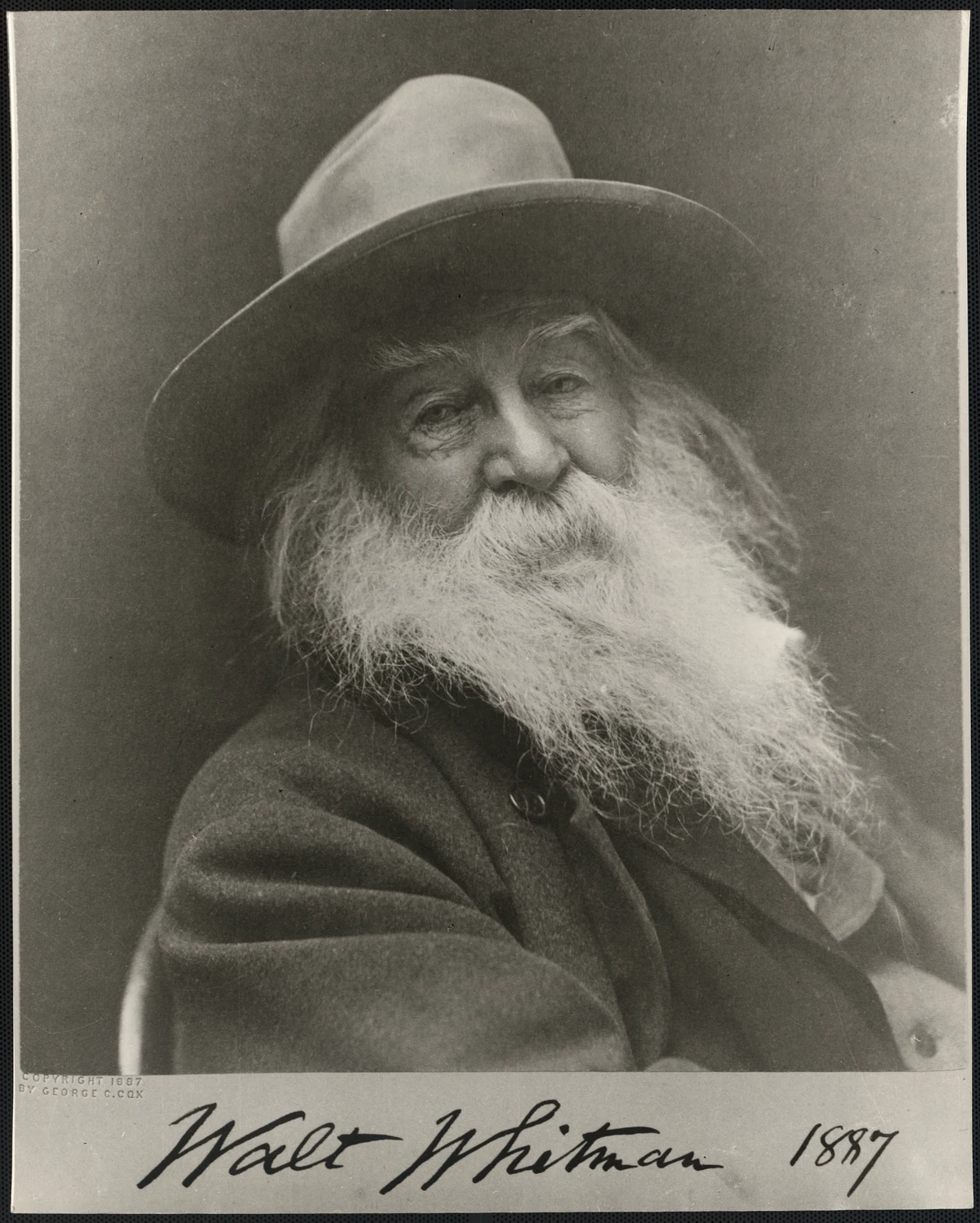
- 9. Library of CongressWalt Whitman, 1887: George C. Cox portrait
Exact portrait and visible 1887 copyright notice checked in the full original TIFF mirror; no claim to have inspected a registration certificate.