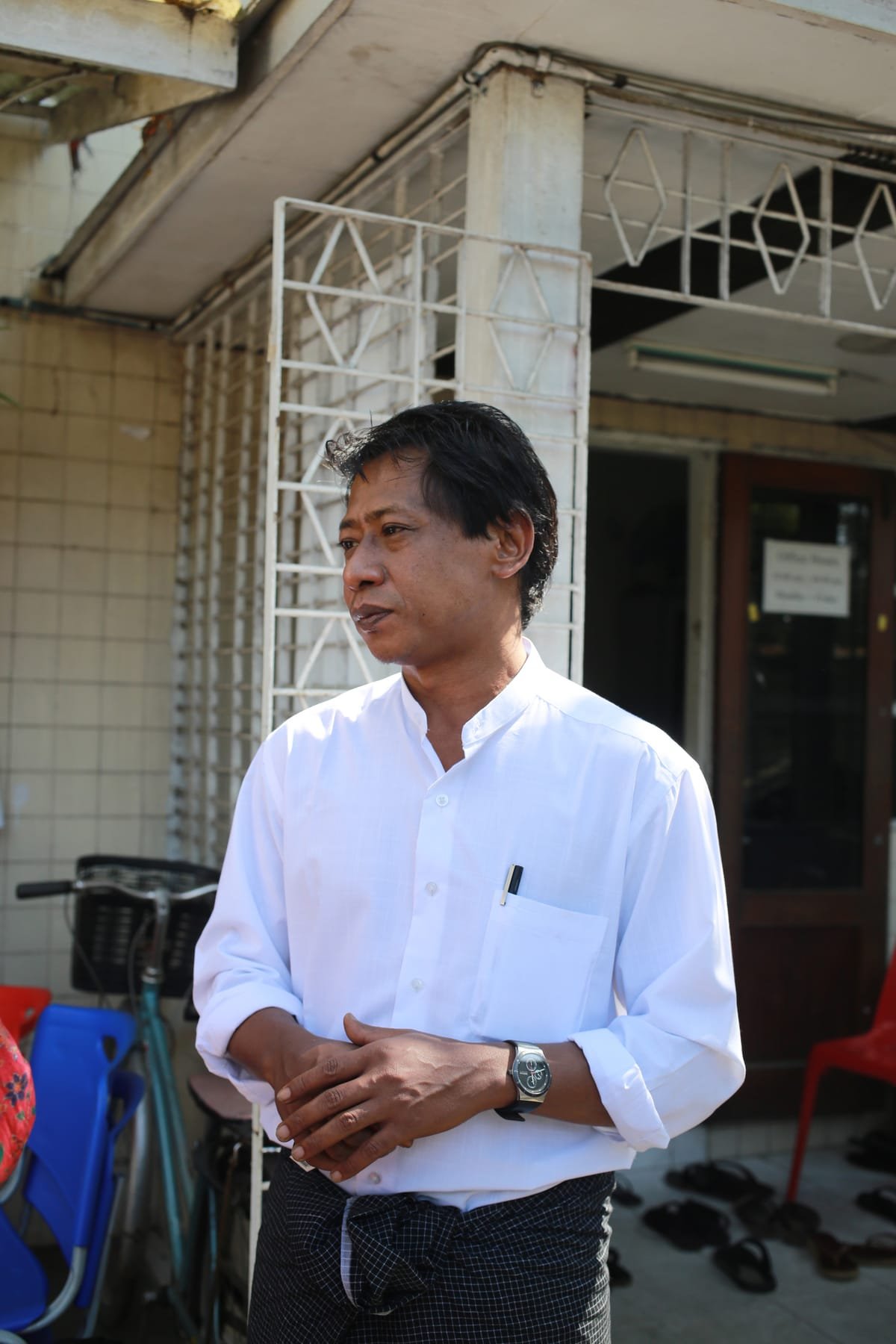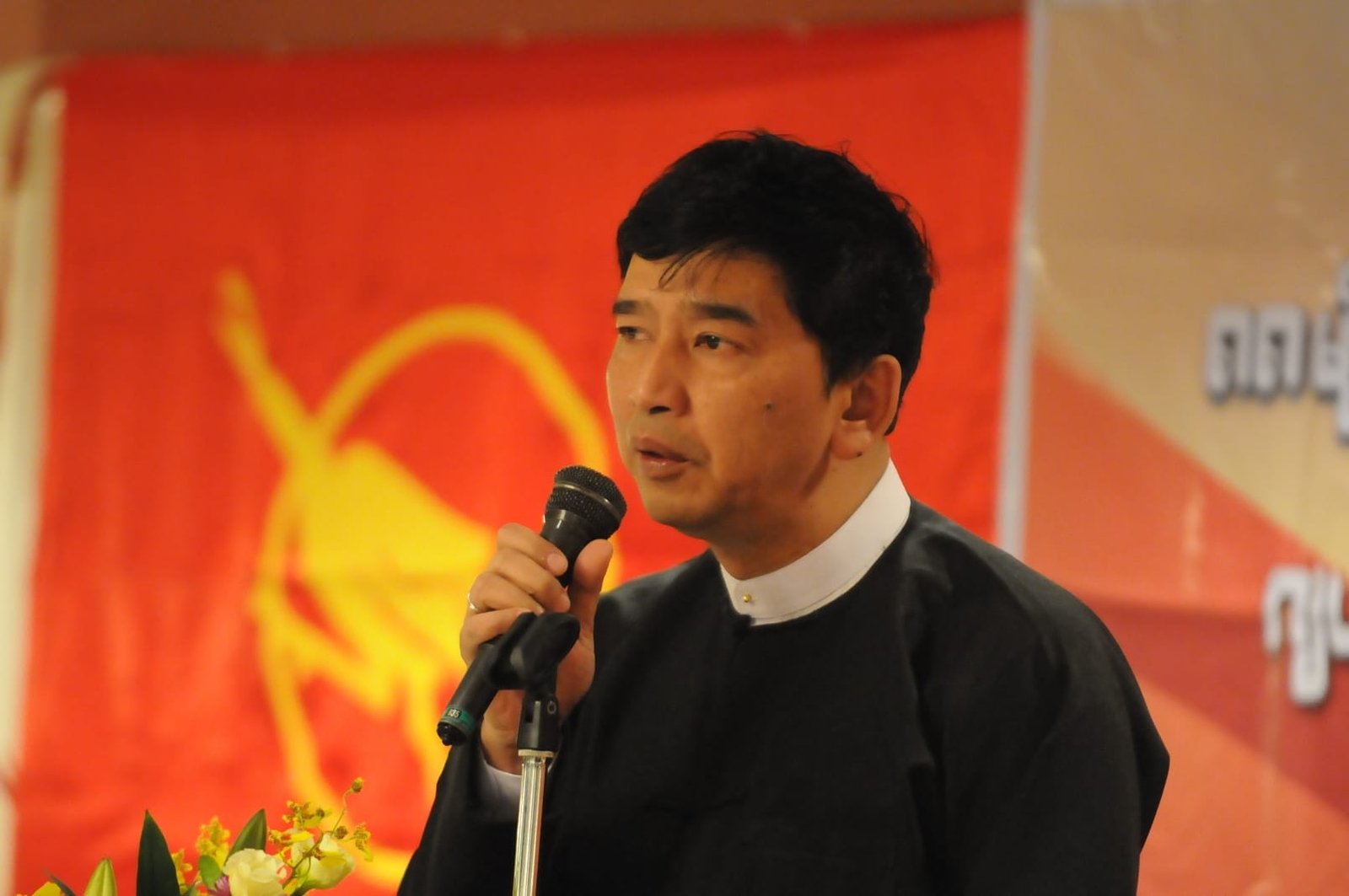
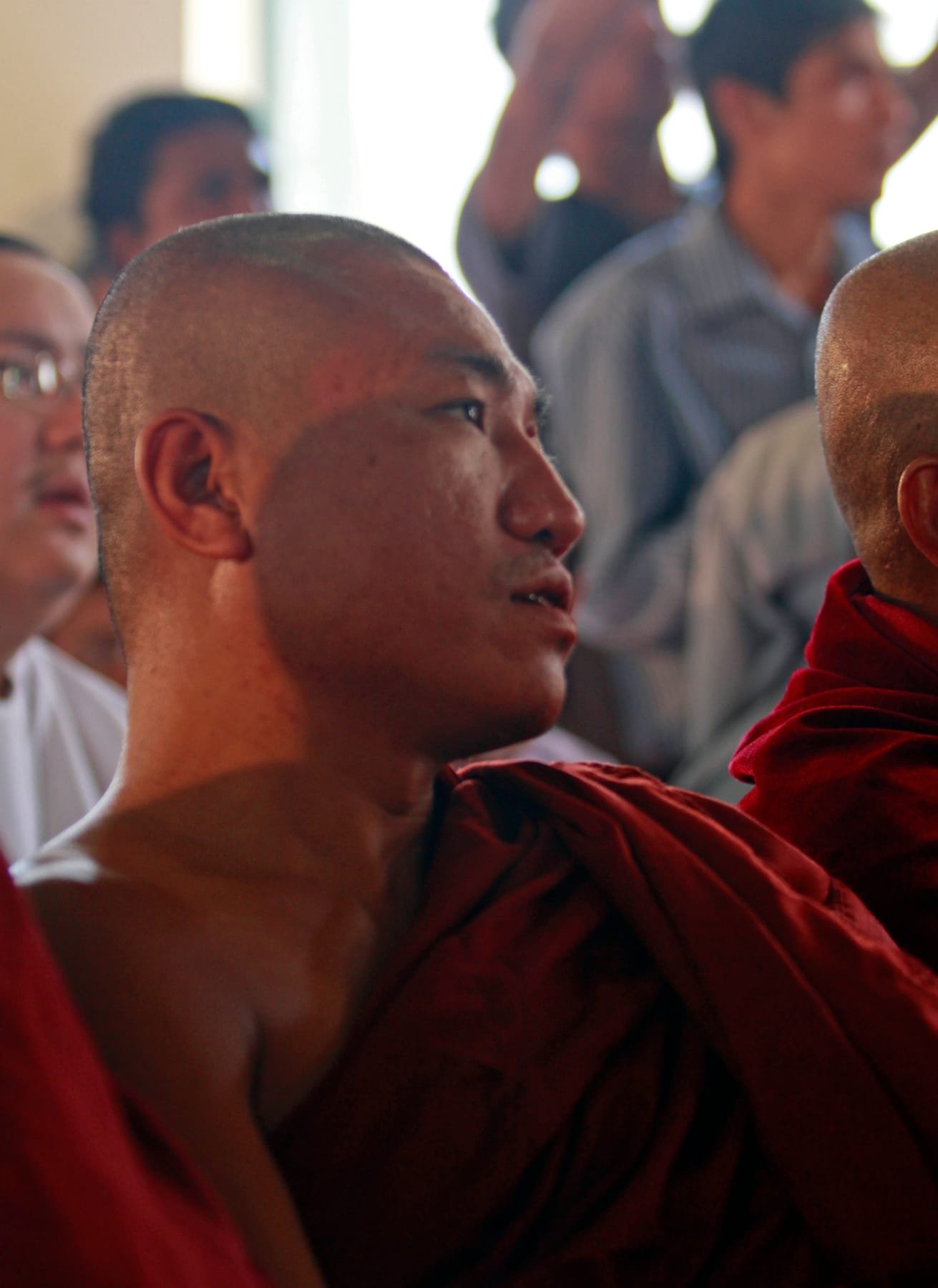
In this biography
Quick facts
- Born
- 19 June 1979
- Birthplace
- Kaingle village, Pauk Township, Magway Division, Burma
- Country
- Myanmar
- Nationality
- Burmese
- Known for
- Helping lead the All Burma Monks Alliance and its religious boycott during the 2007 Saffron Revolution
- Lay name
- Nyi Nyi Lwin
- Monks’ organisation
- All Burma Monks Alliance
- Arrested
- 4 November 2007
- Original sentence
- 68 years, including hard labour
Why this life matters
U Gambira connected monastic networks, nonviolent political protest and the long imprisonment that followed the Saffron Revolution crackdown.
Timeline
Key moments
Born in Magway Division
Born Nyi Nyi Lwin on 19 June in Pauk Township.
Helped organise the monks’ movement
The All Burma Monks Alliance demanded an apology, lower prices, prisoner releases and political dialogue.
Arrested after the crackdown
Authorities detained him after more than a month in hiding and had also targeted members of his family.
Sentenced to 68 years
A prison court imposed multiple convictions, including twelve years of hard labour.
Released in a general amnesty
Freed with other prominent political prisoners during the reform period.
Faced another political prosecution
Was imprisoned on an immigration charge before courts dropped the remaining cases and released him in July.
A young monk inside an authoritarian state
U Gambira was born Nyi Nyi Lwin in Kaingle village, Pauk Township, in 1979. He entered the Buddhist monastic world in a country where monasteries provided education, welfare and one of the few social institutions not wholly absorbed by the military state. Monks also carried a long political memory extending from anticolonial nationalism to protests against Ne Win’s government.
By 2007 he was connected to monastic organisers in Yangon and Mandalay. The State Peace and Development Council restricted independent associations, so networks developed quietly across monasteries and through personal contacts. That organisation became important after the government sharply raised controlled fuel prices on 15 August and veteran student activists began small peaceful marches.
The All Burma Monks Alliance and overturned bowls
Security forces beat monks who demonstrated in Pakokku on 5 September. In response, monastic groups formed the All Burma Monks Alliance. U Gambira became one of its most visible organisers. The alliance demanded an apology, lower commodity prices, the release of political prisoners and dialogue with democratic forces. When the government ignored its deadline, monks began refusing alms from military officials and supporters—a religious sanction known as overturning the bowls.
Marches expanded from 18 September. Monks chanted the Metta Sutta of loving kindness as laypeople formed protective lines and offered water. The movement reached cities across the country and briefly opened a public space that military rule had closed. U Gambira’s role was organisational rather than electoral: he helped link monasteries and articulate a moral boycott that transformed an economic protest into a national challenge.
Arrest, torture and a sixty-eight-year sentence
Troops and police used live ammunition, raids and mass detention to end the demonstrations on 26–29 September. U Gambira went underground. Human Rights Watch reported that authorities detained his brother and later his father in an effort to force him to surrender. He was arrested in Mandalay on 4 November, the same day an article under his name defended nonviolence and called for continued international pressure.
A prison court convicted him under a collection of association, public-order and communications laws in November 2008 and imposed a total sentence of sixty-eight years, including hard labour. United Nations and rights-group records describe torture, repeated transfers to remote prisons and serious psychological and physical harm. Five years were later removed from the sentence, but the punishment still illustrated how the state converted peaceful organisation into multiple criminal cases.
Release and the unfinished cost of imprisonment
U Gambira was released on 13 January 2012 as President Thein Sein’s government freed prominent political prisoners. He did not return permanently to monastic life. Human Rights Watch later reported that he needed psychosocial treatment for trauma connected to imprisonment and that authorities repeatedly detained him after release.
In January 2016 he was arrested after returning from Thailand and prosecuted under an immigration law that rights organisations described as politically motivated. Courts dropped the remaining charges and released him on 1 July. His career shows both the political authority monks could exercise in 2007 and the personal cost of a crackdown that continued long after the street demonstrations ended.
Quick answers
Frequently asked questions about U Gambira
- Who is U Gambira?
- U Gambira is a former Buddhist monk and Saffron Revolution organiser. U Gambira connected monastic networks, nonviolent political protest and the long imprisonment that followed the Saffron Revolution crackdown.
- What is U Gambira best known for?
- U Gambira is best known for helping lead the All Burma Monks Alliance and its religious boycott during the 2007 Saffron Revolution.
- When and where was U Gambira born?
- U Gambira was born on 19 June 1979 in Kaingle village, Pauk Township, Magway Division, Burma.
Sources and further reading
Explore the evidence
These references support the biography and offer further reading. Official records, first-person accounts and independent reporting provide different perspectives; image records document attribution and licensing.
- 1. Human Rights WatchThe Resistance of the Monks · Buddhism and Activism in Burma
- 2. Human Rights WatchBurma’s Forgotten Prisoners · U Gambira profile
- 3. United Nations Working Group on Arbitrary DetentionOpinion No. 33/2016 concerning Gambira · A/HRC/WGAD/2016/33
- 4. Human Rights WatchDrop Charges Against Former Activist Monk
- 5. Amnesty InternationalPrisoner of conscience U Gambira released
- 6. Wikimedia CommonsPortrait licensing record