In this biography
Quick facts
- Born
- 23 August 1940
- Died
- 9 October 2018
- Birthplace
- Milwaukee, WI, USA
- Country
- United States
- Nationality
- Not independently established
- Known for
- Mapping biological catalysts, including the large ribosomal subunit
Why this life matters
Mapping biological catalysts, including the large ribosomal subunit
Timeline
Key moments
Birth
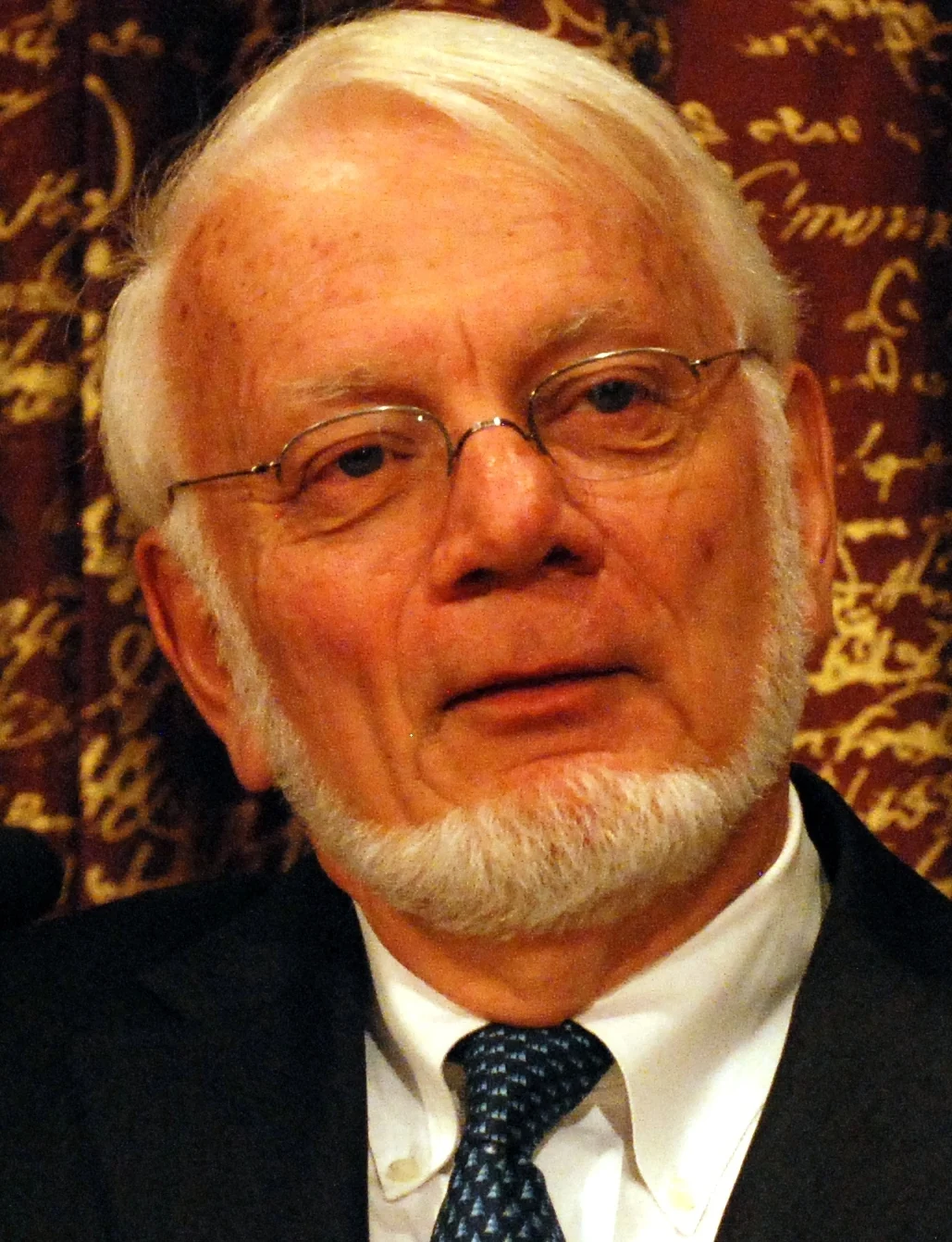
Thomas A. Steitz was born in Milwaukee, WI, USA.
Large-subunit structures
Coauthored the atomic 50S structure and a separate substrate-analogue study.
Nobel recognition
Received Nobel recognition for the work described in the official award record.
From Wisconsin to structural biology
Thomas Steitz was born in Milwaukee in 1940 and studied chemistry at Lawrence University. Undergraduate research introduced him to enzyme measurements and the practical use of computation. At Harvard he joined William Lipscomb’s crystallographic programme, working on carboxypeptidase rather than beginning with a ribosome project. His 1966 doctorate gave him experience in relating a macromolecular structure to substrate and inhibitor binding. The route to his later achievement therefore involved learning how to interpret a biological catalyst, not simply improving the magnification of a molecular image.
Cambridge training and a Yale programme
Postdoctoral work at Cambridge’s Medical Research Council Laboratory of Molecular Biology extended that training in a community studying proteins and nucleic acids. Steitz subsequently joined Yale, where his research investigated enzymes involved in the handling and expression of genetic information. His account credits mentors and collaborators rather than describing structure determination as a solitary calculation. Large complexes required suitable material, crystals, diffraction measurements and interpretable maps. Success depended on fitting those stages together while asking a biological question specific enough for the resulting structure to address.
The ribosome project had several authors
The 2000 atomic structure of the large ribosomal subunit was published by Nenad Ban, Poul Nissen, Jeffrey Hansen, Peter Moore and Steitz. A separate paper with a different author order examined substrate analogues at the peptide-bond-forming centre. The work placed RNA at that centre while showing extensive structural roles for surrounding proteins. These were connected findings with distinct records: an overall architecture and an investigation of the active-site environment. Neither paper should be merged with the small-subunit studies into one indistinguishable ribosome image.
Recognition for structure and function
Steitz shared the 2009 Nobel Prize in Chemistry with Ada Yonath and Venkatraman Ramakrishnan for studies of ribosome structure and function. He died in Branford, Connecticut, in 2018. His career shows why a structural result can be biologically important without being a complete movie of a reaction. Locating components and bound analogues constrains proposed mechanisms, while rates, motions and chemical intermediates require additional experiments. The contribution was to make previously inaccessible molecular relationships concrete enough for such questions to be investigated with far greater precision.
Quick answers
Frequently asked questions about Thomas A. Steitz
- Who shared Steitz’s 2009 Nobel Prize?
- Ada Yonath and Venkatraman Ramakrishnan, for related studies of ribosome structure and function.
- Was the 2000 structure the whole translating ribosome?
- The Ban study examined the large 50S subunit; it should be distinguished from whole-ribosome and 30S studies.
Keep exploring
Lives connected to this story
- Venkatraman Ramakrishnan
Compare the large-subunit active-site question with the distinct decoding role examined in 30S-subunit structures.
Sources and further reading
Explore the evidence
These references support the biography and offer further reading. Official records, first-person accounts and independent reporting provide different perspectives; image records document attribution and licensing.
- 1. Ban and colleagues, Science, 2000The complete atomic structure of the large ribosomal subunit at 2.4 Å resolution
- 2. Nissen and colleagues, Science, 2000; original paper reproduced in Stanford teaching PDFThe Structural Basis of Ribosome Activity in Peptide Bond Synthesis
The supplied PDF combines two separate 2000 papers: Ban and colleagues’ large-subunit structure and Nissen and colleagues’ substrate-analogue study. They examine the overall architecture and the peptide-bond active site, respectively.
- 3. Nobel Prize OutreachThomas A. Steitz — Biographical
The Nobel Facts page repeats the birthday day and month in its death entry. The Nobel biography addendum and Yale obituary instead give 9 October 2018; this profile follows those independent records.
- 4. Nobel Prize OutreachThomas A. Steitz — Facts