
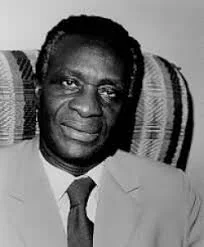
In this biography
Quick facts
- Born
- 29 March 1923
- Died
- March 2004
- Birthplace
- Abeokuta, Nigeria
- Country
- Nigeria
- Nationality
- Not independently established
- Known for
- Aro’s community-linked care programme and cross-cultural psychiatric research
- Medical education
- Birmingham,graduated 1948
- Aro leadership
- 1954–1963
- Ibadan vice-chancellor
- 1968–1971
- WHO service
- Joined 1971; deputy leadership 1973–1988
Why this life matters
His career made cultural context, families and professional institutions part of the same research and service question.
Timeline
Key moments
Birth
Born in Abeokuta on 29 March.
Medical and specialist training
Qualified in Birmingham and later trained at the Maudsley.
Aro and research
Led the institution during the development of its community-linked village programme.
Ibadan chair
Became the foundation professor of psychiatry.
University leadership
Served as vice-chancellor.
International health
Joined WHO and later held deputy-director-general responsibilities.
Death
Institutional records disagree on the exact day; month retained.
Medicine and specialist training began across two countries
Lambo was born on 29 March 1923 in Abeokuta and attended Baptist Boys’ High School. He studied medicine in Birmingham, qualifying in 1948, and completed early hospital work there. Specialist training at the Maudsley followed during 1952–1954. Returning to Nigeria brought that preparation into a different institutional and social setting. Femi Oyebode’s obituary places this movement at the centre of his career: the question was not simply how to reproduce a British hospital, but how psychiatric knowledge and care would work among the people he served.
Aro had a history before its best-known reform
The hospital’s own account traces an earlier institution at Lantoro to 1944 and the acquisition of the Aro site to 1948. Lambo took over leadership in 1954 and remained until 1963. His role should therefore be distinguished from the claim that every part of the institution began with his arrival. The village programme developed during the 1950 s. The hospital history specifically gives 1956, while other retrospective accounts attach earlier starting points. This biography preserves the decade rather than inventing a sequence that resolves all those dates. Institutions can have several beginnings: land, buildings, appointments and a new practice are different milestones.
A community programme depended on more than one clinician
Patients lived in nearby villages alongside relatives and other residents while professional services continued. The institutional history names nursing, family presence and local participation; Ade Adewunmi’s 2002 letter describes liaison with community leaders and the use of existing social infrastructure. It also notes lodging costs borne by patients and families, long stays and some permanent settlement. These details make both resources and burdens visible. The programme did not eliminate specialist work, family labour or questions about access simply by moving beyond a hospital ward. Its operation depended on relationships that had to be maintained.
Research questioned assumptions about culture and illness
Lambo’s publications examined psychiatric presentations in Nigeria and took part in cross-cultural research with Alexander Leighton and colleagues. The Pontifical Academy’s account places this alongside international study of schizophrenia and the effects of social change. His investigations challenged sweeping assumptions that African settings lacked recognisable psychiatric disorders. Their historical diagnostic language and observational comparisons require care today. A biography can explain the research question without importing old classifications unchanged or converting a reported association between social environment and recovery into a universal treatment recommendation.
Teaching and administration extended the institutional work
In 1963 he became the foundation professor of psychiatry at Ibadan, later serving as dean of medicine and vice-chancellor during 1968–1971. These roles joined clinical teaching to wider university responsibilities. In 1971 he moved to the World Health Organization as an assistant director-general, and from 1973 to 1988 held deputy-director-general responsibilities according to the professional obituary. The Academy record describes involvement in international research, including tropical and parasitic disease programmes. Those were collaborative administrative roles, not evidence that he personally conducted every study coordinated by the organisation.
The sources preserve an influential career and unresolved details
His honours included the 1970 Haile Selassie African Research Award and election to the Pontifical Academy of Sciences in 1974. He died inMarch 2004. The Academy lists 13 March, while Aro’s history gives 14 March; the exact day is therefore withheld from structured data. The hospital history also overstates his age relative to its own dates. His influence is better assessed through the continuing departments, training and community questions he helped establish than through unqualified superlatives. The record leaves room for further work on patients’ and host families’ own experiences, alongside the institutional accounts that dominate commemoration.
Quick answers
Frequently asked questions about Thomas Adeoye Lambo
- Did the Aro programme remove the need for professionals?
- No. The accounts describe professional care working with families, village residents and local leaders.
- Why is his exact death day omitted?
- The consulted institutional sources disagree between 13 and 14 March 2004. The supported month is used instead.
Keep exploring
Lives connected to this story
- Grace Alele-Williams
Compare a later Nigerian university leader’s distinct academic field and institutional responsibilities.
- Akin Mabogunje
Compare an Ibadan researcher’s different route from scholarship into public policy.
Sources and further reading
Explore the evidence
These references support the biography and offer further reading. Official records, first-person accounts and independent reporting provide different perspectives; image records document attribution and licensing.
- 1. Femi Oyebode; Royal College of PsychiatristsThomas Adeoye Lambo: obituary, Psychiatric Bulletin28,469,2004
The complete one-page professional obituary was read. The underlying 1960 paper and original patient records were not acquired; no new evaluation of comparative clinical efficacy is claimed.
- 2. Federal Neuropsychiatric Hospital, AroAbout Neuropsychiatric Hospital Aro Abeokuta, institutional history
This is the institution’s retrospective account. Its 1956 programme milestone,1954 appointment and earlier hospital history are kept separate; its age and broad global-success claims are not adopted.
- 3. Pontifical Academy of SciencesThomas Adeoye Lambo: deceased academician record
The Academy gives death on13 March 2004; the hospital history gives14 March. March 2004 is retained without an unsupported exact-day resolution.
- 4. Ade Adewunmi; Royal College of PsychiatristsCommunity Psychiatry in Nigeria, Psychiatric Bulletin26(10),394–395, October2002
The complete short 2002 letter was read. It is a retrospective professional comparison, not an acquired patient-level outcome study. Its October 2002 issue date is distinct from online posting in 2018.
