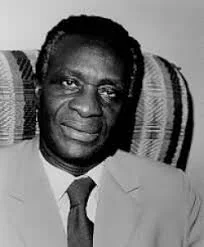
In this biography
Quick facts
- Born
- 18 October 1931
- Died
- 4 August 2022
- Birthplace
- Kano, Nigeria
- Country
- Nigeria
- Nationality
- Not independently established
- Known for
- Urban geography, Nigerian planning and international geographical institutions
- Doctorate
- University of London,1961
- Ibadan professor
- Appointed 1965
- IGU president
- 1980–1984
- Vautrin Lud Prize
- 2017
Why this life matters
His importance lies in making geographical analysis useful to public decisions while building institutions through which others could study cities and regions.
Timeline
Key moments
Education in Nigeria
Born in Kano and completed secondary schooling at Ibadan Grammar School.
University study
Studied through Ibadan and London, completing a dissertation on Lagos.
Professor at Ibadan
Appointed Professor of Geography.
Federal capital advisory work
Undertook ecological and geographical survey work for the Federal Capital Development Authority.
IGU presidency
Served as the union’s first African president.
New professional emphasis
Retired from Ibadan and continued public advisory work.
Recognition and death
Received the Vautrin Lud Prize in 2017 and died on 4 August 2022.
School geography became a sustained research commitment
Mabogunje was born in Kano on 18 October 1931 and completed secondary studies at Ibadan Grammar School in 1948. He entered the University of Ibadan in 1949, earning a University of London general BA in 1953 under the educational arrangements of the period. Further study at University College London led through advanced geography work to a doctorate in 1961. His dissertation concerned Lagos as an urban-geographical problem. The sequence joined Nigerian experience with methods and research networks developed abroad. It also established the city as a subject that could be investigated through relationships among settlement, economy, movement and institutions.
Ibadan gave the subject an institutional base
He joined Ibadan as an assistant lecturer in 1958 and became Professor of Geography in 1965. His responsibilities later included the social-sciences deanship, leadership of the geography department and direction of planning studies. These posts involved teaching, curriculum and the support of other researchers as well as his own publications. The American Geographical Society’s account identifies urbanisation, development and regional mobility among his research interests. A university career thus supplied both an intellectual programme and an organisation in which it could continue. Honorary degrees later recognised that work; they should not be confused with the doctorate earned through research.
Public planning required more than a map
Mabogunje’s advisory work concerned problems with consequences for households and communities: settlement, housing, land and regional development. Ronald Abler’s retrospective describes work involving populations affected by hydroelectric development and later urban-management institutions. These accounts show the range of questions to which he brought geographical analysis. They do not independently establish that every relocation was fair, every recommendation adopted or each project achieved its promised benefits. The distinction matters particularly when a commemorative source moves from describing a contribution to praising its outcome. Advisory responsibility and implementation need different records.
Sources for this section: [1]
The federal capital connected survey work to state building
The IGU obituary, supplied by Ibadan geographer Ibidun Adelekan, identifies Mabogunje as a specialist planning consultant to the Federal Capital Development Authority. It dates his ecological and geographical survey work on the Federal Capital Territory to 1976–1984. That gives a more precise role than saying he personally built Abuja. Planning a capital involved public authorities, surveyors, architects, engineers, residents and contractors. His contribution can be substantial without absorbing their work. Later population growth or development problems also cannot be attributed to a single adviser merely because his name appears in the founding history.
International leadership connected Nigerian and wider debates
Mabogunje served two terms as IGU vice-president between 1972 and 1980, followed by its presidency from 1980 to 1984, the first African scholar to hold that office. His wider appointments included urban-management and development organisations associated with international agencies. He retired from Ibadan in 1981 while continuing advisory activity. Retirement from the university therefore marked a change of institutional base, rather than the end of professional work. The geographical questions remained connected to policy, finance and local governance, areas where research could clarify a decision without deciding every political choice on its own.
Recognition should preserve the specific work it honours
His later recognition included election to the United States National Academy of Sciences in 1999 and the Vautrin Lud Prize in 2017. He died in Lagos on 4 August 2022. Institutional tributes often call him a father of African geography; the phrase conveys influence but is not a substitute for explaining the research, students and public responsibilities behind it. The 2017 prize is a geographical honour, not an actual Nobel Prize. His surviving scholarly and institutional record offers a more durable legacy: methods for examining cities and the argument that such knowledge belongs inside public decision making.
Quick answers
Frequently asked questions about Akin Mabogunje
- Did Mabogunje build Abuja by himself?
- No. The institutional record identifies a specialist planning and survey role within a much larger public development process.
- Was the Vautrin Lud Prize a Nobel Prize?
- No. It is a distinct geographical honour, awarded to him in 2017.
Keep exploring
Lives connected to this story
- Adebayo Adedeji
Compare another Nigerian scholar’s movement between university work, regional institutions and development policy.
- Grace Alele-Williams
Compare a different academic field and the responsibilities of Nigerian university leadership.
- Thomas Adeoye Lambo
Follow another Ibadan academic whose research also shaped a public institution.
Sources and further reading
Explore the evidence
These references support the biography and offer further reading. Official records, first-person accounts and independent reporting provide different perspectives; image records document attribution and licensing.
- 1. Ronald F. Abler; National Academy of SciencesAkinlawon Akin Mabogunje (1931 to 2022): retrospective, PNAS120(23),2023
The complete retrospective text was consulted through the Europe PMC full-text mirror. Its tributes are attributed rather than treated as independent evaluations of every planning outcome. The printed Lapido spelling differs from the Ladipo form in the university obituary it cites.
- 2. Ibidun O. Adelekan; International Geographical UnionFormer IGU President Professor Akin Mabogunje, 13 August 2022
The obituary supplies specific 1976–1984 survey work and 1980–1984 IGU office. The Vautrin Lud honour is not a Nobel award; its commemorative comparison is not repeated literally.
- 3. American Geographical SocietyAkin L. Mabogunje: Celebrating Black Geographers
The short institutional profile supports the field, degrees and Ibadan responsibilities. No claim is made to have read his complete books or doctoral dissertation.