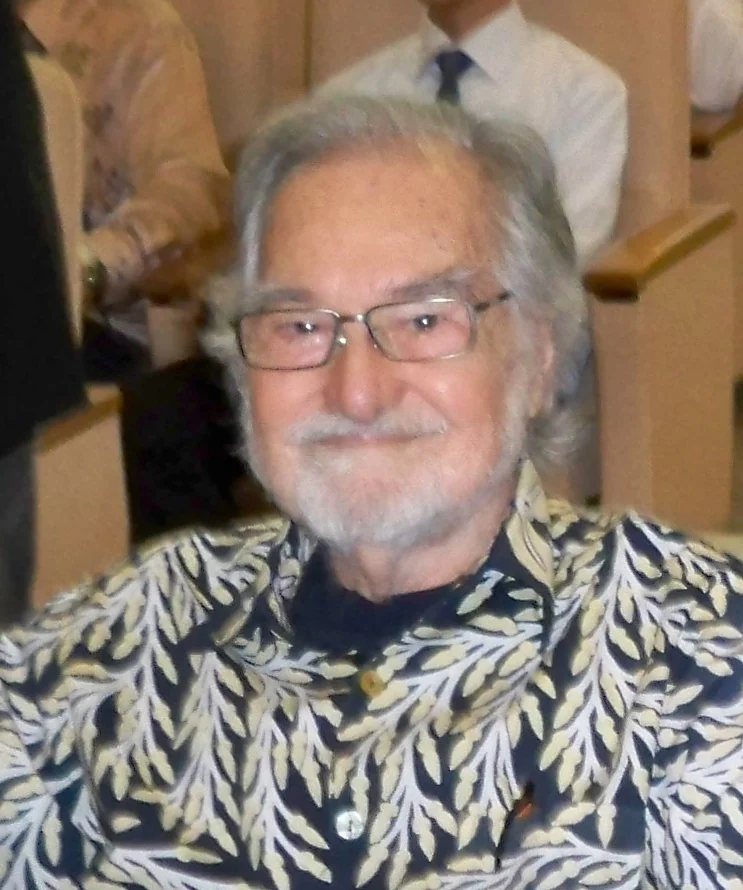
In this biography
Quick facts
- Born
- 17 September 1928
- Died
- 23 January 2007
- Birthplace
- Bogor, Dutch East Indies (now Indonesia)
- Country
- Malaysia
- Nationality
- Not independently established
- Known for
- Critic of colonial stereotypes.
- Intellectual question
- How can researchers examine their assumptions?
Why this life matters
He asked who produces social knowledge, whose assumptions it repeats and whether it helps explain local problems. His academic work and political participation make that question concrete.
Timeline
Key moments
An argument revisited
A selected article distinguishes adaptation from uncritical imitation.
From colonial society to social inquiry
Syed Hussein Alatas was born in Bogor, grew up partly in Johor and experienced the Japanese occupation in Java. He edited Progressive Islam while a student and received his Amsterdam doctorate in 1963. Earlier work at Dewan Bahasa dan Pustaka brought research into a public language institution.
Sources for this section: [1]
Building an academic field
He led Malay Studies in Singapore from 1967 to 1987. A later NUS memorial emphasised his criticism of colonial stereotypes, attention to corruption and commitment to a multiracial society.
The publisher’s description of The Myth of the Lazy Native, first published in 1977, identifies a study of colonial images of Malays, Filipinos and Javanese.
The stereotype is the object of inquiry here, not a description readers should adopt as fact.
Autonomy and constructive borrowing
His 1974 article distinguishes uncritical intellectual dependence from constructive imitation. He explicitly allows useful knowledge to be borrowed, but insists on questioning presuppositions and adapting methods to the problems being studied.
That position demands more than replacing a foreign author with a local one. The test is whether a research design examines its assumptions and can explain the evidence before it.
Sources for this section: [3]
A public intellectual in institutions
Alatas cofounded Gerakan, became a senator and participated in the National Consultative Council. He later led the University of Malaya from 1988 to 1991 and worked at Universiti Kebangsaan Malaysia. He died in Kuala Lumpur in 2007.
These roles placed institutional responsibility alongside criticism of institutions. His writings remain propositions to test and debate, rather than a licence to treat every imported concept as unsuitable.
Sources for this section: [1]
Quick answers
Frequently asked questions about Syed Hussein Alatas
- Who was Syed Hussein Alatas?
- Syed Hussein Alatas was a sociologist. He asked who produces social knowledge, whose assumptions it repeats and whether it helps explain local problems. His academic work and political participation make that question concrete.
- What is Syed Hussein Alatas best known for?
- Syed Hussein Alatas is best known for critic of colonial stereotypes..
- When and where was Syed Hussein Alatas born?
- Syed Hussein Alatas was born on 17 September 1928 in Bogor, Dutch East Indies (now Indonesia).
- When did Syed Hussein Alatas die?
- Syed Hussein Alatas died on 23 January 2007.
Keep exploring
Lives connected to this story
- Wang Gungwu
Compare a historian’s choice of terms and scale.
Sources and further reading
Explore the evidence
These references support the biography and offer further reading. Official records, first-person accounts and independent reporting provide different perspectives; image records document attribution and licensing.
- 1. Sharifah Afra Alatas / National Library Board, SingaporeSyed Hussein Alatas bin Syed Ali Alatas
A later biographical synthesis; the suggested cause of his 1991 departure is belief, not an adjudicated finding and is not asserted here.
- 2. NUS Malay Studies memorial accountEducation: lessons from Syed Hussein Alatas
Participant commemoration; not independent verification of all evaluations.
- 3. Syed Hussein Alatas / International Social Science Journal 26(4), 1974The captive mind and creative development
Only selected opening and constructive-imitation discussion, not all ten pages. Native title / year govern over repository “Part 2” label; distinct from 1972 article.
- 4. Routledge reissue / Google Books catalogueThe Myth of the Lazy Native: publisher description and contents
Official preview returned 403 expired token; no whole book, chapters or unofficial mirror read. Reissue and original are one work pool.