In this biography
Quick facts
- Born
- 24 September 1957
- Died
- 28 January 2021
- Birthplace
- Soweto, Johannesburg, South Africa
- Country
- South Africa
- Nationality
- Not independently established
- Known for
- Ancient Evenings, the title role in Princess Magogo kaDinuzulu and work across South African vocal traditions
- Born
- Soweto, 24 September 1957
- Parents
- Grace and Khabi Mngoma
- Breakthrough award
- Standard Bank Young Artist Award for Music, 1993
- Debut album
- Ancient Evenings, 1996
- National order
- Ikhamanga in Silver, 2008
- Died
- 28 January 2021
Why this life matters
Her career makes the passage between musical traditions visible as skilled practice, not a choice between an African identity and formal vocal training.
Timeline
Key moments
A musical upbringing
Family, township music and study form a varied musical education.
Teaching and arts work
Music education and institutional work precede wider public recognition.
Recognition and recording
A Young Artist award precedes the debut album Ancient Evenings.
Princess Magogo
She creates the title role in the Durban premiere.
Institutions and artist development
Her label and governance work accompany continued performance.
Death and posthumous recognition
Family and institutional tributes record her contribution.
Family and community supplied more than a single musical tradition
Khumalo was born in Soweto on 24 September 1957 to Grace and Khabi Mngoma. Music was part of family and community life. She learned instruments, singing and performance while encountering a range of sounds rather than one isolated tradition.
In her 2002 interview with Michael Church, she remembered radio, church services, neighbourhood music and her father’s choir. That recollection connects listening with the surroundings of childhood. It also complicates the idea that a later jazz or opera career must have begun in a culturally separate world.
Education and teaching preceded the public breakthrough
She studied music at the University of Zululand and completed honours study at Wits. Before wider recognition as a singer, she worked in music teaching, administration and research, including FUBA and the Funda Centre’s Madimba Institute of African Music.
Church’s interview records her account of racial barriers to study and professional opportunity. Her training encompassed European art song and the study of African repertoire. These were resources she selected and worked with, not evidence that one musical identity had to displace another.
Recordings gave the voice a life beyond individual concerts
The 1993 Standard Bank Young Artist Award for Music became a major career opening. Ancient Evenings followed in 1996, with Live at the Market Theatre and further studio work extending her recorded repertoire. A debut album and an earlier professional breakthrough are different milestones.
Her career crossed jazz and opera without requiring every recording to represent every part of her practice. Music In Africa’s profile also records the 2007 launch of Magnolia Vision Records. A singer’s work could therefore include production and management as well as the moment of performance.
Princess Magogo required interpretation as well as vocal technique
In 2002 she premiered the title role in Princess Magogo kaDinuzulu, composed by Mzilikazi Khumalo. Singer and composer were different contributors. The role brought an existing musician’s life and songs into an operatic production, rather than making the performer their original author.
Khumalo told Church she had known Magogo and had also studied recordings. That combination of remembered encounter and sustained musical preparation is important. It distinguishes a performance shaped by research from the claim that an audience is hearing an unmediated historical voice.
Arts leadership and honours recognised work outside the spotlight
SAMRO’s 2021 report remembers her as its first Black woman deputy chairperson and later chairperson, recording retirement from its boards in December 2018. This dated account is more precise than leaving a historical board title in the present tense.
The Presidency confirms her 2008 Ikhamanga in Silver; Unisa separately records its honorary musicology degree in October 2013. She died on 28 January 2021. Tributes recalled mentoring and education alongside performance, while her earlier public concerns included the treatment and working conditions of women musicians.
Quick answers
Frequently asked questions about Sibongile Khumalo
- What was her debut album?
- Ancient Evenings, released in 1996.
- Did she compose Princess Magogo?
- Mzilikazi Khumalo composed the opera; she premiered its title role.
- Were her honorary degrees the same as her earned qualifications?
- No. Her formal studies and later honorary awards are distinct.
- Was she still a SAMRO board member when she died?
- Its own report dates her retirement from its boards to December 2018.
Keep exploring
Lives connected to this story
- Miriam Makeba
Explore another voice connecting South African repertoire with international audiences.
- Abdullah Ibrahim
Compare composition, ensemble performance and the public life of recordings.
- Johnny Clegg
Read a different career in which teaching and musical collaboration remained connected.
Sources and further reading
Explore the evidence
These references support the biography and offer further reading. Official records, first-person accounts and independent reporting provide different perspectives; image records document attribution and licensing.
- 1. Khumalo family / National Arts Council28 January 2021 — family statement, birth and death
- 2. University of the Witwatersrand2021 — two-page posthumous honorary doctorate citation
Actual two-page posthumous citation, not a claim that all named performances were viewed. Conflicting aggregate SAMA counts are not forced into a single total.
- 3. University of South Africa29 January 2021 — October 2013 honorary degree record
- 4. The Presidency, South Africa28 January 2021 — Ikhamanga Silver awarded in 2008
- 5. Music In Africa / David DurbachArtist profile — selected recordings, teaching and label history
- 6. Ano Shumba / Music In Africa29 January 2021 — obituary and attributed industry concerns
- 7. Michael Church / The IndependentMay 2002 — actual interview on training, repertoire and opera
Contemporary interview and attributed listening observations; no recording or complete opera viewing claimed.
- 8. SAMRO2021 integrated report — selected chairperson’s tribute, printed page 9
Selected chairperson’s tribute, printed page 9, rather than the complete integrated report.
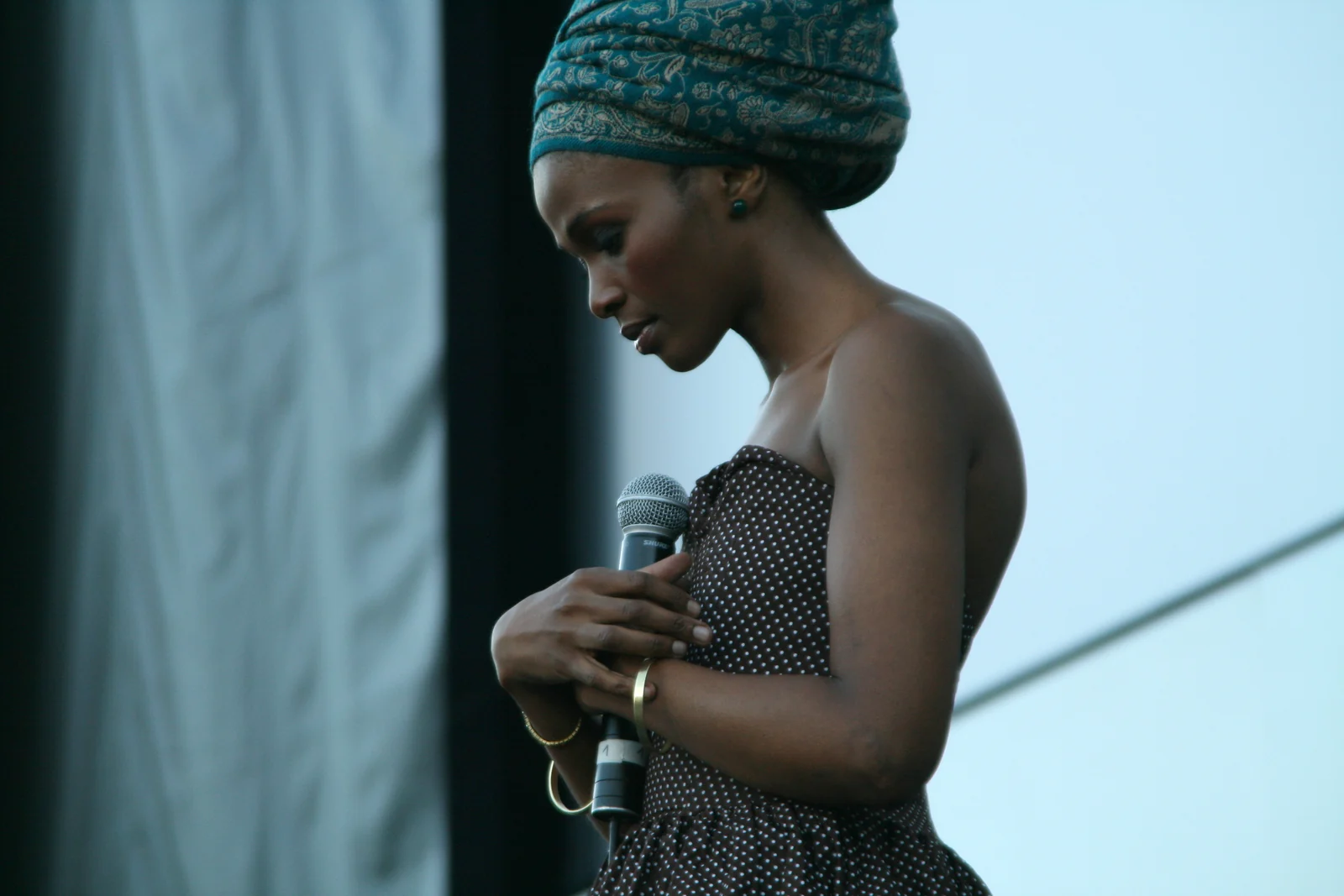
- 9. Svickova / Wikimedia CommonsExact own-work 2008 photograph and creator’s public-domain dedication
Photographer’s own-work PD-self dedication appears in first/current records. Complete stage frame and original lighting preserved; no model release inferred.