In this biography
Quick facts
- Born
- 6 December 1959
- Died
- 11 July 2015
- Birthplace
- Sapporo, Hokkaido, Japan
- Country
- Japan
- Nationality
- Not independently established
- Known for
- Nintendo DS, Wii and a strategy of expanding the gaming audience
- Education
- Tokyo Institute of Technology, computer science; graduated 1982
- HAL presidency
- Appointed March 1993
- Nintendo director
- Appointed June 2000
- Nintendo president
- May 2002–July 2015
Why this life matters
Iwata connected product development with an effort to reach new players, while making the work and decisions of game-development teams unusually visible.
Timeline
Key moments
Born
Born on 6 December; grew up in Hokkaido.
University
Entered Tokyo Institute of Technology.
HAL Laboratory
Joined full-time after graduation.
HAL president
Appointed in March.
Nintendo director
Appointed in June.
Nintendo president
Succeeded Yamauchi in May.
Nintendo DS
The handheld launched in the US and Japan.
Wii
Nintendo launched the home system.
DeNA alliance
Presented the companies’ business and capital alliance on 17 March.
Death
Died on 11 July.
Programming connected school, university and play
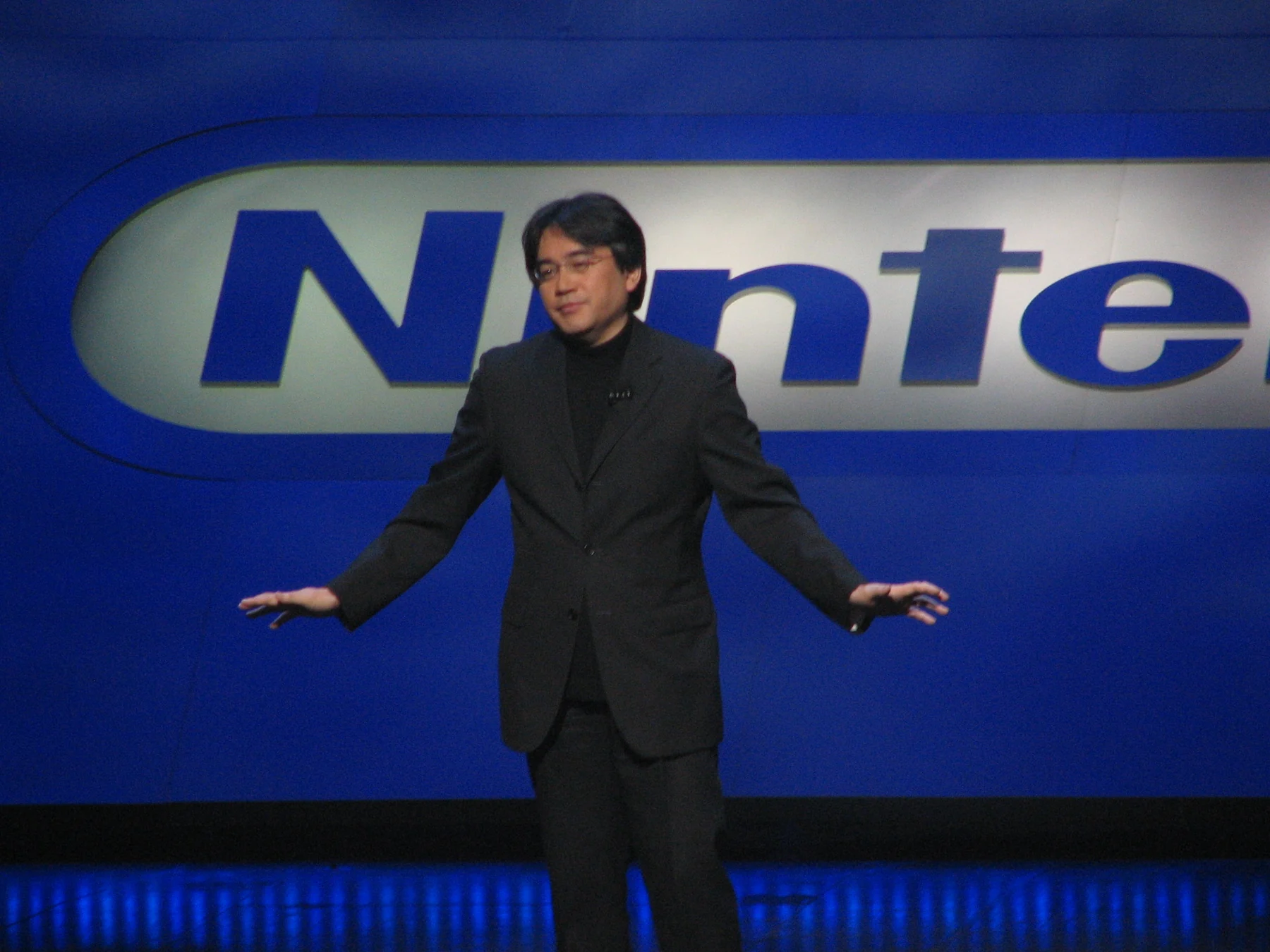
Satoru Iwata was born on 6 December 1959 and grew up in Hokkaido; contemporary reporting identifies Sapporo as his birthplace. He entered Tokyo Institute of Technology in 1978 and studied computer science. The university’s memorial brings together recollections by classmates and colleagues, including work with a Commodore PET computer and graduation research on recognising handwritten mathematical expressions. Those memories give concrete substance to the word programmer. They describe someone who learned by making software and helping other people with it, before he was known as a corporate leader. They do not establish that a student project was itself an early Nintendo product.
HAL provided experience as a maker and manager
While at university, Iwata worked part-time at HAL Laboratory. He joined full-time after graduation in 1982. The university memorial identifies his contributions to games including the Kirby series; HAL’s own chronology dates his appointment as president to March 1993. These two kinds of work required connected but different skills. Programming asks whether a system behaves as intended, while running a company involves organising people, priorities and continuing production. A useful account of his later leadership keeps that earlier experience visible without assigning him sole authorship of every game produced during his time at HAL.
Nintendo gave him responsibility for a whole business
Nintendo appointed Iwata as a director in June 2000. Its 2002 succession record names his existing role in corporate planning and schedules his move to president for 31 May. The same document lists other senior representative directors, including Genyo Takeda and Shigeru Miyamoto. Iwata’s promotion therefore belonged to a wider management structure. He took over from Hiroshi Yamauchi, whose long tenure had established the company’s major game platforms. The challenge involved renewing that business and coordinating teams, rather than simply applying one programmer’s solution to every problem.
The DS made audience expansion a product question
Nintendo DS launched in the United States on 21 November 2004 and in Japan on 2 December. A contemporaneous financial statement explains the company’s aim to reach people across ages, genders and levels of game experience. The machine combined two screens, touch input, a microphone and wireless communication. These features required hardware developers and software makers to discover usable combinations. Nintendo’s later account of audience research separates hardware sales from actual users, since a machine can be shared. That distinction reflects an executive trying to evaluate a strategic objective, rather than treating units shipped as a complete description of who played.
Interviews left the team’s decisions on the record
Iwata also conducted the Iwata Asks conversations with game and hardware developers. Their value lies in the detailed accounts of roles, prototypes and disagreements, as well as in their approachable tone. In the Game & Watch discussion, for example, he asks participants what they remember and follows their explanation of how a calculator chip became part of a game. One participant states that he does not know the earliest origin story first-hand. The published exchange preserves that limit. The archive consequently gives readers a route into making games as collective work, with recollection attached to a named speaker.
Sources for this section: [9]
Later difficulties required another change in approach
Iwata’s tenure included the Wii, launched in 2006, and less successful transitions to Nintendo 3DS and Wii U. In the March 2015 DeNA presentation, he acknowledged that the transitions had been less smooth than expected and discussed pressure from smart devices. He then explained the proposed use of Nintendo intellectual property on those devices and the importance of continuing services alongside finished products. This was a stated business direction, whose later results should not be credited to him in advance. Iwata died on 11 July 2015. Nintendo’s notification records his offices and dates, closing a career that joined programming, management and public explanation.
Quick answers
Frequently asked questions about Satoru Iwata
- Did Iwata begin his career as a Nintendo executive?
- No. He programmed at HAL Laboratory and became its president before joining Nintendo as a director in 2000.
- Why are Iwata Asks interviews useful?
- They preserve named participants’ explanations of their roles, decisions and limits of memory in game and hardware development.
Keep exploring
Lives connected to this story
- Hiroshi Yamauchi
Read his predecessor’s role in shaping Nintendo and the initial two-screen request.
- Shigeru Miyamoto
Explore a colleague’s game design and contributions to hardware and software discussions.
Sources and further reading
Explore the evidence
These references support the biography and offer further reading. Official records, first-person accounts and independent reporting provide different perspectives; image records document attribution and licensing.
- 1. NintendoNotification of death and personnel change, 13 July 2015
- 2. Matt Peckham / TIMEWhy Nintendo President Satoru Iwata Mattered, 13 July 2015
Used narrowly to corroborate Sapporo birthplace. The biography otherwise rests on actual corporate records, institutional history and published participant exchanges.
- 3. Tokyo Institute of TechnologyIn memory of Satoru Iwata, 8 September 2015
Named classmates’ and lab colleagues’ memories are attributed. Saeki’s retrospective analogy between the handwriting project and DS is not recast as a product-development genealogy.
- 4. HAL LaboratoryHAL Laboratory company history: March 1993 appointment
- 5. NintendoFiscal 2002 results: directors’ change, printed page 30
Exact scheduled inauguration date is 31 May 2002; profile uses May where a single day is unnecessary.
- 6. NintendoNine-month financial results, 26 January 2005, printed page 1
- 7. NintendoSix-month financial results, 25 November 2004, printed page 4
- 8. Nintendo10 October 2007 conference, page 4: user survey method
- 9. NintendoIwata Asks Game & Watch, part 2: using calculator chips
- 10. NintendoCompany history: cards, home systems and handhelds
- 11. Nintendo / DeNABusiness and capital alliance with DeNA, 17 March 2015, page 1
Read the actual 2015 presentation. Plans are stated as plans; later mobile or Switch results are not attributed to a person who died in 2015.
- 12. Nintendo / DeNABusiness and capital alliance with DeNA, 17 March 2015, page 2