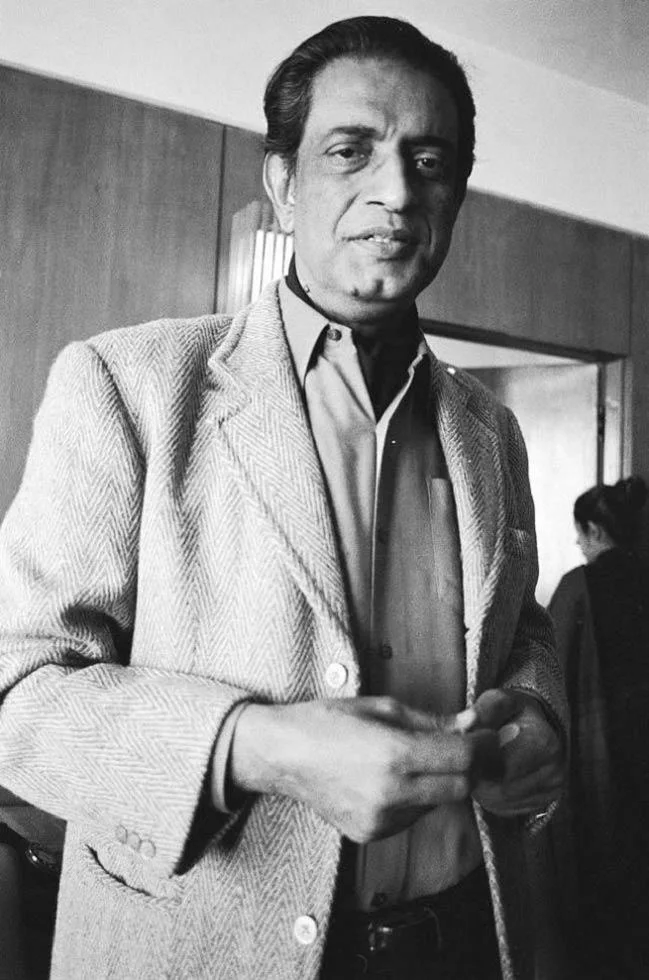
In this biography
Quick facts
- Born
- 4 November 1925
- Died
- 6 February 1976
- Birthplace
- Dhaka, East Bengal, British India (now Bangladesh)
- Country
- India
- Nationality
- Not independently established
- Known for
- Films examining Partition and displacement
- Creative starting points
- Writing, theatre and performance
- Completed features
- Eight, in the BFI’s account
Why this life matters
His films used popular dramatic forms to express radical political concerns. The resulting career challenges a choice between emotional storytelling and historical argument: a work can make its argument through the pressures placed on ordinary lives.
Timeline
Key moments
Theatre recognition
Dalil was recognised at the IPTA conference.
A feature on displacement
The Cloud-Capped Star.
Adaptation
A River Called Titas.
Death
Died on 6 February in Calcutta.
Dhaka, Calcutta and theatre
Ghatak was born in Dhaka and migrated to Calcutta while young. He worked across fiction, performance and stage production.
For the Indian People’s Theatre Association he wrote, performed in and directed plays. Dalil received recognition at its 1953 all-India conference. The Harvard programme places his cinema within political activism and his engagement with Brecht and Eisenstein.
Film work and an uneven path to audiences
Ghatak’s first feature, Nagarik, was made in the early 1950s but did not reach release during his lifetime. Ajantrik followed in 1958. He worked as director, screenwriter and producer, alongside shorter and unfinished projects.
The Cloud-Capped Star in 1960 and Komal Gandhar in 1961 became part of a grouping with Subarnarekha around Partition’s consequences. The grouping connects distinct films, rather than identifying one continuous production or a documentary record of the political event.
Teaching and later features
A period as vice-principal at the film institute in Poona brought him into contact with students including Kumar Shahani and Mani Kaul. This was another route through which his work circulated: through teaching and argument, as well as completed films.
A River Called Titas, from 1973, adapted a novel by Advaita Mallabarman about a fishing community. Ghatak also made Jukti Takko Aar Gappo, associated with 1974 in the filmography and released posthumously in 1977. He died in Calcutta in February 1976.
Reception, preservation and interpretation
Most of Ghatak’s films failed commercially or remained unreleased during his life, according to Sanghita Sen’s BFI account. Later archive programmes brought his work together through themes of politics and melodrama.
The BFI’s centenary season describes restoration of eight features from elements preserved by NFDC-NFAI and the West Bengal State Film Archive, with colour grading supervised by Avik Mukhopadhyay. This later work shapes access to the films without transferring their original authorship to the restorers. A career history can therefore follow both creation and the institutions that make subsequent encounters possible.
Quick answers
Frequently asked questions about Ritwik Ghatak
- Does the India archive label describe his birthplace today?
- No. His birthplace is now in Bangladesh; this archive association follows the documented context of his filmmaking rather than inferring citizenship from a present-day map.
Keep exploring
Lives connected to this story
- Satyajit Ray
Read another Bengali filmmaker’s career, while retaining the differences between their methods.
Sources and further reading
Explore the evidence
These references support the biography and offer further reading. Official records, first-person accounts and independent reporting provide different perspectives; image records document attribution and licensing.
- 1. Senses of Cinema, Megan CarrigyGhatak, Ritwik
Selected biographical and filmography passages read; embedded Ghatak statements are mediated by Carrigy. No full essay collection or film was consumed.
- 2. BFI / Sight and SoundDerek Malcolm on the films of Ritwik Ghatak
Indexed portions of the historical essay read. Its incorrect birth/age wording is not adopted. A precise film-institute appointment year is withheld.
- 3. Harvard Film ArchivePolitics and Melodrama: The Partition Cinema of Ritwik Ghatak
Archive programme read; its Subarnarekha year differs from the BFI record. This difference is retained in the accompanying guide without inventing which event either label dates.
- 4. BFI, Sanghita SenWhere to begin with Ritwik Ghatak
- 5. BFI Southbank / NFDC-NFAI partnershipRevolutionary Cinema: The Passion of Ritwik Ghatak