In this biography
Quick facts
- Born
- 1920
- Died
- 2015
- Birthplace
- Hull,Québec,Canada
- Country
- Canada
- Nationality
- Not independently established
- Known for
- Founding the NFB’s French animation studio and directing geometric films including Notes on a Triangle
Why this life matters
His career connects the apparent simplicity of geometric animation to a wider culture of teaching, production and collaborative experimentation.
Timeline
Key moments
NFB recruitment
Joined through Norman McLaren after art-school graduation.
French animation studio
Established the studio and completed Notes on a Triangle.
Retirement
Left the NFB but continued computer experiments.
Death
Died in Montréal in January 2015.
An art-school graduate enters a young institution
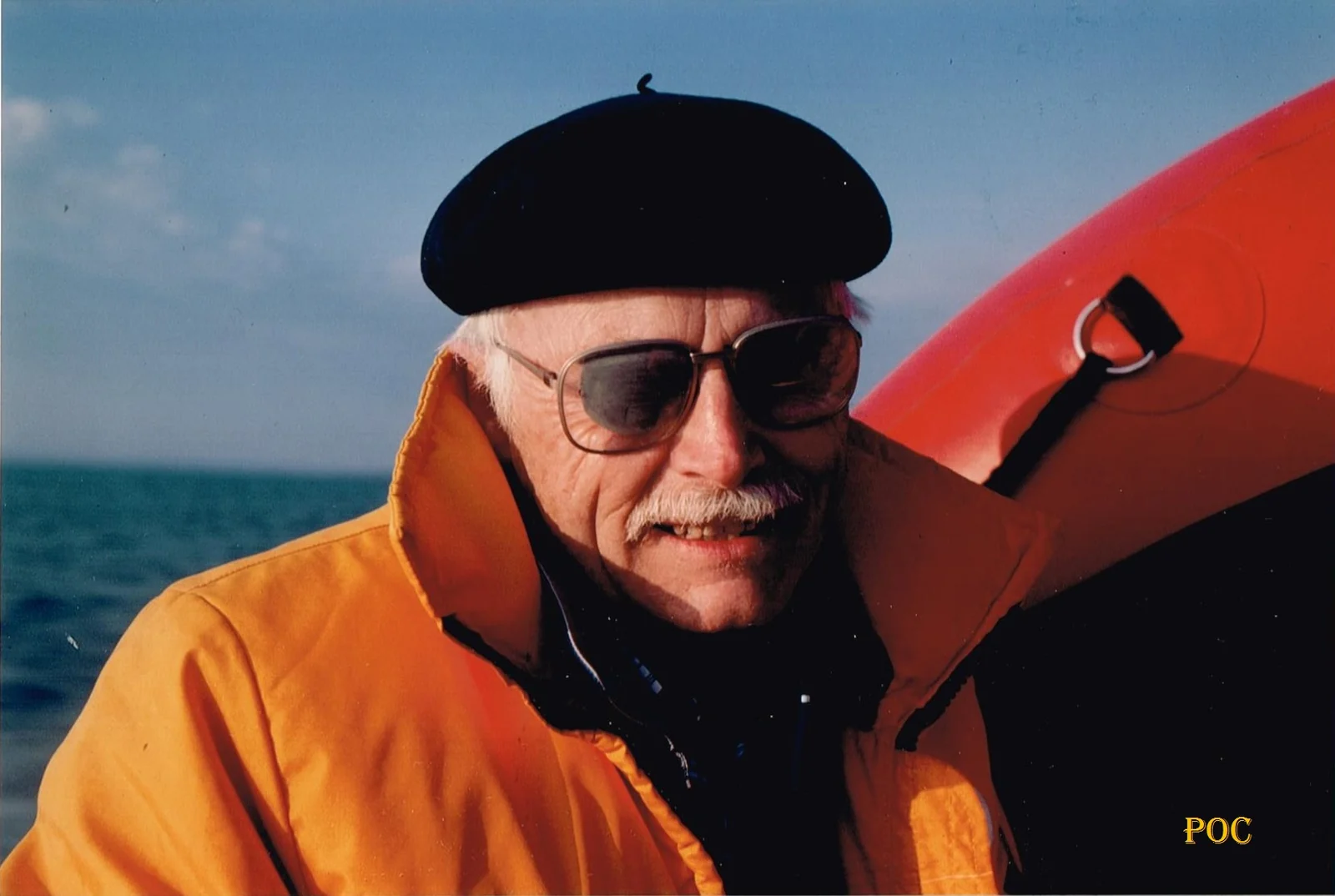
René Jodoin was born in Hull, Québec, in 1920. After graduating from Montréal’s École des Beaux-arts, he was recruited to the National Film Board by Norman McLaren in 1943. Their collaboration included Alouette and Spheres, but Jodoin also developed an independent body of geometrically organised films. His career therefore joins practical production with an interest in how movement can be built from a limited visual vocabulary. It would be misleading to make every abstract film an extension of McLaren’s individual style. The co-directed works and Jodoin’s own films occupy related, but separately credited, places in the institution’s history.
Direction and institution building
In 1963 Jodoin became head of the NFB’s science-film programme, and in 1966 he was assigned to create an animation studio within French Production. The filmmakers associated with this environment included Co Hoedeman, Pierre Hébert, Francine Desbiens, Suzanne Gervais and Jacques Drouin. He also initiated a relationship with the National Research Council that contributed to Peter Foldès’s computer-assisted Hunger. Those responsibilities extended his influence beyond films bearing his own directing credit. A studio can make experimentation possible by bringing people, equipment and time together. Jodoin’s institutional role belonged to that enabling structure without making him the hidden sole author of the films he supported.
Sources for this section: [1]
Geometric images and bodily movement
Notes on a Triangle (1966) arranges divisions and recombinations of a simple shape with music by Maurice Blackburn. Hébert’s later participant account treats the work as part of a larger inquiry into movement, not merely a demonstration of geometry. That distinction is especially important when comparing it with Spheres, whose gestures Jodoin understood through bodily movement. He retired from the NFB in 1985 and continued experimenting on a home computer, completing Between Time and Place in 1998. He received Québec’s Prix Albert-Tessier in 2001 and died in 2015. His legacy lies in both kinds of construction: the careful organisation of forms on a screen and the production community in which other artists could discover their own forms.
Quick answers
Frequently asked questions about René Jodoin
- Was Jodoin only a producer?
- No. He directed his own films as well as establishing and leading an animation studio.
- What links Jodoin to computer animation?
- He supported the research collaboration behind Hunger and later made computer-based work himself.
Keep exploring
Lives connected to this story
- Norman McLaren
Jodoin co-directed Alouette and Spheres with McLaren before pursuing his own geometric films.
- Co Hoedeman
Read one filmmaker’s stop-motion career within the French animation community Jodoin helped establish.
Sources and further reading
Explore the evidence
These references support the biography and offer further reading. Official records, first-person accounts and independent reporting provide different perspectives; image records document attribution and licensing.