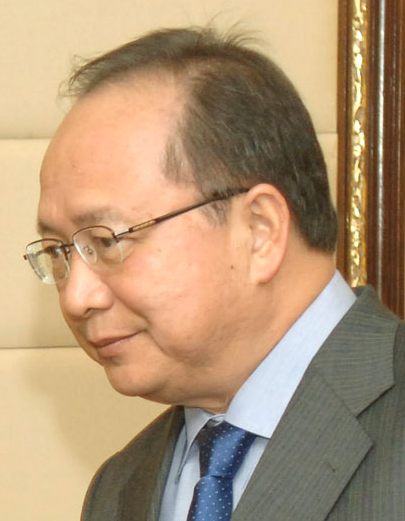
In this biography
Quick facts
- Born
- 19 May 1923
- Died
- 1 January 2020
- Birthplace
- Sandakan, North Borneo (now Sabah)
- Country
- Malaysia
- Nationality
- Malaysian
- Known for
- Serving as Sabah’s second chief minister and contributing legal expertise during negotiations to form Malaysia
- Profession
- Lawyer
- Historical distinction
- First locally born practising lawyer in Sabah
- Political party
- Sabah Chinese Association / Sabah Alliance
- State office
- Chief Minister of Sabah, 1965–1967
- Later representation
- Member of Parliament for Gaya
Why this life matters
Lo’s career connects the legal work behind Sabah’s entry into Malaysia, Alliance coalition bargaining and the transition to the state’s first direct election.
Timeline
Key moments
Born in Sandakan
Born in British North Borneo and later pursued legal studies in New Zealand.
Began legal practice in North Borneo
Returned from Victoria University of Wellington and became the territory’s first locally born practising lawyer.
Worked on formation-era safeguards
Applied his legal training to the constitutional discussions surrounding North Borneo’s proposed entry into Malaysia.
Sabah entered Malaysia
Served within the Sabah Alliance during the political transition from colonial rule to federation.
Became chief minister
Succeeded Fuad Stephens as a coalition compromise during a period of rivalry inside the Sabah Alliance.
Led government into the first direct election
Left office after USNO and the Sabah Chinese Association formed the post-election government under Datu Mustapha.
Represented Gaya in Parliament
Continued public service at federal level after his state premiership.
Died in Kota Kinabalu
Died on 1 January at age 96, more than half a century after leading Sabah.
Sandakan origins and legal training
Peter Lo Sui Yin was born in Sandakan in 1923, when the town was part of British North Borneo. He studied law at Victoria University of Wellington and returned home to practise, becoming widely recognised as the territory’s first locally born lawyer.
That professional background distinguished him in a political generation shaped by civil servants, community organisers and traditional leaders. Legal training gave Lo a role in interpreting the constitutional choices that confronted North Borneo as British decolonisation accelerated.
Legal work around the formation of Malaysia
Lo participated in the discussions surrounding North Borneo’s proposed federation with Malaya, Sarawak and Singapore. Contemporary accounts credit him with helping examine safeguards later associated with the Inter-Governmental Committee and Sabah’s Twenty Points.
Those documents addressed religion, immigration, language, public service and other matters on which local leaders sought protection. Lo should not be treated as their sole author, but his legal expertise made him an important participant in turning political demands into constitutional language.
A compromise chief minister
Sabah’s first government rested on the multi-party Sabah Alliance. Tension between Fuad Stephens and Datu Mustapha Datu Harun destabilised that arrangement, and Stephens moved to the federal cabinet at the end of 1964.
Lo, a leader of the Sabah Chinese Association, became chief minister on 1 January 1965. His appointment offered the coalition a figure who did not lead either of its two largest bumiputera parties, allowing the government to continue while those rival centres of influence remained divided.
The 1967 election and transfer of office
Lo governed until Sabah’s first direct state election in April 1967. USNO won fourteen seats, UPKO twelve and the Sabah Chinese Association five, leaving the Chinese party in a position to determine which bloc could form a majority.
The association aligned with USNO and Datu Mustapha became chief minister on 11 May. Lo’s orderly transfer of office closed Sabah’s appointed transitional phase and began a government built on the first statewide electoral mandate after Malaysia’s formation.
Parliamentary service and legacy
Lo later represented Gaya in the Dewan Rakyat and remained associated with public and legal affairs. His career never produced the long executive tenure of Mustapha or later chief ministers, but it covered the years in which Sabah’s constitutional place and electoral institutions were being established.
He died on 1 January 2020. His biography is most useful when read as a bridge: from colonial North Borneo’s small professional class, through the formation negotiations, to a directly elected Sabah government inside Malaysia.
Quick answers
Frequently asked questions about Peter Lo Sui Yin
- Who was Peter Lo Sui Yin?
- Peter Lo Sui Yin was a former Chief Minister of Sabah and lawyer. Lo’s career connects the legal work behind Sabah’s entry into Malaysia, Alliance coalition bargaining and the transition to the state’s first direct election.
- What is Peter Lo Sui Yin best known for?
- Peter Lo Sui Yin is best known for serving as Sabah’s second chief minister and contributing legal expertise during negotiations to form Malaysia.
- When and where was Peter Lo Sui Yin born?
- Peter Lo Sui Yin was born on 19 May 1923 in Sandakan, North Borneo (now Sabah).
- When did Peter Lo Sui Yin die?
- Peter Lo Sui Yin died on 1 January 2020.
Sources and further reading
Explore the evidence
These references support the biography and offer further reading. Official records, first-person accounts and independent reporting provide different perspectives; image records document attribution and licensing.
- 1. Government of SabahOfficial List of Sabah Chief Ministers
- 2. Daily Express SabahFormer Sabah chief minister Peter Lo dies aged 96
- 3. Journal of Administrative Science, UiTMThe 1967 Sabah State Election and Alliance Politics
- 4. ISEAS–Yusof Ishak InstituteExporting the BN/UMNO model: Politics in Sabah and Sarawak
- 5. Parliament of MalaysiaDewan Rakyat proceedings listing the Member for Gaya
- 6. Wikimedia CommonsPeter Lo Sui Yin portrait and public-domain record