
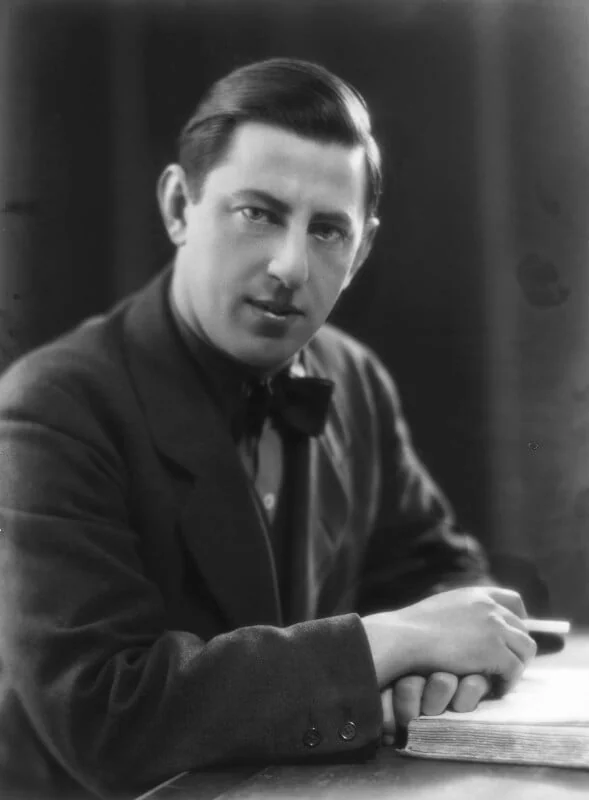
In this biography
Quick facts
- Born
- 1889
- Died
- 1946
- Birthplace
- Kensington, London
- Country
- United Kingdom
- Nationality
- Not independently established
- Known for
- War landscapes, surrealist transformations and the modern-art group Unit One
Why this life matters
He joined a close attachment to British places with modernist experiments that made familiar landscape unsettling.
Timeline
Key moments
Slade study
Formal training preceded a varied landscape practice.
Official war artist
Damaged terrain became a central subject.
Unit One
Nash helped organise a modernist exhibition group.
Totes Meer
Aircraft wreckage became the basis for a transformed landscape.
A landscape painter learns a wider language
Paul Nash was born in Kensington, London, in 1889 and grew up with a strong attachment to the countryside. He studied at the Slade School of Fine Art in 1910–11. Landscape became a lasting thread through his work, but it was never limited to a neutral record of scenery. Trees, hills and coastlines could organise a personal encounter with a place. His later practice extended through painting, illustration, photography, writing and applied design, giving that encounter several different material forms.
War changes the work of landscape
Nash served in the First World War and became an official war artist in 1917. His images of damaged terrain made the landscape carry a history of human violence. Buildings and trees were not simply backgrounds to soldiers’ actions; the altered ground itself became a subject. After the war he lived and worked in southern England, including the Sussex coast and the area around Rye. The return to familiar places did not erase the experience of destruction. It supplied other settings in which landscape could remain charged with tension and memory.
Modernism, objects and artistic organisation
During the 1930s Nash helped found Unit One and participated in the International Surrealist Exhibition in London. His photographs and found-object interests offered ways to discover unexpected relations within things already present in the world. Design and writing connected him with magazines, books and a wider public. These activities show a modernist who worked through networks and commissions as well as through personal images. An imaginative transformation did not necessarily begin with a wholly invented subject; it could begin by seeing a familiar object differently.
Oxford, aircraft and a final landscape
Nash moved to Oxford in 1939 and again served as an official war artist. Totes Meer, made in 1940–41, transformed wrecked aircraft into the suggestion of a dead sea. His garden also became a resource for later sunflower imagery, extending his attention from machines back to living forms. He died in 1946. The career’s continuity lies in this movement between observed place and a constructed visual relationship. War painting, Surrealism and the quiet study of a garden were different conditions of that sustained practice, rather than unrelated episodes.
Quick answers
Frequently asked questions about Paul Nash
- Was Nash only a war painter?
- No. His practice included landscapes, photography, writing, illustration and design.
- What was Unit One?
- It was the modern-art group Nash helped found in 1933, connecting painters, sculptors and related artistic discussion.
Keep exploring
Lives connected to this story
- John Brack
Compare another painter who used a strongly organised image to reshape a familiar modern environment.
- John Nash
Compare his brother’s separate career and firsthand wartime painting.
Sources and further reading
Explore the evidence
These references support the biography and offer further reading. Official records, first-person accounts and independent reporting provide different perspectives; image records document attribution and licensing.
- 1. UK Government Art CollectionPaul Nash
- 2. National Galleries of ScotlandPaul Nash
- 3. Tate Shop, Tate institutional artwork accountTotes Meer (Dead Sea)
The accessible official source is Tate’s artwork-shop account. A blocked main collection page is not counted as read.
- 4. Recherches anglaises et nord-américaines, scholarly essayA Questionable Pleasure: Ruins in Piper and Nash
- 5. Oxfordshire Blue Plaques BoardPaul Nash
- 6. Tate ArchiveTate Archive photographic collection list
The archive inventory was inspected; the original Clark letter and photograph were not.