In this biography
Quick facts
- Born
- 6 January 1923
- Birthplace
- Waimate, South Canterbury, New Zealand
- Country
- New Zealand
- Nationality
- Not independently established
- Known for
- The 1972 Labour victory, Pacific nuclear protest and a more active foreign policy
- Born
- 6 January 1923, Waimate
- Mayor of Kaiapoi
- 1953–January 1958
- Labour leader
- 1965–1974
- Prime minister
- 1972–1974
Why this life matters
His premiership made national autonomy visible through concrete decisions, while economic pressures and an early death limited its duration.
Timeline
Key moments
Born in Waimate
Grew up in a working-class household.
Kaiapoi mayor
Won local office before entering Parliament.
Lyttelton MP
Entered Parliament at the general election.
Labour leader
Succeeded Arnold Nordmeyer.
General election victory
Became prime minister after twelve years of National government.
Mururoa protest
Sent naval vessels to demonstrate against atmospheric nuclear testing.
New Zealand Day
The new national holiday was first observed.
Death
Died in Wellington while in office.
Practical work and local politics
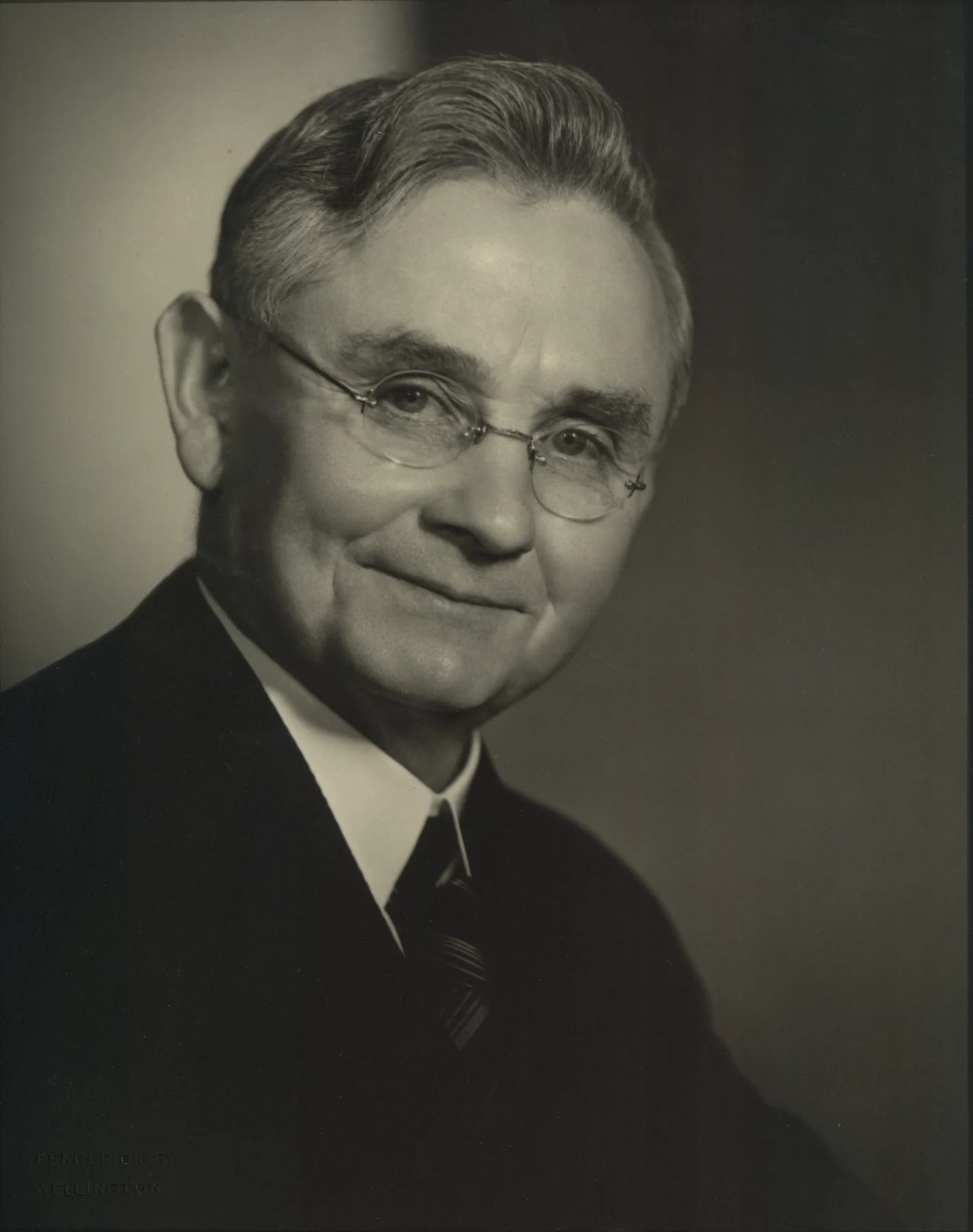
Norman Eric Kirk was born at Waimate on 6 January 1923. His working-class upbringing and limited formal education did not prevent extensive reading or technical study. He gained an engine driver’s certificate, worked in industrial employment and built his family’s house in Kaiapoi with concrete blocks he made himself. Local government offered his first sustained elected responsibility. He became mayor in 1953 and continued until January 1958, after winning the Lyttelton parliamentary seat in November 1957. This sequence matters: practical local experience preceded, and briefly overlapped with, his national political career.
Sources for this section: [1]
A long route to the 1972 victory
Kirk advanced through Labour organisation, becoming party president and then parliamentary leader in December 1965 after a challenge to Arnold Nordmeyer. He did not win government immediately. Defeats in 1966 and 1969 forced Labour to improve its organisation and broaden its appeal. At the November 1972 election, its promise of change ended twelve years of National government. Kirk’s physical presence and direct language made him a distinctive public figure, but electoral victory also depended on colleagues, candidates and campaign work. He inherited the task of turning an opposition’s programme into coordinated decisions across a new ministry.
Diplomacy and litigation were separate instruments
The government also brought proceedings against France at the International Court of Justice. A New Zealand letter circulated at the United Nations on 24 July 1973 reported Otago’s observation of the 21 July test and renewed the government’s protest. The letter states New Zealand’s legal position; it is not itself a court finding. In December 1974, after Kirk’s death, the Court treated France’s undertaking to end atmospheric testing as legally significant and found the claim no longer had an object. The naval mission and litigation contributed to a sustained dispute, but neither instantly ended every form of French testing.
Domestic decisions and a changing public identity
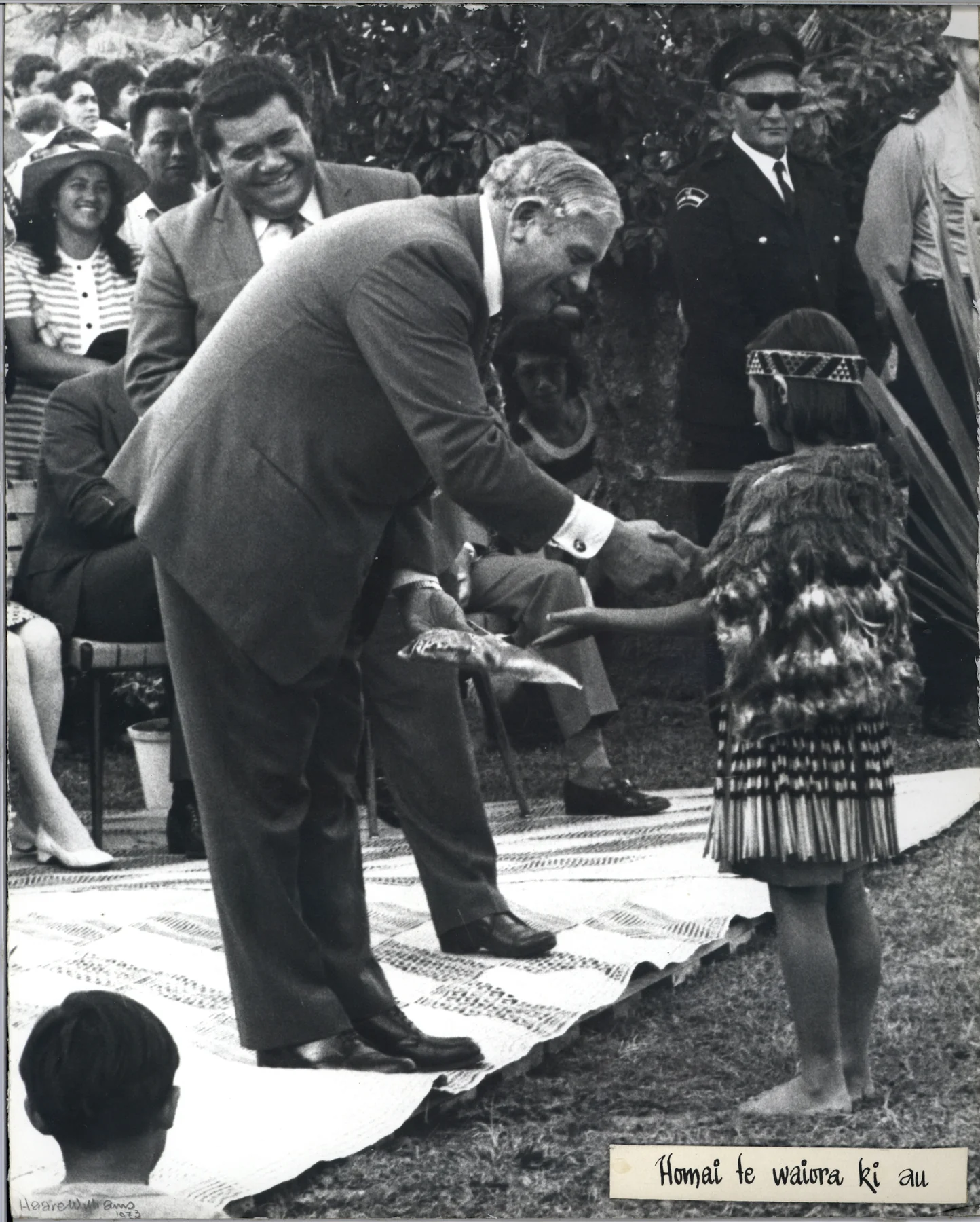
Kirk’s ministry established the Shipping Corporation, created an authors’ fund and restructured broadcasting. It also prevented the proposed 1973 Springbok rugby tour amid objections to South Africa’s racially selected team. These decisions connected public institutions, culture and foreign relations. At Waitangi, the government promoted a national holiday observed in 1974 as New Zealand Day. Māori demands over land and the Treaty remained substantial political questions. Matiu Rata was an important minister in that work. The Treaty of Waitangi Act came in 1975 under Kirk’s successor, Bill Rowling; describing it as Kirk’s personal enactment would place a later law before his death. Kirk announced in February 1973 that the following year’s observance would be a national holiday. The change gave the day a broader official role while also providing a more prominent setting for debate about the Treaty.
A brief administration faced growing pressures
The first oil price shock and worsening economic conditions constrained the government’s ambitions. Kirk’s own declining health further shortened his ability to direct the programme. He died in Wellington on 31 August 1974, aged 51, leaving colleagues to carry it forward. His career can be assessed through identifiable work rather than the image of a leader who solved every problem: local government, a rebuilt electoral challenge, institutions created in office, and diplomatic choices with operational consequences. Mururoa remains an especially clear example because its political purpose, ships, supporting personnel and separate legal proceedings can all be traced in contemporary records.
Quick answers
Frequently asked questions about Norman Kirk
- Did Kirk’s frigates stop all French nuclear tests in 1973?
- No. Atmospheric tests continued, and France later moved to underground testing. The court’s 1974 judgment concerned its undertaking to end atmospheric tests.
- Who was the Cabinet minister aboard the frigates?
- Fraser Colman accompanied the mission. He was distinct from Prime Minister Kirk, who directed policy from New Zealand.
- Did Kirk enact the Treaty of Waitangi Act 1975?
- He died in August 1974. Matiu Rata’s work and the subsequent Rowling government belong in the account of the 1975 Act.
Keep exploring
Lives connected to this story
- Peter Fraser
Compare an earlier Labour prime minister’s approach to international institutions.
- David Lange
Follow the later development of New Zealand’s nuclear-free policy.
Sources and further reading
Explore the evidence
These references support the biography and offer further reading. Official records, first-person accounts and independent reporting provide different perspectives; image records document attribution and licensing.
- 1. Manatū Taonga — Ministry for Culture and HeritageKirk, Norman Eric — Michael Bassett, DNZB
Treaty chronology: The short NZHistory profile groups the 1975 Act with the administration’s innovations. Kirk died in August 1974; the draft distinguishes Rata and the succeeding Rowling government.
- 2. Manatū Taonga — Ministry for Culture and HeritageNorman Kirk — Gavin McLean
- 3. National Museum of the Royal New Zealand NavyFrench nuclear testing at Mururoa
- 4. Manatū Taonga — Ministry for Culture and HeritageHMNZS Otago sails for Mururoa test zone, 28 June 1973
- 5. United Nations General AssemblyA/9107: New Zealand letter of 24 July 1973 and note of protest of 22 July
- 6. International Court of JusticeNuclear Tests (New Zealand v. France), judgment, 20 December 1974
Mururoa outcome: Naval protest, diplomatic allegations, provisional measures and the 1974 judgment remain distinct. The ICJ judgment controls legal scope over compressed retrospective narratives.
- 7. Manatū Taonga — Ministry for Culture and HeritageWaitangi Day in the 1970s