In this biography
Quick facts
- Born
- 20 October 1873
- Died
- 1 September 1951
- Birthplace
- Near Chatsworth, Ontario
- Country
- Canada
- Nationality
- Canadian
- Known for
- Manitoba’s suffrage campaign and the 1929 Persons Case
- Early profession
- Rural schoolteacher in Manitoba
- Alberta office
- Liberal MLA for Edmonton, 1921–1926
- Constitutional campaign
- One of the Famous Five in the Persons Case
- Later service
- CBC Board of Governors, 1936–1942
Why this life matters
McClung connected popular fiction, temperance organizing, electoral politics and constitutional litigation. Her gains for women coexist with exclusionary ideas that require critical scrutiny.
Timeline
Key moments
A prairie education
Born in Ontario, moves to Manitoba in 1880, trains as a teacher and marries Wesley McClung in 1896.
A successful first novel
Sowing Seeds in Danny builds a readership for her depictions of prairie life.
Campaigns for the provincial vote
Helps found the Political Equality League; performs in the 1914 mock parliament before Manitoba’s 1916 suffrage law.
An Alberta legislator
Serves as a Liberal MLA, campaigning for social measures, prohibition and eugenic legislation.
The Persons Case succeeds
The Privy Council rules that women may qualify for appointment to Canada’s Senate.
Broadcasting, international work and final books
Serves on the CBC board and attends the League of Nations in 1938; dies in British Columbia in 1951.
A teacher formed by prairie settlement
Born near Chatsworth, Ontario, on 20 October 1873, Nellie Mooney moved with her family to Manitoba in 1880. Farm work, limited schooling and the expectations placed on daughters shaped her early life. She trained at Winnipeg Normal School and began teaching in rural Manitoba in 1890, entering one of the few professions readily available to women.
Annie McClung, a temperance and suffrage organizer whose family took her in as a boarder, became an important influence. Nellie married Annie’s son Wesley, a pharmacist, in 1896. Their household eventually included five children. Wesley supported her ambitions, while access to paid domestic help also made her unusually extensive public career possible.
Popular writing carried a religious reform message
Sowing Seeds in Danny, published in 1908, made McClung a successful novelist before she became a nationally prominent politician. Rural communities, women’s work and the unequal burdens of family life supplied material for her fiction. Writing provided income, readers and a public identity that she could bring to the platform.
Her Methodism linked personal conduct to social responsibility. Temperance, better working conditions and women’s political participation belonged to the same programme. In Times Like These, published in 1915, collected arguments sharpened through her speaking campaigns. Its humour could challenge male authority, but its maternal feminism also treated women’s presumed domestic virtues as grounds for public influence.
The Manitoba campaign depended on an organized movement
After moving to Winnipeg in 1911, McClung helped establish the Political Equality League in 1912. Journalists, labour supporters, Icelandic suffragists and other reformers contributed to a movement that predated her arrival. Petitions, meetings and newspaper work made its case across the province.
On 28 January 1914 she played a premier in the league’s mock parliament at the Walker Theatre, reversing the usual roles by dismissing men’s demand for votes. Manitoba enacted provincial suffrage on 28 January 1916 under T. C. Norris. The law retained age and British-subject qualifications and excluded treaty-status First Nations people. McClung had by then moved to Edmonton, where she continued campaigning.
Alberta office exposed the limits of her equality
Elected a Liberal MLA for Edmonton in 1921, McClung sat in opposition to the United Farmers of Alberta government. She supported public-health services, libraries and women’s legal protections, and worked across party lines with Irene Parlby. Her strong commitment to prohibition contributed to her defeat in 1926.
Her programme also included eugenic legislation aimed at restricting the reproduction of people labelled mentally unfit. That position treated some people’s bodily autonomy as expendable in pursuit of an imagined healthier society. It is a serious contradiction within her equality campaigns. Her legislative term ended before Alberta enacted its 1928 Sexual Sterilization Act; supporting eugenic ideas and voting on that later act are different claims.
The Persons Case concerned eligibility for the Senate
In 1927 McClung joined Henrietta Muir Edwards, Emily Murphy, Louise McKinney and Irene Parlby in seeking a constitutional reference. They asked whether women were included among the qualified persons who could be summoned to the Senate under section 24 of the British North America Act. The Supreme Court answered negatively in April 1928.
The Judicial Committee of the Privy Council reversed that answer on 18 October 1929. The victory removed a sex barrier to Senate eligibility; it did not grant women every legal right or appoint the five campaigners themselves. Cairine Wilson became the first woman senator in February 1930. McClung never served in the Senate.
Later public service and a contested reputation
McClung continued writing after electoral politics. She became the first woman on the CBC Board of Governors, serving from 1936 to 1942, and represented Canada at the League of Nations in 1938. In British Columbia she opposed the wartime internment of Japanese Canadians. Her final autobiography, The Stream Runs Fast, appeared in 1945; she died on 1 September 1951.
These commitments do not erase her eugenics or assumptions about British settler leadership. They show why a whole-life account needs both achievement and contradiction. Her durable significance lies in making women’s political authority harder to dismiss, through storytelling, organized campaigning and legal challenge, while also revealing the unequal reach of reform in her generation.
Quick answers
Frequently asked questions about Nellie McClung
- Did Nellie McClung win the vote for every Canadian woman in 1916?
- No. Manitoba’s 1916 law concerned provincial elections and retained other eligibility restrictions. Federal legislation followed in 1918, with exclusions continuing.
- Was Nellie McClung a senator?
- No. She helped win the case that opened Senate eligibility to women. Cairine Wilson became the first woman appointed in 1930.
- Did McClung support eugenics?
- Yes. Her support for eugenic legislation restricting the reproduction of people labelled mentally unfit is documented and is a significant limitation of her equality programme.
- Was she an author as well as a politician?
- Yes. Her novels, essays and autobiographies supplied a readership and a platform for reform; Sowing Seeds in Danny appeared in 1908 and In Times Like These in 1915.
Keep exploring
Lives connected to this story
- Agnes Macphail
Compare the suffrage campaign with the parliamentary career of Canada’s first elected woman MP.
- Kim Campbell
Follow a later stage in women’s access to federal executive office.
Sources and further reading
Explore the evidence
These references support the biography and offer further reading. Official records, first-person accounts and independent reporting provide different perspectives; image records document attribution and licensing.
- 1. University of Toronto and Université Laval / Dictionary of Canadian BiographyMichelle Swann and Veronica Strong-Boag: Mooney, Helen Letitia (McClung), published 2009, revised 2015
The complete biographical narrative was read in retrieved HTML. It supplies the account of eugenics, the end of her legislative service, later Japanese Canadian advocacy and the precise life dates.
- 2. Manitoba Historical SocietyMemorable Manitobans: Nellie McClung, revised 30 March 2025
- 3. Government of Manitoba / Historic Resources BranchNellie McClung: provincial commemorative plaque
- 4. Manitoba Historical Society / TimeLinksNellie McClung: writing, maternal feminism and nativism
- 5. University of Toronto LibrariesEugenics and Coerced Sterilization: Alberta’s 1928 act and later amendments
- 6. Manitoba Historical Society / Manitoba HistoryHarry and Mildred Gutkin: Give us our due! How Manitoba Women Won the Vote, Autumn 1996
- 7. Archives of Manitoba18 January 2016: the signed suffrage act and remaining eligibility restrictions
- 8. Judicial Committee of the Privy Council / BAILIIEdwards and others v Attorney General of Canada, [1929] UKPC 86, judgment of 18 October 1929
The judgment text was read through the search service’s indexed result; a later direct open was blocked. Its narrow Senate question controls over shorthand claims that women lacked all legal personhood.
- 9. Senate of CanadaWhy the Persons Case Matters, 18 October 2016
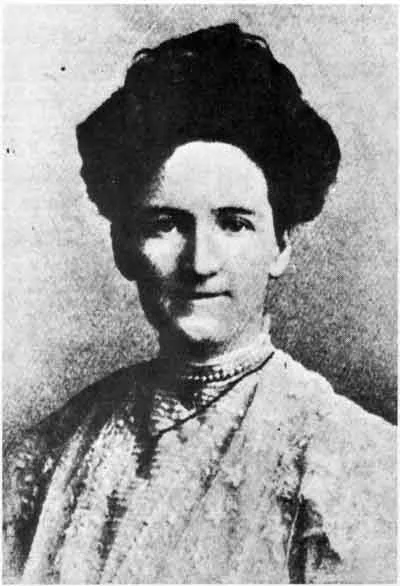
- 10. Manitoba Historical Society / Archives of ManitobaTimeLinks image reference 0042: Nellie McClung, from Trail Magazine, December 1910; negative 7694
The archive reference identifies actual publication in Trail Magazine, December 1910. The image uses the earlier complete Commons 400 × 586 frame of the same portrait; the publisher’s 268 × 300 image is a tighter crop. The photographer is unidentified.
- 11. Wikimedia Commons / Archives of ManitobaNellie McClung 1910: file history, including the complete 400 by 586 revision