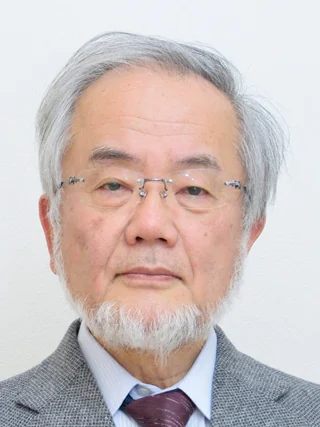
In this biography
Quick facts
- Born
- 1924
- Died
- 1994
- Birthplace
- Okazaki, Aichi, Japan
- Country
- Japan
- Nationality
- Not independently established
- Known for
- Neutral molecular evolution
- Research home
- National Institute of Genetics
- Doctorate
- Wisconsin, 1956
- Later collaborator
- Tomoko Ohta
Why this life matters
He made chance and selection explicit parts of quantitative genetic models.
Timeline
Key moments
NIG
Joined the institute.
Molecular argument
Published the neutral-theory paper.
Recognition
Received the Darwin Medal.
Plants, mathematics and genetics
Kimura graduated from Kyoto’s botany programme in 1947, joined NIG in 1949 and completed his Wisconsin doctorate in 1956.
His 1962 paper developed fixation probabilities using a continuous stochastic approximation.
The problem was not whether chance exists, but how to represent it without collapsing probability into certainty.
A molecular-scale argument
The 1968 abstract argues that inferred nucleotide substitution rates were so high that many changes must be neutral.
NIG’s account places this argument alongside his earlier mathematical treatment of drift.
This does not mean every mutation is neutral or that natural selection has no role. The level and assumptions of the claim matter.
Debate and a colleague’s distinct contribution
Ohta describes daily scientific arguments with Kimura and the development of her nearly neutral theory. She distinguished mutations with weak effects from those treated as completely neutral.
Her contribution should retain her name rather than disappear into a single-founder narrative. The debate connected models with changing molecular evidence.
Sources for this section: [3]
Later research leadership
Kimura headed NIG’s population-genetics department, became a professor after restructuring and later professor emeritus. He received the Darwin Medal in 1992 and died in 1994.
His equations remain important as conditional models. They are not a licence to assign a fixed evolutionary story to an individual human trait.
Sources for this section: [2]
Quick answers
Frequently asked questions about Motoo Kimura
- Did neutral mean every mutation has no effect?
- No. That would extend a conditional molecular argument beyond its scope.
- Is one new copy likely to fix?
- In the stated neutral diploid case, its probability is 1/(2N).
Keep exploring
Lives connected to this story
- Charles Darwin
Compare different questions and scales in evolutionary explanation.
- Harriet Brooks
Try a distinct problem about conditional inference from measurements.
Sources and further reading
Explore the evidence
These references support the biography and offer further reading. Official records, first-person accounts and independent reporting provide different perspectives; image records document attribution and licensing.
- 1. National Institute of Genetics, centenary history, JapaneseAbout Dr. Motoo Kimura
- 2. National Institute of Genetics, Japanese centenary timelineMotoo Kimura 1924–1994: life chronology
Japanese chronology read directly; English descriptions are our translation. No rights in its photographs are inferred.
- 3. National Institute of Genetics, participant interviewTomoko Ohta: Pioneers of Genetics, Vol.1
- 4. United States National Academy of SciencesMotoo Kimura: membership record
- 5. Motoo Kimura, Genetics 47, 1962, 713–719; original reprint hosted at UBCOn the Probability of Fixation of Mutant Genes in a Population
- 6. Motoo Kimura, Nature 217, 624–626, 17 February 1968Evolutionary Rate at the Molecular Level
Only the public abstract and metadata were read; the guide’s equations come from selected 1962 original pages.