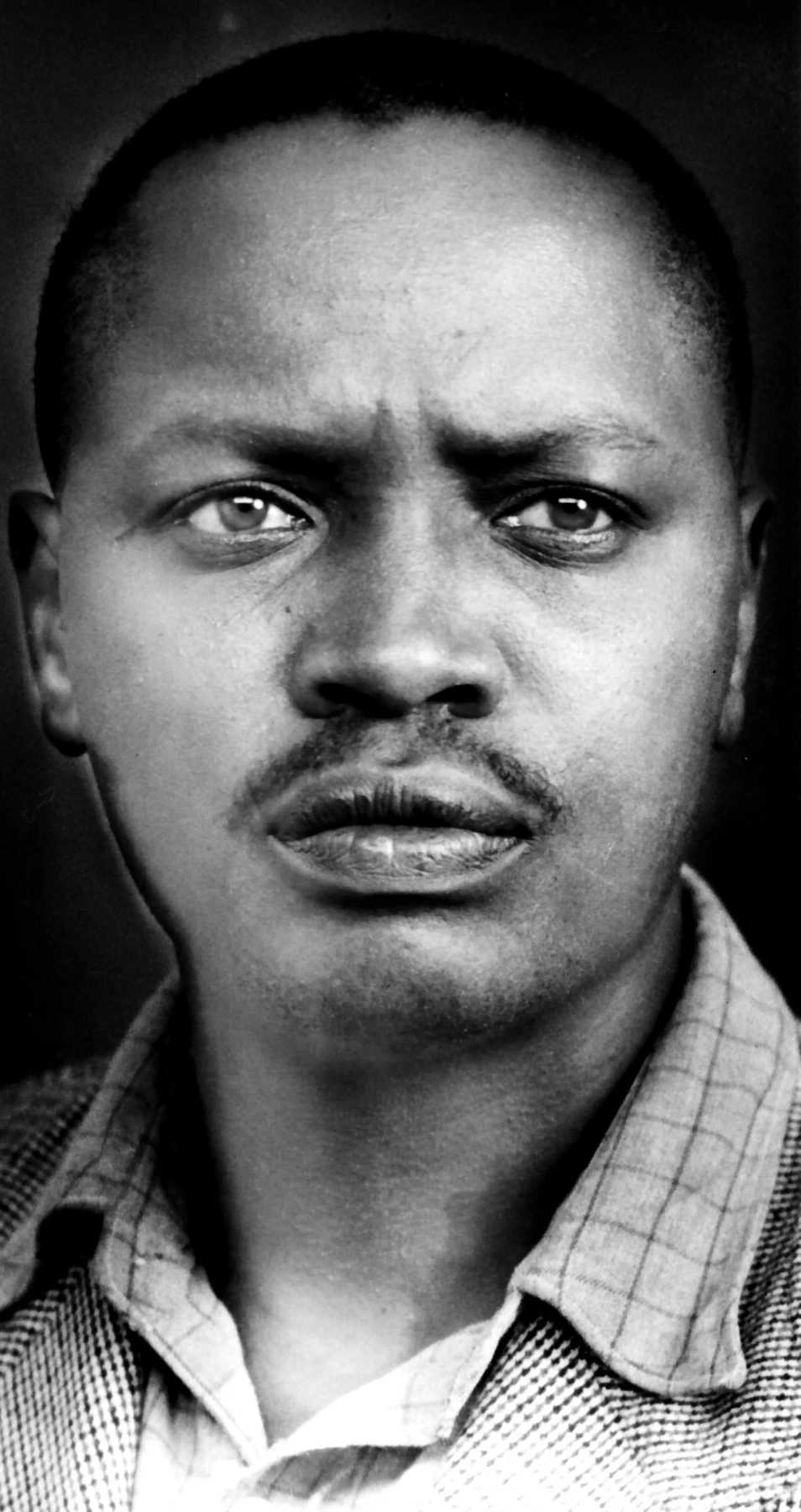
In this biography
Quick facts
- Born
- 1922
- Died
- August 1992
- Birthplace
- Matili, Bungoma, Kenya
- Country
- Kenya
- Nationality
- Not independently established
- Known for
- Regional representation
- Early profession
- Teaching
Why this life matters
His changing alliances reveal a durable argument about regional power, cabinet discipline and opposition unity.
Timeline
Key moments
Public mobilisation
A dated rally record places him among colleagues in opposition.
Education and a first electoral mandate
Muliro trained through Catholic educational institutions, studied in Cape Town and returned to teaching in Kenya. The Yearbook does not establish completion of the master’s degree for which he enrolled.
In 1957 he won Nyanza North in the first elections for African members of the Legislative Council. Hornsby places the university-educated teacher among the emerging regional representatives.
The electoral mandate gave a route into colonial institutions without erasing the restrictions governing African representation.
Regionalism and government
He became a leading KADU figure alongside Ronald Ngala and Daniel arap Moi, serving as its vice-president and entering the ministerial administration before independence. When KADU dissolved in 1964, he joined KANU.
The later retrospective associates him with regional government, agricultural boards and cooperative administration.
Regionalism was a political answer to how power would be distributed, not simply an expression of personal rivalry. Moving into a governing party did not necessarily settle that argument or eliminate conflicts with its leadership.
Cabinet discipline and parliamentary scrutiny
He held cooperative and public-works responsibilities. His support for adopting the parliamentary inquiry report on Josiah Mwangi Kariuki’s death put him at odds with the government in 1975, and he was dismissed from the cabinet.
The episode exposes a tension between collective ministerial responsibility and parliamentary investigation. Supporting scrutiny could carry an executive cost even for an experienced colleague. Precise claims about how one vote changed the final arithmetic require the division record rather than retrospective admiration alone.
Sources for this section: [3]
Return to opposition
After later electoral reversals, Muliro became a central FORD figure as multiparty politics returned. He was discussed as a possible compromise leader before his death in August 1992.
A Presidential Library caption places him with Martin Shikuku and James Orengo at a Kamukunji rally the previous month.
His final political importance lay partly in mediation between competing ambitions. A possible compromise is not evidence of an election that never took place, but it explains why his absence mattered to a movement already confronting difficult choices about unity.
Quick answers
Frequently asked questions about Masinde Muliro
- Why does the distribution of power matter in this career?
- Regional government remained part of the political argument behind his changing alliances.
Keep exploring
Lives connected to this story
- Ronald Ngala
Read a colleague’s approach to the distribution of political power.
- John Keen
Compare another career crossing cabinet discipline and opposition politics.
Sources and further reading
Explore the evidence
These references support the biography and offer further reading. Official records, first-person accounts and independent reporting provide different perspectives; image records document attribution and licensing.
- 1. Kenya Yearbook Editorial Board / Presidential LibraryMasinde Muliro: selected Yearbook biography
The article and mirrored Cabinets chapter are one account. Its precise ministerial-start chronology conflicts with the retrospective, so that precision is withheld. No whole volume read.
- 2. Charles Hornsby,2022A Political History of the Bukusu Luhya,1957–2022
Selected pages of 38, not a whole history. Deterministic counterfactual claims about electoral victory are not adopted; loss of seat chronology differs from short obituaries.
- 3. The Standard,2019 retrospectiveMuliro: opposition and cabinet career
Evaluative retrospective; exact disputed ministerial start withheld. Allegations of electoral rigging and vote-swung-outcome claims not treated as proven findings.
- 4. Presidential Library and Museum, KenyaFORD members at Kamukunji rally,7 July1992
Caption record only; no adopted image or image copyright permission inferred.