
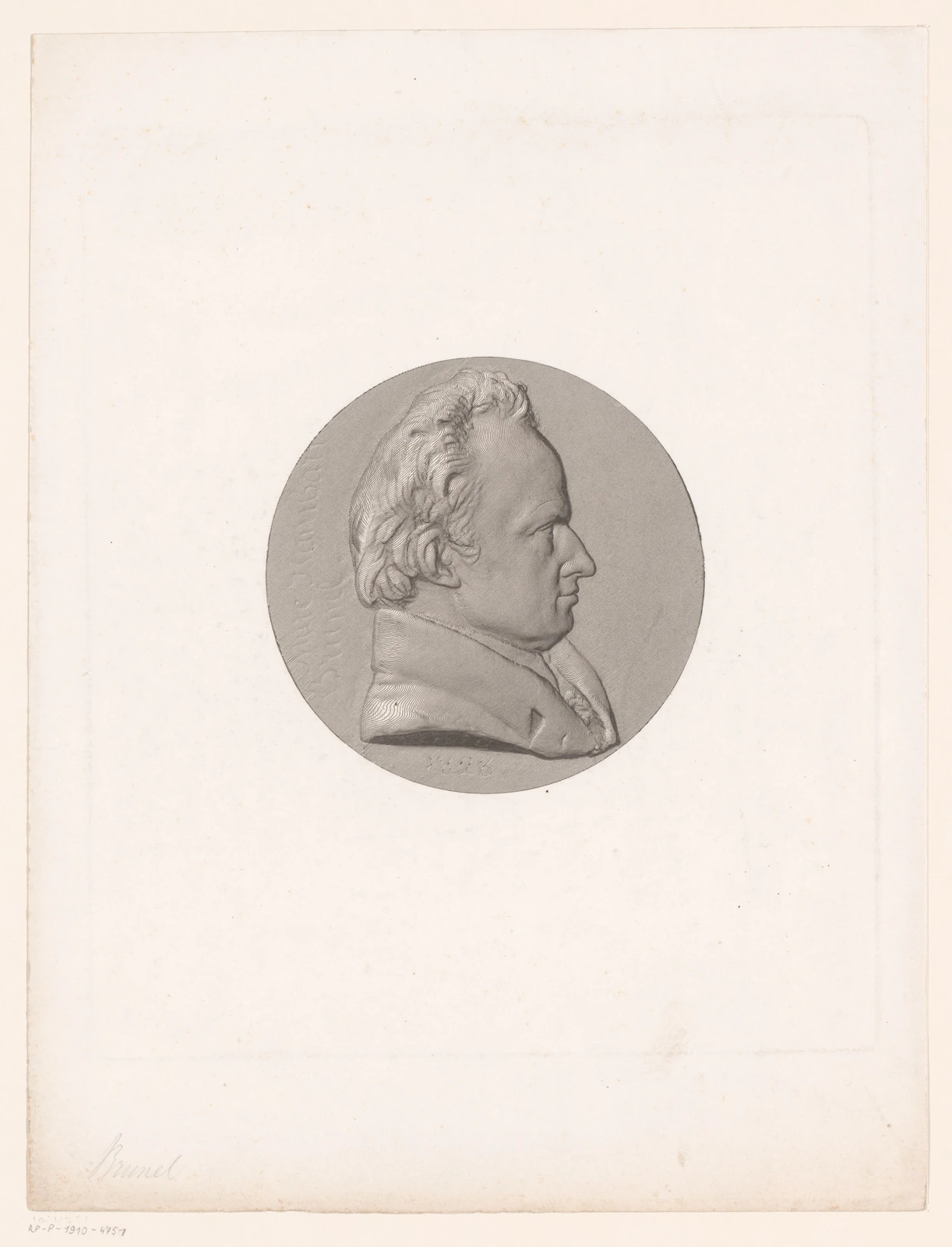
In this biography
Quick facts
- Born
- 1769
- Died
- 1849
- Birthplace
- Hacqueville, Normandy, France
- Country
- United Kingdom
- Nationality
- French
- Known for
- Portsmouth block-making machinery and the rectangular tunnelling shield
- Known for
- Portsmouth block-making machinery and the rectangular tunnelling shield
- Field
- Engineer of production machinery and the Thames Tunnel
Why this life matters
Marc Isambard Brunel developed machinery for naval supplies before leading the difficult construction of London’s Thames Tunnel.
Timeline
Key moments
Moves to Britain
Brunel brings his mechanical production plans to Britain.
Tunnel construction begins
Excavation starts beneath the Thames.
Pedestrian opening
The tunnel opens after substantial interruptions.
A career across three countries
Born in Normandy in 1769, Marc Isambard Brunel served in the French navy before the Revolution redirected his life. He left for the United States in 1793 and worked on engineering projects in and around New York. In 1799 he moved to Britain, where naval manufacturing offered a market for his mechanical ideas. That year he married Sophia Kingdom. His career developed through changes of country and patronage, rather than through a single uninterrupted appointment.
Making ships’ blocks by machine
Brunel proposed mechanised production of the pulley blocks used in sailing ships. The Portsmouth installation brought multiple operations into a coordinated manufacturing system. Henry Maudslay built machinery for the project, making the achievement a collaboration between design and precision manufacture. Brunel also pursued other products, including military boots. The collapse of that market after the Napoleonic Wars contributed to financial distress and his imprisonment for debt in 1821.
The tunnel and the family name
Brunel’s rectangular shield supported the ground while miners advanced beneath the Thames and bricklayers installed a permanent lining behind them. Construction began in 1825 but flooding and financial interruptions repeatedly checked progress. The tunnel finally opened to pedestrians in 1843. His son Isambard Kingdom Brunel assisted on the undertaking and later became famous for separate railway and ship projects. Marc died in 1849. Keeping the two careers distinct restores both the father’s manufacturing work and the long, collective effort behind the tunnel.
Quick answers
Frequently asked questions about Marc Isambard Brunel
- What is Marc Isambard Brunel known for?
- Marc Isambard Brunel developed machinery for naval supplies before leading the difficult construction of London’s Thames Tunnel.
Keep exploring
Lives connected to this story
- Henry Maudslay
Maudslay built machines for Brunel’s Portsmouth block-making system.
- Isambard Kingdom Brunel
Marc’s son assisted on the Thames Tunnel before his separate railway and ship career.
- William Cubitt
Explore William Cubitt’s work: moving from millwrighting and agricultural machinery to canals, railways and supervision of the Great Exhibition building.
- Samuel Bentham
Explore Samuel Bentham’s work: organising naval works and helping introduce mechanised block-making at Portsmouth through collaboration with Brunel and Maudslay.
Sources and further reading
Explore the evidence
These references support the biography and offer further reading. Official records, first-person accounts and independent reporting provide different perspectives; image records document attribution and licensing.
- 1. Science Museum GroupMarc Isambard Brunel
Institutional or professional historical account used for the named life events, projects and contributions discussed in this article.
- 2. Brunel MuseumMarc Isambard Brunel (1769–1849)
Institutional or professional historical account used for the named life events, projects and contributions discussed in this article.
- 3. American Society of Civil EngineersThames Tunnel
Institutional or professional historical account used for the named life events, projects and contributions discussed in this article.