In this biography
Quick facts
- Born
- 2 October 1904
- Died
- 11 January 1966
- Birthplace
- Mughalsarai, United Provinces, British India (now Uttar Pradesh, India)
- Country
- India
- Nationality
- Indian
- Known for
- India’s premiership in 1964–1966, the 1965 war and the Tashkent Declaration
- Prime minister
- 9 June 1964–11 January 1966
- Shastri
- Qualification awarded by Kashi Vidyapeeth, adopted as his name
- Railway resignation
- 1956, accepting ministerial responsibility after fatal accidents
- Tashkent Declaration
- Signed with Ayub Khan on 10 January 1966
Why this life matters
His short premiership joined questions of military resolve, food production and parliamentary responsibility. The railway resignation and Tashkent diplomacy illuminate different kinds of accountability, beyond his reputation for personal modesty.
Timeline
Key moments
Born in Mughalsarai
Born on 2 October in the Varanasi region.
Joined the independence movement
Left school during non-cooperation, studied at Kashi Vidyapeeth and underwent repeated imprisonment.
Entered provincial government
Worked in Uttar Pradesh administration before moving to national responsibilities.
Railway minister
Served in the Union cabinet and resigned in 1956 after fatal railway accidents.
Succeeded Nehru
Became prime minister on 9 June, after Gulzarilal Nanda’s interim tenure.
War and food pressure
Led the government during conflict with Pakistan and emphasised agricultural production.
Tashkent and death
Signed the declaration on 10 January and died in Tashkent on 11 January.
Nationalist education accompanied the independence struggle
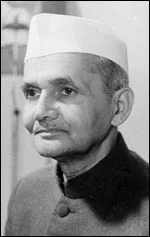
Lal Bahadur Shastri was born on 2 October 1904 at Mughalsarai, then in British India’s United Provinces. His father died when he was very young, and his upbringing involved financial hardship and schooling in the Varanasi region. The official account connects his political formation with Mahatma Gandhi’s call for non-cooperation and his decision to leave conventional schooling.
He subsequently studied at Kashi Vidyapeeth, a nationalist educational institution. Shastri was the qualification awarded there and became the name by which he was known. His involvement in anti-colonial campaigns brought repeated imprisonment. These experiences place his later administrative reputation within a long political movement, rather than making personal simplicity alone the explanation for his rise.
Organisation and administration preceded national leadership
Shastri entered provincial government in 1946 and worked in Uttar Pradesh before moving to New Delhi in 1951. His subsequent Union responsibilities included railways, transport and communications, commerce and industry, and home affairs. He also undertook Congress organisational work, including election preparation. He therefore arrived at the premiership with extensive experience despite lacking Nehru’s international visibility.
The distinction is important in a parliamentary system. Leadership can emerge through cabinet work, legislative relationships and party negotiation rather than a direct national election for prime minister. Shastri’s understated style did not mean that he had been outside power. It developed alongside the routines and political compromises of a governing party.
The railway resignation became an example of ministerial responsibility
Fatal railway accidents in 1956 led Shastri to offer his resignation as railway minister. After the Ariyalur disaster that November, his resignation was accepted. The PMO account records Nehru’s explanation that acceptance recognised constitutional propriety, rather than establishing that Shastri personally caused the accident. That distinction is central to why the episode became so frequently remembered.
A minister can accept political responsibility for a department without being the operator responsible for a particular technical failure. Resignation also does not repair infrastructure or compensate bereaved families by itself. Its significance lies in the public relationship between office and accountability, which must accompany investigation and corrective administration if it is to do more than produce a moral example.
The premiership faced military and agricultural pressures together
After Nehru’s death and Gulzarilal Nanda’s interim administration, Shastri became prime minister on 9 June 1964. Food shortages and low agricultural productivity were pressing concerns. The slogan Jai Jawan, Jai Kisan connected the soldier and the farmer, drawing attention to the relationship between national defence and the everyday capacity to feed the population.
In 1965 conflict with Pakistan escalated from Kashmir to fighting across the international border. Shastri’s government authorised a wider response, including the Punjab front. The fighting involved service commanders and forces on both sides, while international pressure helped bring a ceasefire. Agricultural transformation likewise depended on ministers, scientists, irrigation, procurement and farmers; neither outcome can be assigned to one slogan or one leader.
Tashkent diplomacy was the final act of a short premiership
Shastri and Pakistan’s president Ayub Khan met at Tashkent in the Soviet Union in January 1966, with Alexei Kosygin helping the negotiations. Their declaration of 10 January committed the countries to withdrawal to positions held before 5 August 1965 and to restoring normal relations. It did not resolve their competing positions on Kashmir. That limited result explains both its practical value and the dissatisfaction it generated.
Shastri died in Tashkent on 11 January 1966. The contemporary US historical record describes a heart attack; this profile does not turn later suspicions into an established alternative cause. Nanda again became interim prime minister before Indira Gandhi’s succession. Shastri’s legacy rests in a combination of administrative experience, wartime decisions and willingness to negotiate, with his early death limiting the programme he could carry through.
Quick answers
Frequently asked questions about Lal Bahadur Shastri
- Was Shastri a hereditary surname?
- The name by which he became known came from the qualification awarded at Kashi Vidyapeeth. It should not be used as a shortcut to infer his caste identity.
- Did his railway resignation establish personal fault?
- No. It exemplified ministerial responsibility; the PMO account records Nehru’s distinction between constitutional propriety and personal causation.
- Did Tashkent settle Kashmir?
- No. It arranged withdrawal and steps towards normal relations while leaving the parties’ differing positions unresolved.
- Where did Shastri die?
- In Tashkent, then in the Uzbek Soviet Socialist Republic of the USSR and now the capital of Uzbekistan, on 11 January 1966.
Keep exploring
Lives connected to this story
- Jawaharlal Nehru
Understand the governing tradition and succession that preceded Shastri’s premiership.
- Indira Gandhi
Follow the prime minister who succeeded him after the interim administration.
- Mahatma Gandhi
Explore the non-cooperation movement that shaped his political formation.
Sources and further reading
Explore the evidence
These references support the biography and offer further reading. Official records, first-person accounts and independent reporting provide different perspectives; image records document attribution and licensing.
- 1. Prime Minister’s Office, IndiaLal Bahadur Shastri: former prime minister profile
The official commemorative profile supplies early-life and cabinet chronology; its praise is not treated as independent assessment.
- 2. The Indian ExpressShastri: railway resignation, food production and Tashkent, 2 October 2023
- 3. Vice President’s Secretariat / Press Information Bureau, IndiaHamid Ansari’s 1965-war seminar address, 1 September 2015
- 4. Office of the Historian, US Department of StateThe India–Pakistan War of 1965: historical overview
- 5. Ministry of External Affairs, IndiaTashkent Declaration, 10 January 1966: treaty text
MEA’s indexed final treaty passages were read; full PDF requests returned 403. The operative withdrawal and normalisation terms are corroborated by FRUS document 278 and UN mission records.
- 6. Office of the Historian, US Department of StateFRUS 1964–1968, volume XXV, document 278: Tashkent and Shastri’s death
- 7. Prime Minister’s Office, IndiaOfficial former-prime-minister photograph of Lal Bahadur Shastri
- 8. Prime Minister’s Office, IndiaCopyright policy: accurate reproduction with source acknowledgment