
The short answer
The 1965 war grew from a disputed regional order into fighting across the international border. A useful account follows escalation, military choices and international pressure separately, then asks what the ceasefire actually achieved. National commemorations illuminate memory, but do not by themselves establish a neutral balance sheet of the war.
Chronology
A timeline of the turning points
Border clashes
Fighting in the Rann of Kutch preceded the larger conflict.
Kashmir escalation
Pakistan’s infiltration effort and subsequent fighting increased the scale of conflict.
War widened
Pakistan attacked in the Chhamb sector; India crossed the international border towards Lahore on 6 September.
Security Council demand
Resolution 211 demanded a ceasefire and subsequent withdrawal.
Ceasefire and withdrawal
UN observers and further agreements helped turn a cessation of fighting into a supervised withdrawal.
The war grew from an unresolved territorial dispute
Partition and the first India–Pakistan war had left Kashmir divided by a ceasefire line, with competing claims and no agreed political settlement. The 1965 conflict was therefore a renewed war over an existing dispute. It was not the 1971 war that led to Bangladesh’s independence, nor the later Kargil conflict, even though all three involved the same two states.
Clashes in the Rann of Kutch earlier in 1965 formed part of a wider deterioration. The August escalation centred on Kashmir. Setting the chronology out in stages prevents 6 September, a central date in Pakistan’s commemorative calendar, from being mistaken for the beginning of every action that produced the war.
Infiltration was intended to change the situation in Kashmir
Pakistan’s Operation Gibraltar sent infiltrators into Indian-administered Kashmir in August. India’s later official account describes an effort to encourage an uprising, disrupt administration and alter the negotiating position without provoking a general war. That is a national retrospective, but its basic sequence is consistent with the US historical overview and contemporary diplomatic discussion of the infiltration.
The strategy did not deliver a quick political change. Fighting intensified, and Pakistan launched a direct attack in the Chhamb–Akhnoor area on 1 September. The mechanism of escalation matters: an operation intended to remain limited could create military pressure and political incentives that encouraged the other side to open a different front.
Crossing the international border expanded the war
On 6 September Indian forces crossed the international border towards Lahore; another offensive developed in the Sialkot sector. The move shifted fighting beyond the Kashmir theatre. India’s stated purpose included relieving pressure in Jammu and Kashmir. It also increased the geographical scope of the war and the danger to communities and infrastructure on both sides.
A US telegram from Rawalpindi that day records Ayub Khan and Zulfikar Ali Bhutto demanding support from their American ally. It also records the American representative challenging Pakistan’s earlier use of force and US-supplied equipment. The document is evidence of a diplomatic encounter and its participants’ positions, not an impartial operational report of every battlefield claim.
Arms relationships did not guarantee an ally’s intervention
Pakistan had developed security relationships with the United States, while India had received Western assistance after the 1962 war with China and also maintained Soviet ties. These overlapping relationships complicated expectations. American equipment was being used in a conflict Washington did not want to fund or widen, making existing alliances a source of pressure as well as assistance.
The United States and Britain suspended arms supplies to both countries. The US historical account judges that this affected Pakistan especially because of its dependence and relative military position. The Soviet Union supported a diplomatic opening. Cold War rivalry did not simply produce two opposing patrons fighting through local clients; outside powers could share an interest in stopping escalation.
A ceasefire demand required implementation and supervision
Security Council Resolution 211, adopted on 20 September, demanded a ceasefire and withdrawal to positions held before 5 August. Its wording separated an immediate end to firing from later movement of troops. A resolution could establish the required framework without instantly ensuring compliance along every part of a long and active front.
UNIPOM observed the international border outside Jammu and Kashmir, where UNMOGIP operated. Observers reported breaches and sought local cooperation; they did not possess an army with power to compel both states. Subsequent arrangements and supervision were needed before the withdrawal was reported complete on 25 February 1966. That practical work belongs alongside the more familiar political announcements.
Stopping the fighting did not settle the political conflict
Neither state secured a settlement of Kashmir through the war. The January 1966 Tashkent Declaration addressed withdrawal and normal relations while recording that the parties retained their positions. Its limited objectives should be distinguished from claims that a ceasefire proved a complete military victory or settled the region’s sovereignty.
The war can be analysed through several questions: whether an operation met its objectives, whether territory was held, what lives and resources were lost, and whether the political dispute changed. Those measures need not produce the same answer. National memories emphasise resolve and sacrifice; a historical explanation also needs to show how the attempted use of force ended in renewed negotiation.
Continue the chronology
Related history guides
Biography context
Explore Jammu and Kashmir; Punjab, India and Pakistan; Rann of Kutch through connected lives
Connected biographies
The Indian prime minister during the war
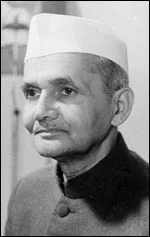
1904–1966
Lal Bahadur Shastri
Freedom-movement organiser and prime ministerLal Bahadur Shastri moved from the independence movement and Congress organisation into state and Union government. As prime minister after Jawaharlal Nehru, he confronted food insecurity and the 1965 India–Pakistan war before signing the Tashkent Declaration shortly before his death.Read biographyQuick answers
Common questions
- Did the whole conflict begin on 6 September?
- No. Earlier border clashes and the August escalation in Kashmir preceded India’s 6 September offensive across the international border.
- Was this the war that created Bangladesh?
- No. Bangladesh’s independence resulted from the 1971 conflict, a separate war with different immediate circumstances.
- Did Resolution 211 itself enforce the ceasefire?
- It established the Security Council’s demand. The parties’ orders, observers, local cooperation and later withdrawal arrangements were necessary for implementation.
- Did the war resolve Kashmir?
- No. Fighting stopped and withdrawal followed, while the underlying political dispute persisted.
Primary and institutional sources
How this history was checked
The Security Council text and UN mission passages establish obligations and supervision. FRUS document 187 records a dated US–Pakistan encounter; the 2015 Indian address is a commemorative national interpretation. Selected passages, rather than every military annex or operational claim, were read. The illustration is an undated official Shastri portrait. This article was reviewed on 23 October 2026.
- Office of the Historian, US Department of StateThe India–Pakistan War of 1965: historical overview
- Associated PressA history of India–Pakistan armed conflict, May 2025
- Vice President’s Secretariat / Press Information Bureau, IndiaHamid Ansari’s 1965-war seminar address, 1 September 2015
- US Department of StateFRUS document 187: telegram from Rawalpindi, 6 September 1965
- The Indian ExpressThe 6 September 1965 offensive towards Lahore, 6 September 2023
- United NationsSecurity Council Resolution 211, 20 September 1965
- United Nations PeacekeepingUNIPOM: ceasefire supervision, withdrawal and termination
- United Nations PeacekeepingUNIPOM mandate and geographical scope
- Office of the Historian, US Department of StateFRUS 1964–1968, volume XXV, document 278: Tashkent and Shastri’s death
- Prime Minister’s Office, IndiaOfficial former-prime-minister photograph of Lal Bahadur Shastri
- Prime Minister’s Office, IndiaLal Bahadur Shastri: former prime minister profile
- Prime Minister’s Office, IndiaCopyright policy: accurate reproduction with source acknowledgment