
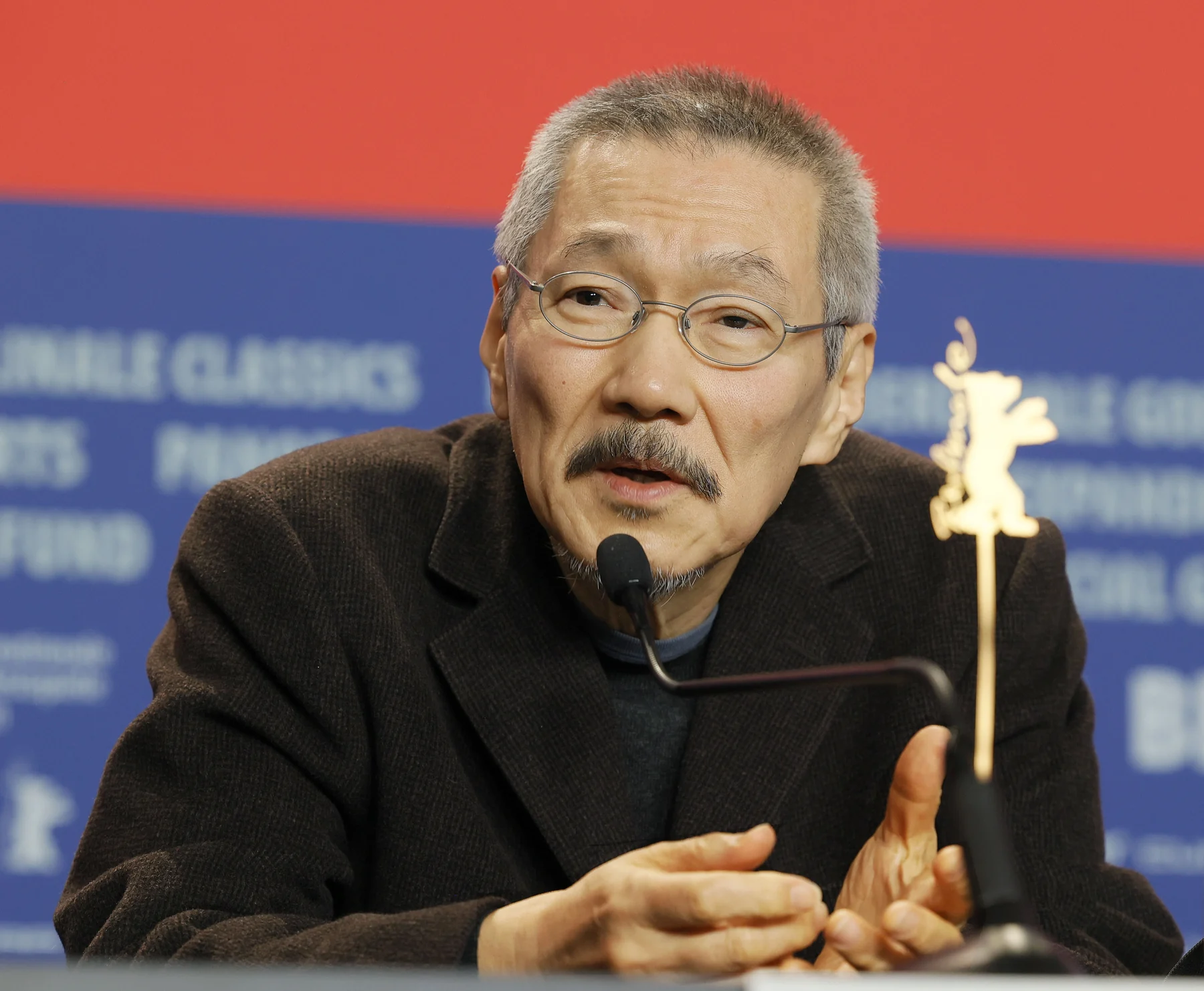
In this biography
Quick facts
- Born
- 1960
- Birthplace
- South Korea
- Country
- South Korea
- Nationality
- Not independently established
- Known for
- The Day a Pig Fell into the Well, Our Sunhi and Right Now, Wrong Then
- Birth year
- 1960
- Feature debut
- The Day a Pig Fell into the Well, 1996
- Locarno directing prize
- Our Sunhi, 2013
- Golden Leopard
- Right Now, Wrong Then, 2015
Why this life matters
His repeated encounters and alternative arrangements of events opened a precise cinematic inquiry into what people know about one another, with sustained recognition at international festivals.
Timeline
Key moments
Birth
Born in South Korea.
Study abroad
Studied film and art in the United States.
Feature debut
Released The Day a Pig Fell into the Well.
Production shift
Like You Know It All marked work through his own production company.
Locarno directing prize
Received the directing award for Our Sunhi.
Golden Leopard
Right Now, Wrong Then received Locarno’s main festival prize.
Archive retrospective
The Korean Film Archive organised a May–June retrospective.
Study abroad preceded the feature career
Hong was born in 1960. After an interrupted period at Chung-Ang University, he studied in the United States, including at the California College of Arts and Crafts and the School of the Art Institute of Chicago. KOFIC and the Korean Film Archive describe a period abroad followed by a return to Korea and television work. That preparation joined art-school study to practical production experience. His eventual feature debut came with The Day a Pig Fell into the Well in 1996, establishing a career beyond the television work of the preceding period.
The films developed an interest in encounters and perspective
The Korean Film Archive identifies repeated situations and alternative perspectives as important features of Hong’s work. Meetings, talk and the uncertain interpretation of another person can carry a film’s structure. Right Now, Wrong Then provides a particularly clear case in the accompanying director’s statement: Hong describes two independent worlds whose differences remain open to comparison. This places the viewer in a position different from that of the characters. The work asks audiences to attend to small variations without assuming that every repeated scene supplies a single final explanation.
Production arrangements changed with the working method
KOFIC identifies Like You Know It All in 2009 as a stage in Hong’s work through his own production company. By the time of Right Now, Wrong Then, the credits named Jeonwonsa as the production company and Kim Kyoung-hee as producer. Hong wrote and directed, while Park Hong-yeol handled cinematography and Hahm Sung-won editing. The compact, director-centred working practice nevertheless involved separately credited collaborators. Those roles were part of the practical structure through which a particular approach to writing and performance reached the screen.
Writing developed around actors, places and the shooting day
In the press-kit interview, Hong describes beginning with actors and locations rather than a completely fixed advance screenplay. He wrote material in the morning, after which actors learned and rehearsed the lines before filming. He also stresses the precision of those lines and the need for experienced performers. The process could remain open while the dialogue itself demanded exact work. His account connects flexibility in preparation with control during the scene, explaining why a casual-looking conversation need not have been freely improvised by its performers.
Sources for this section: [3]
Locarno recognition involved different award categories
Our Sunhi brought Hong the directing prize at Locarno in 2013. Two years later Right Now, Wrong Then won the Golden Leopard, while Jung Jae-young received the actor award. The Ecumenical Jury separately gave the film a commendation, explaining its decision through an ethical reading of the encounters. These were distinct recognitions by different bodies. The film also entered the 2015 New York Film Festival programme, where its two-part arrangement was introduced to another audience through the festival’s synopsis and presentation.
A retrospective placed the films within a longer career
The Korean Film Archive organised a Hong Sangsoo retrospective from May into June 2026. Its introduction situates the work within a long career and records earlier teaching at the Korea National University of Arts and Konkuk University. By that point the feature debut of 1996 belonged to a substantial history of production, circulation and discussion. Hong’s own explanations of his working process remain valuable beside such institutional recognition, showing how an apparently modest situation can emerge from deliberate choices about writing, performers, camera position and the viewer’s knowledge.
Quick answers
Frequently asked questions about Hong Sang-soo
- Did Hong win Locarno’s directing award for Right Now, Wrong Then?
- The 2015 film won the Golden Leopard. KOFIC records his directing prize for Our Sunhi in 2013.
- Were the conversations simply improvised?
- His press-kit interview describes morning writing and precisely learned dialogue, within a process responsive to actors and locations.
Keep exploring
Lives connected to this story
- Lee Chang-dong
Compare another Korean director whose films circulated through international festivals.
- Bong Joon-ho
Read a director with a different approach to genre and production.
- Im Kwon-taek
Compare a filmmaker from an earlier industrial generation.
Sources and further reading
Explore the evidence
These references support the biography and offer further reading. Official records, first-person accounts and independent reporting provide different perspectives; image records document attribution and licensing.
- 1. Korean Film CouncilHong Sang-soo: person record
Actual biography and selected dated filmography fields read:1960,US study,2009production shift,2013Locarno director prize and2015film/actor awards. Overview mistakenly dates debut1995; use original distributor1996andKOFA2026corroboration. Latest2021language,2016/2017film dates and personalised muse/partner speculation not adopted as current facts. No films watched.
- 2. Korean Film Archive,May–June2026 programmeHong Sangsoo Retrospective: Introduction
Actual original retrospective introduction, education/teaching biography and selected programme fields read.1996feature debut and2026retrospective dates. Source describes an upcoming6May2026release within an earlier announcement; no claim it is still upcoming inOctober or all listed films screened/viewed by us. No linked videos played.
- 3. Grasshopper Film; Hong Sangsoo statement and Cinema Scope interview by Francisco Ferreira/Julien GesterRight Now, Wrong Then: press kit
Actual10-page original PDF acquired/extracted. PDF1–4 metadata,synopsis,biography,statement,credits and selected interview PDF7–10/printed8–11 read. Two equal/independent worlds; audience/character knowledge; locations/actors,daily writing,precision rather than unrestricted improvisation. PDF text interleaves columns; selected questions/answers checked in sequence. Essay PDF5–6,whole film,stills and trailer not reviewed. No verbatim dialogue or source drawing reproduced.
- 4. Film at Lincoln Center,2015Right Now, Wrong Then: NYFF53 programme
Actual indexed programme body read:synopsis and restart with changed emotional dynamics;121minutes,Korean,2015NYFF53. Origin403 retained. Promotional critical praise is not our review; no film,trailer or entirefestivalprogramme viewed.
- 5. INTERFILM / Ecumenical JuryCommendation of the Ecumenical Jury, Locarno 2015
Actual complete short jury record read: own commendation to RightNowWrongThen, main ecumenical prize to Paradise, and separate festivalGoldenLeopard. Jury ethical interpretation is attributed, not sole definitive authorial message. No jury-deliberation transcript or film watched.