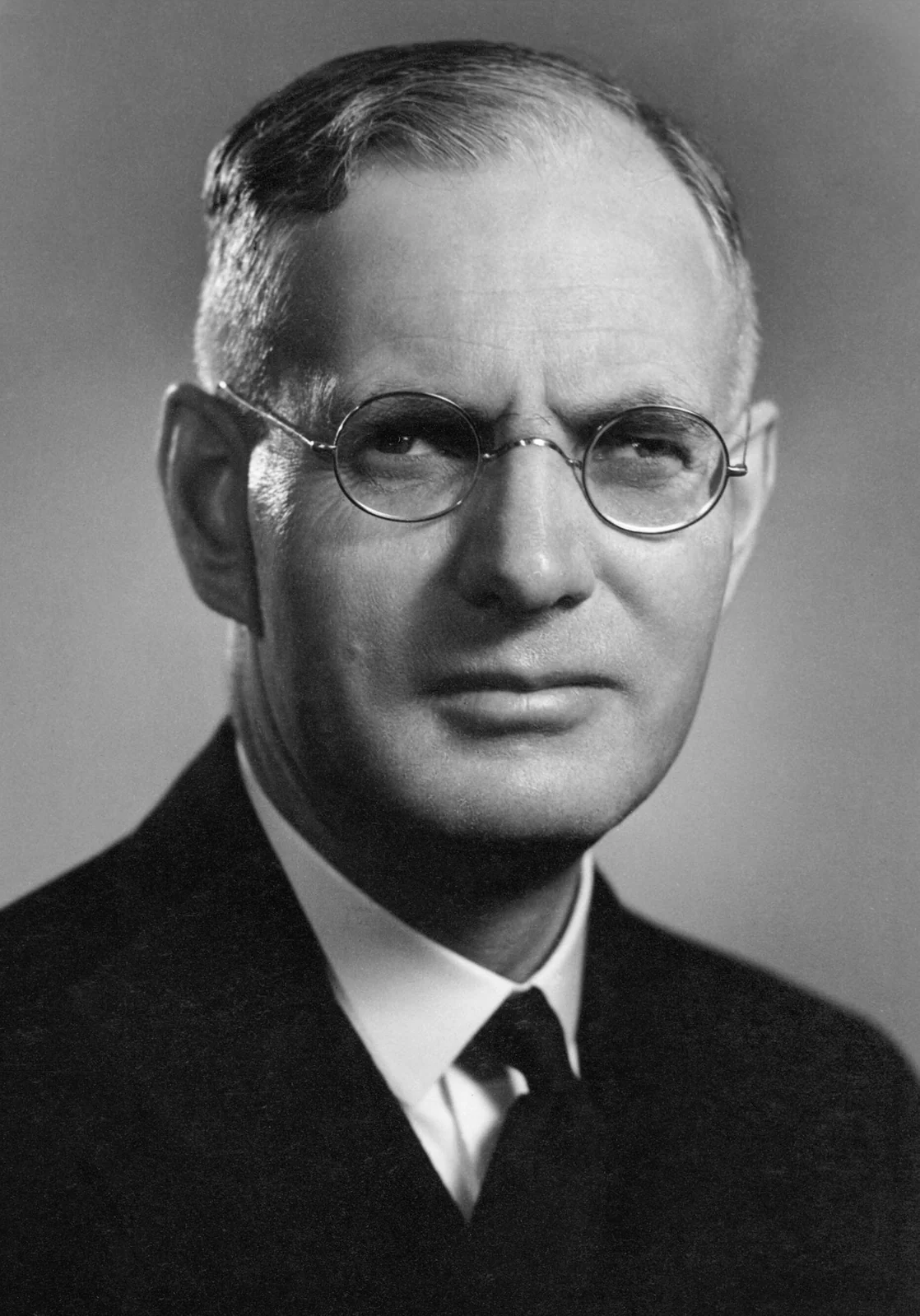
In this biography
Quick facts
- Born
- 1879
- Died
- 1939
- Birthplace
- Stanley, Tasmania
- Country
- Australia
- Nationality
- Not independently established
- Known for
- Moving from Tasmanian Labor leadership to the formation of the United Australia Party and federal government during the Depression
Why this life matters
Moving from Tasmanian Labor leadership to the formation of the United Australia Party and federal government during the Depression.
Timeline
Key moments
Birth
Joseph Lyons was born in Stanley, Tasmania.
Tasmanian premier
Led a Labor government.
Party realignment
Became leader of the new United Australia Party.
Prime minister
Took office on 6 January.
Death
Joseph Lyons died in 1939.
Teaching and Tasmanian politics formed his career
Joseph Aloysius Lyons was born in Stanley, Tasmania, in 1879. Family financial difficulties interrupted his schooling, and he worked at several jobs before returning to education with help from relatives. He trained as a teacher and entered Labor politics through local organisation. Election to Tasmania’s Parliament in 1909 began a long state career. His experience of education and public administration preceded his national prominence, giving him a different route to the prime ministership from politicians whose early careers were in law or business.
A Labor premier developed cross-party relationships
Lyons served in Tasmanian ministries and became premier in 1923. His minority government worked with support beyond Labor, while financial management and industrial development were persistent concerns. Labor lost office in 1928. The following year he entered federal Parliament for Wilmot and joined James Scullin’s government. His earlier experience gave him administrative standing, but also a policy outlook that increasingly conflicted with colleagues during the Depression. State-level cooperation did not eliminate party conflict; it helped shape the networks and reputation he later carried into national politics.
The Depression produced a decisive realignment
As acting treasurer, Lyons favoured orthodox financial management and opposed other responses advanced within Labor. He and James Fenton left the cabinet in 1931. Lyons then broke with the party and became leader of the new United Australia Party, which brought his followers together with Nationalists and citizens’ groups. John Latham accepted the deputy leadership. The new alignment was organised before the federal election, rather than appearing only when the votes were counted. It gave Lyons a political vehicle through which to seek office.
Prime ministership followed electoral victory
The UAP won the December 1931 election, and Lyons became prime minister on 6 January 1932. He led governments through most of the 1930s, later in coalition with the Country Party. Economic recovery, welfare proposals, party tensions and defence all formed part of the administration. He died in office in April 1939. His career is especially useful for understanding how personal leadership, policy disagreement and institutional reorganisation interact. A former Labor premier could lead a new conservative alignment, but the change required supporters, parliamentary manoeuvres, party organisation and an election, not simply a new label attached to one politician.
Quick answers
Frequently asked questions about Joseph Lyons
- Did Lyons begin as a conservative politician?
- No. He was a Labor politician and Tasmanian Labor premier before his 1931 break and UAP leadership.
- Did the UAP’s formation immediately make him prime minister?
- No. Parliamentary and electoral events followed; he took office on 6 January 1932.
Keep exploring
Lives connected to this story
- Robert Menzies
Explore Robert Menzies’s separate career as constitutional lawyer, liberal party organiser and two-time prime minister; compare the work and institutions in context.
- Ben Chifley
Explore Ben Chifley’s separate career as railway unionist, treasurer and prime minister; compare the work and institutions in context.
- John Curtin
Read John Curtin’s documented work and the related study: Australia’s 1942 Adoption Act: Why 1939 Also Matters.
- John McEwen
Read John McEwen’s documented work and the related study: The 1957 Australia–Japan Agreement: Treatment and Safeguards.
Sources and further reading
Explore the evidence
These references support the biography and offer further reading. Official records, first-person accounts and independent reporting provide different perspectives; image records document attribution and licensing.