
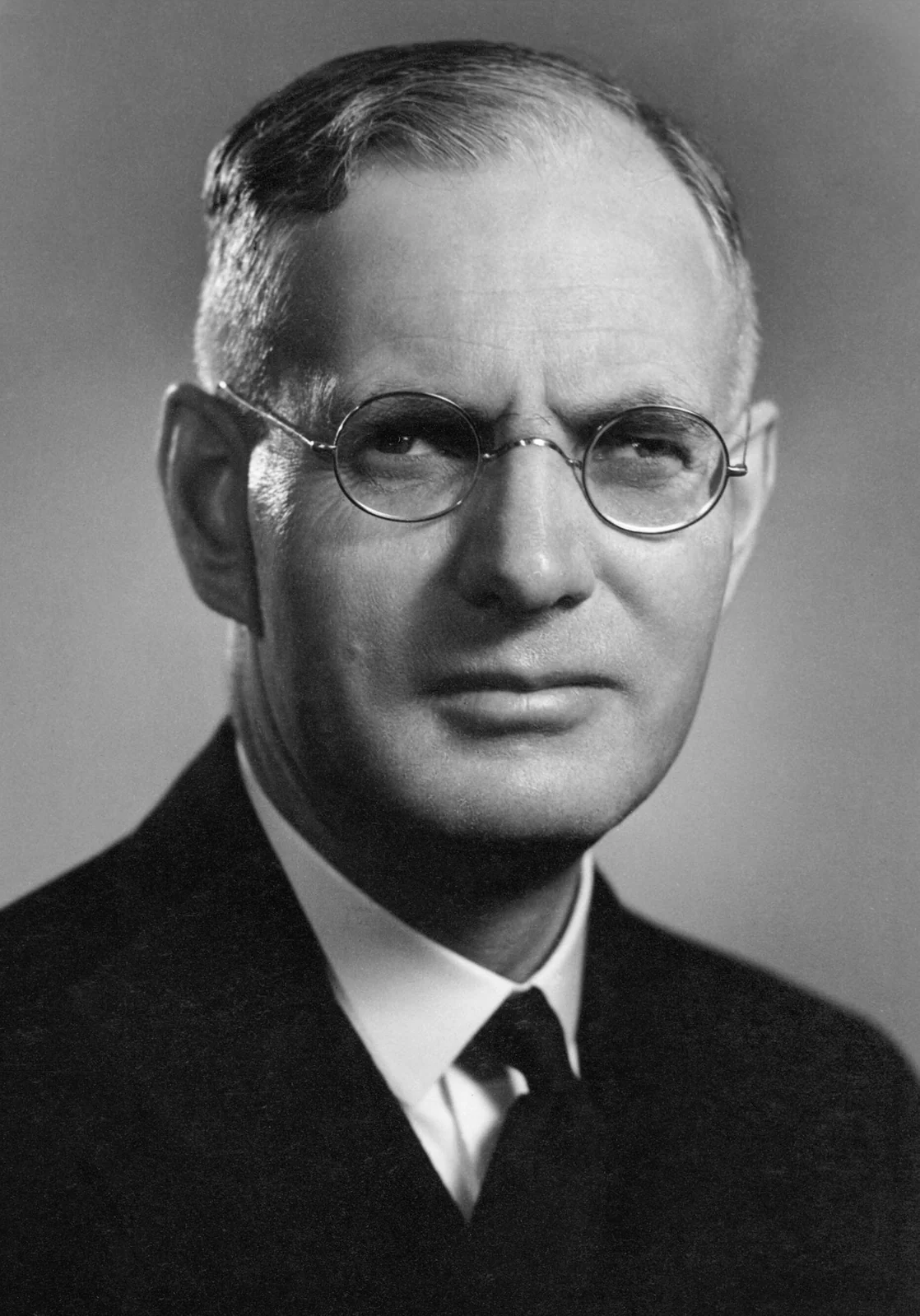
In this biography
Quick facts
- Born
- 1885
- Died
- 1945
- Birthplace
- Creswick, Victoria
- Country
- Australia
- Nationality
- Not independently established
- Known for
- Leading Australia’s wartime government and managing military, parliamentary and constitutional changes during the Pacific conflict
Why this life matters
Leading Australia’s wartime government and managing military, parliamentary and constitutional changes during the Pacific conflict.
Timeline
Key moments
Birth
John Curtin was born in Creswick, Victoria.
Prime minister
Took office in October.
Constitutional legislation
Parliament adopted provisions of the Statute of Westminster.
Election
Labor won a substantial victory.
Death
John Curtin died in 1945.
Work and reading shaped a labour activist
John Curtin was born in Creswick, Victoria, in 1885. His childhood included moves between towns and a short formal education before paid employment. Work in manufacturing and clerical jobs sat alongside extensive independent reading. He entered the labour movement through political organisation, debate and union activity. This background supplied his route into public life rather than an early professional or parliamentary career. His later leadership retained a connection with the movement’s concern about employment, wages and the responsibilities of government.
Journalism and Parliament created a national role
Curtin became a newspaper editor in Western Australia and developed his position in Labor politics. He entered federal Parliament for Fremantle in 1928, lost the seat in 1931 and returned in 1934. He became federal Labor leader in 1935. Those reversals are important to the career: his eventual prime ministership did not follow an uninterrupted progression through office. Party organisation and parliamentary support had to be maintained through the Depression and the deteriorating international situation. Journalism also gave him experience explaining policy to a wider public.
War demanded decisions about forces and authority
Curtin became prime minister in October 1941, shortly before the Pacific war transformed Australia’s immediate defence circumstances. His government redirected military priorities and negotiated with Britain and the United States. The return of Australian forces and the development of a closer American defence relationship belong to that setting. Parliament also adopted provisions of the Statute of Westminster in 1942. That constitutional measure addressed restrictions and doubts affecting Commonwealth legislation, including wartime measures. It was enacted through government and Parliament, rather than being a personal declaration that one leader had created sovereignty.
The government’s work continued beyond him
Labor won a substantial election victory in 1943, giving Curtin stronger parliamentary support. He remained prime minister through severe wartime pressures but died in July 1945 before the Pacific conflict ended. His significance includes political leadership, public communication and decisions about Australia’s strategic position. It also includes work carried out through colleagues, officials, military commands and parliamentary processes. The 1942 adoption legislation is a useful example: its wording and dates explain a concrete institutional change more accurately than a broad claim that every constitutional link with Britain ended at once.
Quick answers
Frequently asked questions about John Curtin
- Why does the 1942 Act mention 1939?
- Its adoption clause was made effective from 3 September 1939, although the adopting measure received assent in 1942.
- Did 1942 end every constitutional link with Britain?
- No. The measure was a major step, but the Constitution, state arrangements and later 1986 changes require separate treatment.
Keep exploring
Lives connected to this story
- Robert Menzies
Explore Robert Menzies’s separate career as constitutional lawyer, liberal party organiser and two-time prime minister; compare the work and institutions in context.
- Ben Chifley
Explore Ben Chifley’s separate career as railway unionist, treasurer and prime minister; compare the work and institutions in context.
- Joseph Lyons
Read Joseph Lyons’s documented work and the related study: The United Australia Party in 1931: Formation before Office.
- James Allen
Read James Allen’s documented work and the related study: New Zealand Naval Defence 1913: The Philomel Link.
Sources and further reading
Explore the evidence
These references support the biography and offer further reading. Official records, first-person accounts and independent reporting provide different perspectives; image records document attribution and licensing.
- 1. Geoffrey Serle / Australian Dictionary of BiographyJohn Curtin
- 2. National Museum of AustraliaJohn Curtin
- 3. National Archives of AustraliaJohn Curtin: before office
- 4. Museum of Australian Democracy / National ArchivesStatute of Westminster Adoption Act 1942: Documenting Democracy
- 5. Queensland Parliamentary CounselStatute of Westminster Adoption Act 1942(Commonwealth): revised reprint