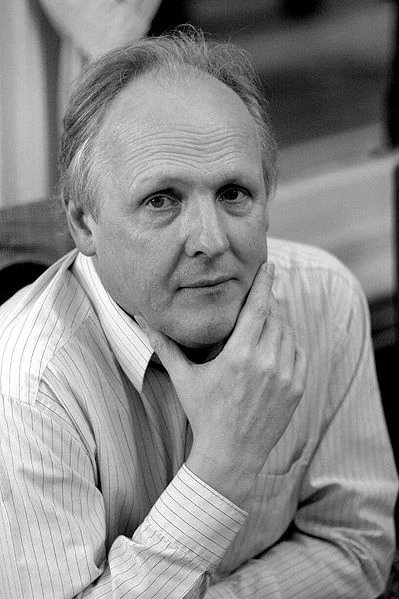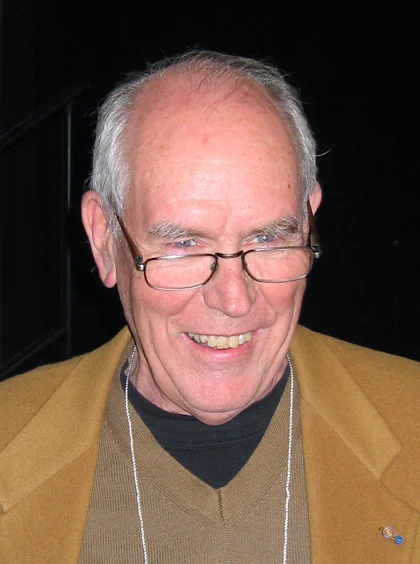
In this biography
Quick facts
- Born
- 1938
- Birthplace
- Hastings, Nebraska, United States
- Country
- United States
- Nationality
- Not independently established
- Known for
- Sketchpad and interactive computer graphics
- Doctorate
- MIT, 1963
- Research system
- Sketchpad
Why this life matters
His Sketchpad program let users edit drawings while preserving specified geometric relationships.
Timeline
Key moments
Sketchpad
His MIT dissertation described graphical interaction.
Graphics enterprise
He cofounded Evans & Sutherland.
Turing Award
ACM recognized his computer-graphics contributions.
Electrical engineering and an interactive thesis
Sutherland was born in Hastings, Nebraska, in 1938 and completed his MIT doctorate in electrical engineering in 1963. His thesis described Sketchpad, a system in which a person could work directly with displayed drawings.
The thesis used a light pen and represented relationships between drawing elements. It also described reusable subpictures. The subject was not merely how to display a finished picture but how to preserve relationships while a user changed one.
A drawing can carry a rule
Sketchpad’s constraints and reusable figures made a drawing behave differently from a static collection of marks. A change could have consequences elsewhere because the representation retained an intended relationship.
That distinction is useful when judging claims about graphical interfaces. Pointing at something is an interaction technique; recording what must stay connected or equal is part of the model underneath it.
Graphics institutions and collaborators
Sutherland led ARPA’s Information Processing Techniques Office, taught at Harvard and Utah, and cofounded Evans & Sutherland with David Evans in 1968. His selected publications include the 1968 head-mounted display and later joint research with Robert Sproull and Robert Schumacker on hidden surfaces.
These projects required different forms of collaboration: building an institution, constructing a display and analyzing an algorithm are not the same task. Sketchpad should be an entry into that broader working life, not its endpoint.
Sources for this section: [1]
Beyond the early graphics systems
His later career included Caltech, the consultancy Sutherland, Sproull and Associates, and Sun Microsystems. He received the 1988 Turing Award and the 1998 IEEE John von Neumann Medal.
The 2012 Kyoto Prize record documents this long trajectory. It is an award-time biography rather than a current employment directory. His continuing interest in computer engineering also makes it misleading to describe his career only as the invention of a modern screen interface.
Quick answers
Frequently asked questions about Ivan Sutherland
- Was Sketchpad just a painting program?
- No. The thesis describes constraints and reusable subpictures as well as the interaction used to create and modify drawings.
Keep exploring
Lives connected to this story
- Douglas Engelbart
Compare another programme of interactive computing.
- Adele Goldberg
Follow a later language and programming environment.
Sources and further reading
Explore the evidence
These references support the biography and offer further reading. Official records, first-person accounts and independent reporting provide different perspectives; image records document attribution and licensing.