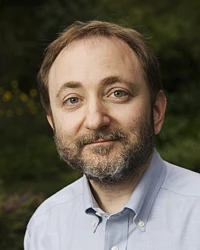
In this biography
Quick facts
- Born
- 1934
- Died
- 1994
- Birthplace
- Philadelphia, PA, USA
- Country
- United States
- Nationality
- Not independently established
- Known for
- The DNA provirus hypothesis and discovery of reverse transcriptase with Satoshi Mizutani
Why this life matters
His career offers a useful distinction between proposing an explanatory intermediate and producing an assay for a required reaction: the hypothesis guided a search, while the biochemical evidence changed what the proposal could securely claim.
Timeline
Key moments
Birth
Born in Philadelphia, PA, USA.
Nobel recognition
Received the Nobel Prize in Physiology or Medicine.
A sustained problem in tumour virology
Howard Temin was born in Philadelphia in 1934 and studied biology at Swarthmore. Research summers helped draw him towards experimental science before graduate study at Caltech. He changed his focus from embryology to animal virology in Renato Dulbecco's laboratory, working on Rous sarcoma virus with Harry Rubin. After completing his doctorate in 1959, Temin continued the experiments that led him to propose a persistent viral form within infected cells.
From a proposal to an enzyme
At Wisconsin, where he moved in 1960, Temin developed the DNA provirus hypothesis. It proposed a DNA intermediate for an RNA tumour virus, a claim that required a route for copying RNA into DNA. Satoshi Mizutani joined his laboratory in 1969. Their work identified an endogenous RNA-directed DNA polymerase activity in virus particles, reported in 1970 alongside David Baltimore's independent discovery. Temin's lecture records the reactions and controls used to distinguish the activity, rather than presenting acceptance as a matter of personal conviction alone.
Credit and the limits of a retrospective account
Temin shared the 1975 medicine prize with Baltimore and Dulbecco. His award autobiography describes a small early Wisconsin group, gradually enlarged through technicians, students and postdoctoral researchers. The lecture gives Mizutani a specific place in the enzyme experiments. Temin died in 1994. His career offers a useful distinction between proposing an explanatory intermediate and producing an assay for a required reaction: the hypothesis guided a search, while the biochemical evidence changed what the proposal could securely claim.
Quick answers
Frequently asked questions about Howard Temin
- What is Howard Temin known for?
- The DNA provirus hypothesis and discovery of reverse transcriptase with Satoshi Mizutani.
Keep exploring
Lives connected to this story
- David Baltimore
Compare the related experimental question and research career.
- Daniel Nathans
Compare the related experimental question and research career.
Sources and further reading
Explore the evidence
These references support the biography and offer further reading. Official records, first-person accounts and independent reporting provide different perspectives; image records document attribution and licensing.
- 1. Nobel Prize OutreachHoward Temin — Facts
Source scope: Birth/death and award metadata; short official work summary.
- 2. Nobel FoundationHoward Temin — Biographical
Source scope: Selected historical passages, as recorded in the research evidence ledger; not a full-document reading claim.
- 3. Nobel FoundationHoward Temin — Nobel lecture
Source scope: Selected historical passages, as recorded in the research evidence ledger; not a full-document reading claim.