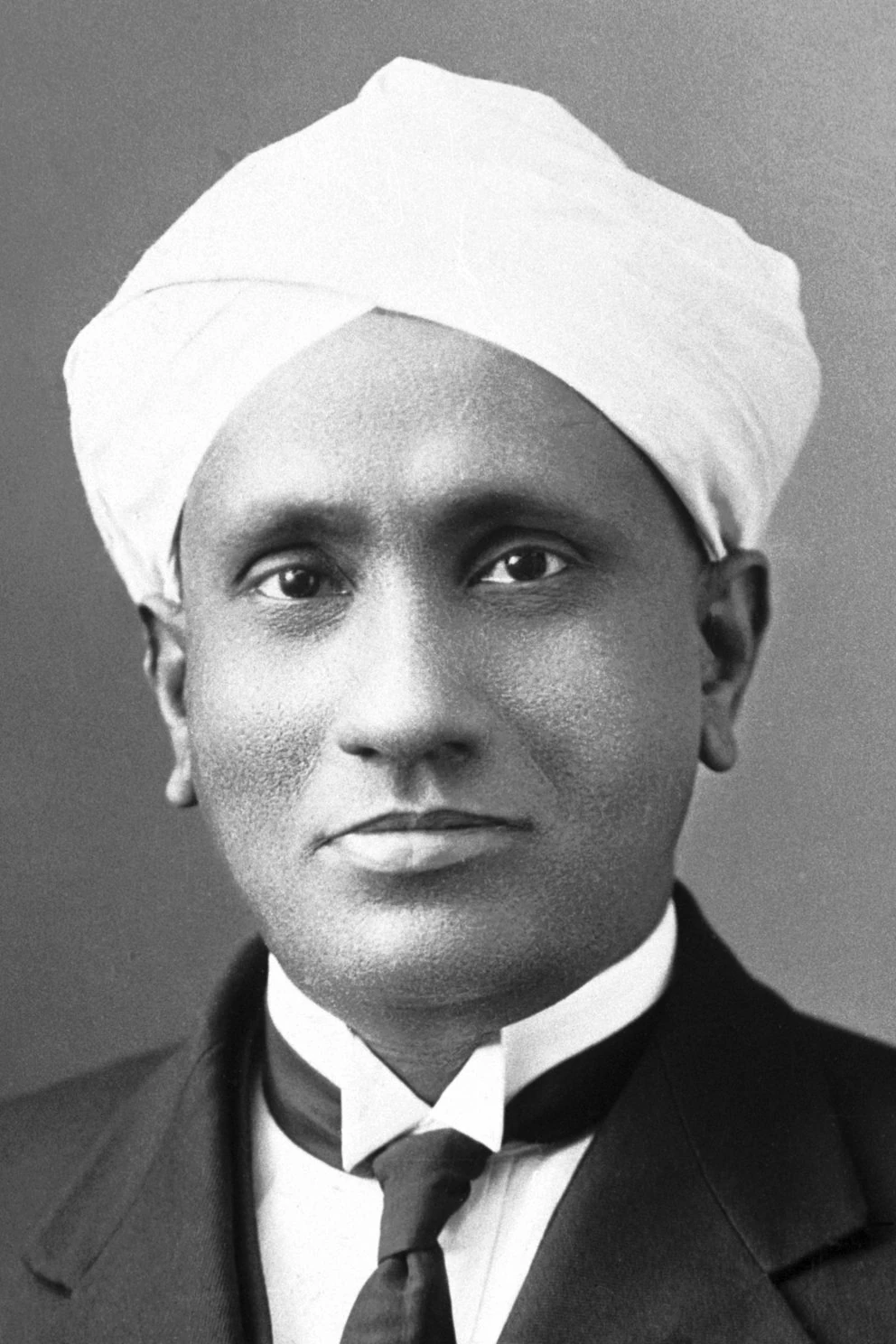
In this biography
Quick facts
- Born
- 23 January 1907
- Died
- 8 September 1981
- Birthplace
- Tokyo, Japan
- Country
- Japan
- Nationality
- Not independently established
- Known for
- The 1935 meson theory of nuclear forces and the 1949 Nobel Prize in Physics
- Original paper
- On the Interaction of Elementary Particles. I (1935)
- Nobel Prize
- Physics, 1949
- Research institute
- First director, RIFP, 1953–1970
- Public advocacy
- Signatory of the 1955 Russell–Einstein Manifesto
Why this life matters
Yukawa made a testable connection between the range of a force and the mass scale of its carrier, while helping establish a permanent centre for theoretical physics in Kyoto.
Timeline
Key moments
Born in Tokyo
Born on 23 January; his education and much of his research career developed in Kyoto.
Graduated in physics
Completed his studies at Kyoto Imperial University.
Published the meson proposal
A paper read in November 1934 appeared in the 1935 proceedings.
Doctor of Science
Received his doctorate from Osaka Imperial University.
Nobel Prize in Physics
Recognised for predicting mesons on the basis of nuclear-force theory.
Directed a new institute
Became the first director of the Research Institute for Fundamental Physics.
Signed a disarmament appeal
Joined the eleven signatories of the Russell–Einstein Manifesto.
Died in Kyoto
Died on 8 September.
Education before a new particle proposal
Hideki Yukawa was born in Tokyo on 23 January 1907 and graduated in physics from Kyoto Imperial University in 1929. He pursued theoretical work during a period when the nucleus was becoming a new object of quantum explanation. Kyoto University’s chronology records his doctorate from Osaka Imperial University in 1938 and appointment as a Kyoto professor in 1939. These qualifications came after the paper for which he became internationally known. The sequence matters: the meson proposal was an early research contribution, rather than a summary written after the Nobel Prize.
A short-range force suggested a mass scale
The central problem in his paper was how nuclear attraction could be strong at very small separations yet quickly diminish outside the nucleus. Yukawa introduced a field whose potential decreased exponentially with distance as well as inversely with distance. Its inverse length parameter was related to the rest mass of the associated quantum. A finite range therefore supplied a clue to an unfamiliar mass scale. The paper appeared in 1935, although its first page records that it had been read on 17 November 1934. These are two different milestones in one research history.
Sources for this section: [3]
A single-author paper within a scientific exchange
Yukawa’s name stands alone on the 1935 byline, but the paper itself preserves another person’s contribution. A footnote on printed page 52 thanks Tomonaga for preceding calculations based on Heisenberg’s theory and says modifications would be needed for the new case. This does not make Tomonaga a coauthor of that publication. It does show why a biography should look beyond the byline when discussing the work around an idea. Yukawa’s subsequent scientific setting also depended on university colleagues, seminars and institutions capable of sustaining theoretical research.
The first apparent discovery was not the final identification
Cosmic-ray findings initially appeared to support the proposed intermediate-mass particle. Yukawa’s 1949 lecture explains why confidence gave way to doubts: the observed particle did not behave as the nuclear-force theory required. By 1947 the evidence supported distinguishing a heavier meson from a lighter decay product. The pion became associated with the nuclear-force proposal; the muon was a different particle. Yukawa received the 1949 Nobel Prize in Physics for the theoretical prediction, not for carrying out the cosmic-ray experiments himself.
Building a place for theoretical physics
Yukawa worked in the United States in the late 1940s and early 1950s, including at Columbia University. Back in Kyoto, he became the first director of the Research Institute for Fundamental Physics in 1953, following the inauguration of Yukawa Hall the previous year. He led the institute until 1970. The institute’s history describes a centre intended for researchers beyond a single university department. This organisational contribution is distinct from the 1935 equation: it concerned the conditions in which other physicists could meet, exchange work and develop new problems.
Scientific authority and public responsibility
On 9 July 1955 the Russell–Einstein Manifesto was issued with Yukawa among its eleven signatories. It warned about nuclear warfare and urged scientists and political leaders to seek peaceful solutions to disputes. The signed statement is direct evidence of this particular intervention, rather than proof that every scientist shared the same political programme. Yukawa died in Kyoto on 8 September 1981. His career can be followed through several kinds of work: an original theoretical proposal, its changing experimental interpretation, the building of a research institute and a public argument about the uses of scientific power.
Quick answers
Frequently asked questions about Hideki Yukawa
- What did Hideki Yukawa predict?
- He proposed a massive quantum associated with a short-range nuclear field. The later pion was linked to that proposal; the first cosmic-ray particle initially taken for it was the different particle now called the muon.
- Was Yukawa’s paper published in 1934 or 1935?
- The printed paper says it was read on 17 November 1934. It was published in volume 17 of the proceedings in 1935.
- Did Tomonaga coauthor the 1935 paper?
- No. Yukawa was its sole listed author, but a footnote explicitly acknowledged preceding calculations by Tomonaga.
Keep exploring
Lives connected to this story
- Sin-Itiro Tomonaga
Follow the physicist explicitly thanked for preceding calculations in the 1935 meson paper.
- Ernest Walton
Compare particle theory with experimental nuclear research involving different questions and teams.
- Takaaki Kajita
Compare a later experimental investigation of neutrinos with the separate history of meson theory.
Sources and further reading
Explore the evidence
These references support the biography and offer further reading. Official records, first-person accounts and independent reporting provide different perspectives; image records document attribution and licensing.
- 1. Nobel PrizeHideki Yukawa: facts
- 2. Kyoto UniversityYukawa and Tomonaga: institutional chronology
The institutional chronology distinguishes the 1929 degree, 1938 Osaka doctorate and 1939 Kyoto professorship. US appointment wording is kept broad because institutional summaries differ on the exact Columbia appointment milestone.
- 3. Proceedings of the Physico-Mathematical Society of Japan / J-STAGEOn the Interaction of Elementary Particles. I, 17:48–57 (1935), DOI 10.11429/ppmsj1919.17.0_48
Original scanned opening, potential equation and printed page 52 inspected. The first page says Read, not received. Footnote 6 credits Tomonaga’s earlier calculations.
- 4. Nobel PrizeMeson theory in its developments: Nobel lecture, 12 December 1949
- 5. Yukawa Institute for Theoretical PhysicsHistory of the institute
- 6. PugwashRussell–Einstein Manifesto, 9 July 1955