In this biography
Quick facts
- Born
- 8 June 1916
- Died
- 28 July 2004
- Birthplace
- Northampton, United Kingdom
- Country
- United Kingdom
- Nationality
- Not independently established
- Known for
- The DNA double-helix model, molecular information principles and research on protein synthesis
Why this life matters
The DNA double-helix model, molecular information principles and research on protein synthesis
Timeline
Key moments
Birth
Francis Crick was born in Northampton, United Kingdom.
Information principles published
Distinguished the sequence hypothesis from the central dogma in On Protein Synthesis.
Nobel recognition
Received Nobel recognition for the work described in the official award record.
A physicist turned toward biology
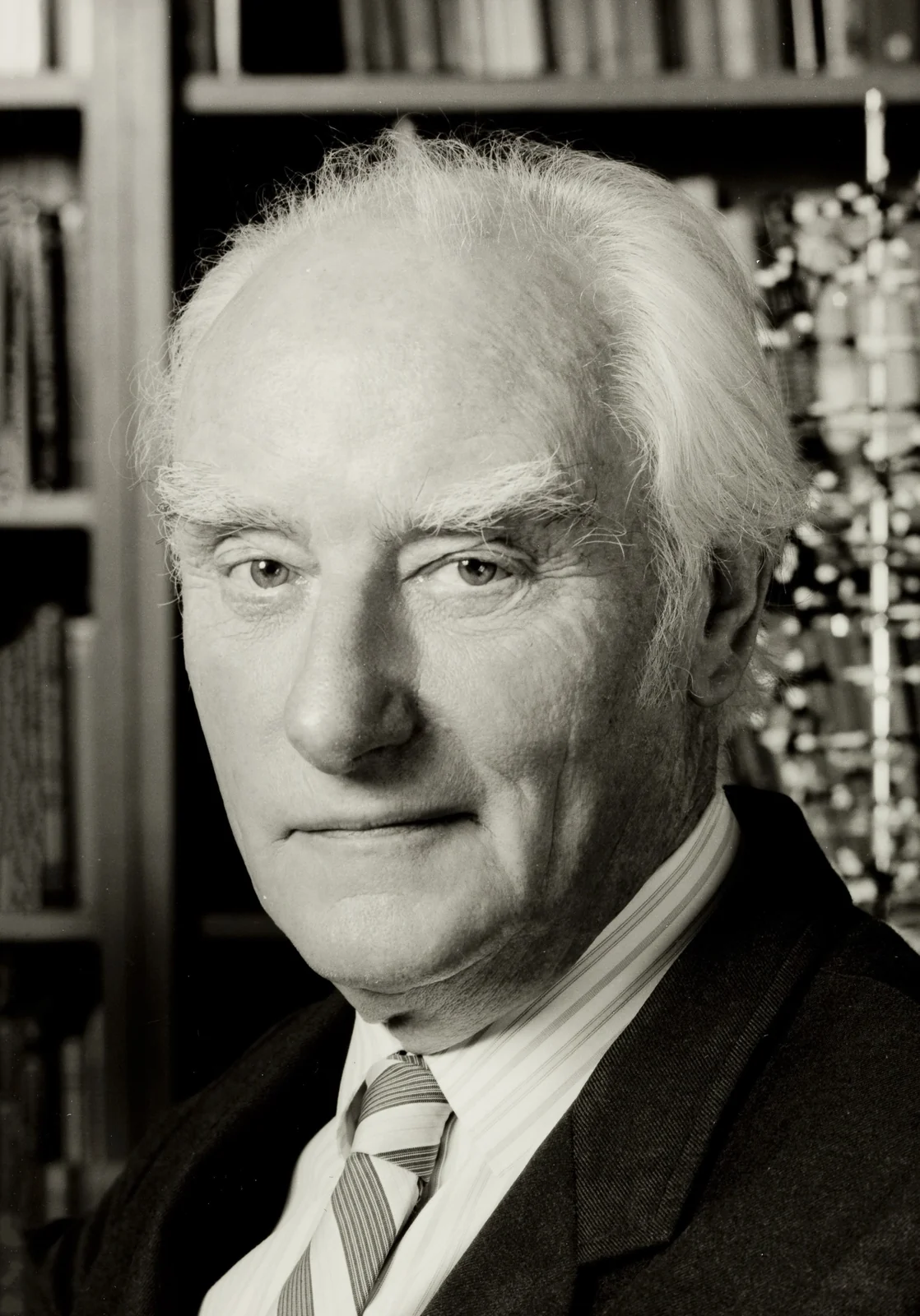
Francis Harry Compton Crick was born in Northampton in 1916. He studied physics at University College London, receiving his degree in 1937, but his initial doctoral work was interrupted by war. He worked for the British Admiralty on magnetic and acoustic mines before leaving in 1947 to study biology. Research at Cambridge’s Strangeways Laboratory preceded his arrival in Max Perutz’s Medical Research Council unit in 1949. His eventual doctorate, completed in 1954, concerned X-ray diffraction by polypeptides and proteins.
Structure and a new account of genetic material
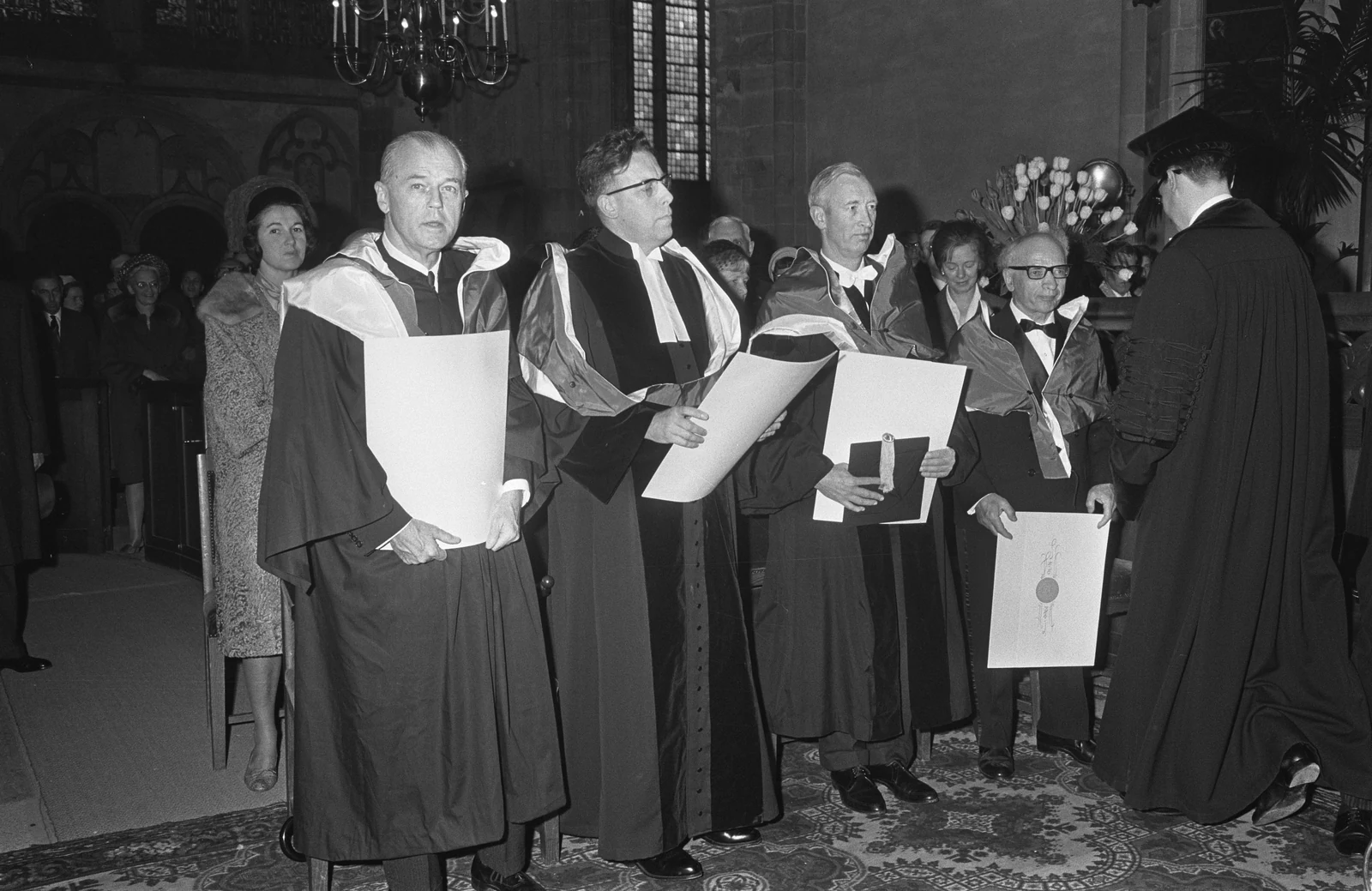
Crick’s collaboration with James Watson produced the 1953 double-helix model of DNA. Its paired bases connected molecular architecture with the possibility of copying sequence information. He shared the 1962 Nobel Prize in Physiology or Medicine with Watson and Maurice Wilkins for discoveries concerning nucleic-acid structure and its significance for information transfer. The award linked a structural result with questions extending beyond a molecular shape: how a sequence could be preserved, copied and connected with the production of biological molecules.
Two principles that should be distinguished
In his 1958 discussion On Protein Synthesis, Crick separated the sequence hypothesis from the central dogma. The first concerned the relationship between a nucleic-acid base sequence and a protein’s amino-acid sequence. The second restricted the direction in which detailed sequence information could be transferred after reaching protein. He explicitly presented them as useful general principles rather than complete biochemical descriptions. In 1970 he returned to the distinction, clarifying that the dogma concerned transfer of sequential information, not every possible causal influence within a cell.
A career organised around explanatory questions
Crick’s Cambridge work connected physical modelling, genetic evidence and the search for general molecular principles. His Nobel biography also records an association with the Salk Institute, and he died in San Diego in 2004. The continuing value of his information arguments lies partly in their precision: a claim about copying a sequence is different from a claim that one molecule affects another’s activity. Reading his own definitions preserves that distinction and explains why a convenient textbook arrow diagram does not contain the entire argument he originally made.
Quick answers
Frequently asked questions about Francis Crick
- Are the sequence hypothesis and central dogma identical?
- No. One relates nucleotide order to amino-acid order; the other restricts possible transfers of detailed sequence information.
- Did Crick define the dogma as only DNA→RNA→protein?
- His definition was more specific: information that had entered protein could not be transferred back into a nucleic-acid or protein sequence.
Keep exploring
Lives connected to this story
- Sydney Brenner
Follow the Cambridge research environment in which genetic structure and coding questions developed through different experiments.
- Alfred Hershey
Compare a definition about sequence information with experiments tracing phage components during infection.
- Christian B. Anfinsen
Explore Christian B. Anfinsen’s related research on protein folding.
Sources and further reading
Explore the evidence
These references support the biography and offer further reading. Official records, first-person accounts and independent reporting provide different perspectives; image records document attribution and licensing.
- 1. Francis Crick / Symposium of the Society for Experimental Biology, 1958On Protein Synthesis
- 2. Francis Crick / Nature, 1970Central Dogma of Molecular Biology
The primary definition is used rather than modern summaries that equate the dogma with an exclusive DNA→RNA→protein chain. Regulation and sequence transfer remain distinct.
- 3. Matthew Cobb, PLOS Biology, 2017; CC BY60 years ago, Francis Crick changed the logic of biology
The 1957 spoken lecture and 1958 published article are different stages. Cobb’s independent 2017 essay is openly licensed CC BY; no archival images or quotations are reproduced.
- 4. Nobel Prize OutreachFrancis Crick — Facts
- 5. Nobel Prize OutreachFrancis Crick — Biographical