In this biography
Quick facts
- Born
- 4 August 1932
- Died
- 4 August 2020
- Birthplace
- New York, United States
- Country
- United States
- Nationality
- Not independently established
- Known for
- Control-flow and data-flow analysis, compiler optimisation and automatic parallelisation
- Earned degrees
- BS mathematics, 1954; MS mathematics, 1957
- IBM
- Joined 1957; retired 2002
- IBM Fellow
- First woman appointed, 1989
- Turing Award
- 2006 award year
Why this life matters
Allen helped make efficient execution a responsibility shared by programming tools and hardware, while building research teams and mentoring other computer scientists.
Timeline
Key moments
Born in New York
Born on 4 August; grew up in Peru, New York.
Mathematics degree
Graduated from Albany State Teachers College and began school teaching.
Master’s degree and IBM
Completed mathematics at Michigan and joined IBM.
Control-flow analysis
Published a paper organising global program relationships through graphs.
Joint data-flow paper
Published with John Cocke in Communications of the ACM.
IBM Fellow
Became the first woman to hold IBM’s senior technical fellowship.
Turing Award
Received the ACM award for the 2006 award year.
Death
Died on 4 August.
Mathematics and school teaching came first
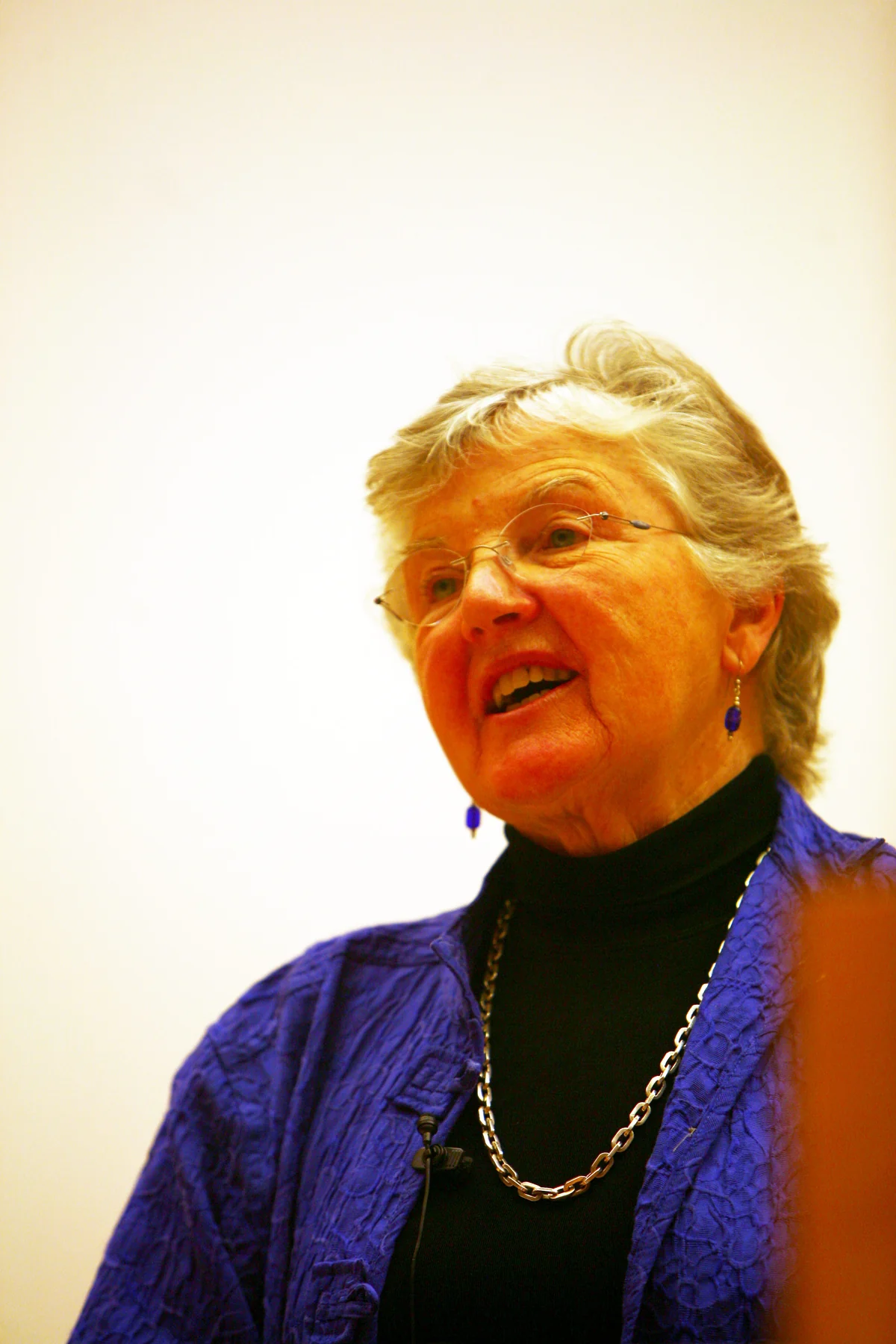
Frances Elizabeth Allen was born on 4 August 1932 in New York State and grew up on a farm in Peru. She earned a mathematics bachelor’s degree at Albany State Teachers College in 1954, taught at the rural high school she had attended, and completed a mathematics master’s degree at the University of Michigan in 1957. These were her earned qualifications; the honorary doctorates awarded later should not be substituted for a research PhD. Her original plan was a teaching career. Joining IBM offered a way to repay her student loans, but the work and colleagues kept her there.
Teaching Fortran opened a research career
Allen joined IBM in 1957, shortly after the introduction of Fortran. An early assignment was to teach the language to researchers, requiring her to master material that was itself new. She subsequently worked on Stretch and its Harvest attachment, including the Alpha language used in the specialised system. The projects involved language design, translation and demanding hardware. Her later reputation as a compiler researcher grew from this practical setting. A compiler translates a program into another executable form; the central performance problem was how to improve that translation while respecting the program’s meaning.
Representing a whole program made local decisions safer
Allen’s 1970 Control Flow Analysis organised program relationships using directed graphs, whose nodes represented basic blocks and whose edges represented possible transfers of control. The paper explicitly acknowledged earlier work on matrices and dominance, and credited John Cocke with the interval construct it developed. This was cumulative research. A compiler considering moving a calculation out of a loop needs information about where execution can go and which values can change. A graph supplies a disciplined description of those questions; a plausible-looking edit to one line supplies no such guarantee.
Sources for this section: [4]
A joint paper made definitions and uses explicit
In 1976 Allen and Cocke published A Program Data Flow Analysis Procedure. It described compile-time analysis of which definitions could reach a program point and which remained live for subsequent use. Its opening page credited Kenneth Kennedy with the live-analysis algorithm and Richard Stasko with contributions to implementation data structures, alongside other researchers in the field. These acknowledgements matter: even a paper with two authors rested on a wider network. The work connected formal relationships to an implemented experimental compiling system, rather than treating optimisation as a list of clever changes detached from evidence.
Parallel computing required a team and a testable system
Allen later led IBM’s PTRAN, or Parallel Translation, research effort. In her 2008 oral history she described hiring researchers, drawing on Dave Kuck’s compiler work and building an experimental system in which analysis and parallelisation techniques could be measured together. The group investigated transformations, scheduling and debugging. Parallel execution can make some tasks faster, but interacting calculations cannot simply be assigned to different processors without examining their dependencies. Her account describes research as organised experimentation with working software. It is also a personal retrospective, not an independent evaluation of every project outcome.
Sources for this section: [3]
Recognition included mentoring as well as technical work
Allen became the first woman IBM Fellow in 1989 and received the ACM A. M. Turing Award for the 2006 award year. The award concerned the theory and practice of optimising compiler techniques, not the invention of Fortran or a general claim to have created modern computing. IBM also remembers her sustained mentoring, especially of women entering technical careers. She retired in 2002 after 45 years, remaining connected as a Fellow Emerita, and died on 4 August 2020. Her career joined teaching, theoretical analysis, implementation and the patient work of building a research community.
Quick answers
Frequently asked questions about Frances Allen
- Did Frances Allen invent Fortran?
- No. She joined IBM in 1957 and taught the newly introduced language. Her own major contributions concerned compiler analysis, optimisation and parallelisation.
- Was Allen’s Turing Award dated 2006 or 2007?
- 2006 is the award year. ACM’s FY2007 report lists her among its 2006 award recipients.
Keep exploring
Lives connected to this story
- Donald Knuth
Compare compiler analysis with the different problem of organising a program for readers.
- John McCarthy
Explore another computing researcher’s work on programming languages and symbolic reasoning.
- John Cocke
Follow her coauthor’s work across compiler analysis and computer architecture.
Sources and further reading
Explore the evidence
These references support the biography and offer further reading. Official records, first-person accounts and independent reporting provide different perspectives; image records document attribution and licensing.
- 1. IBMFrances Allen: research career and mentoring
- 2. Computer History MuseumFrances Allen, 2000 Fellow
CHM gives Plattsburg as birthplace; common accounts use Peru, where she grew up. The draft retains the verified state rather than resolving this locality conflict without a birth record.
- 3. Computer History MuseumOral History of Fran Allen, Al Kossow interview, 11 September 2008
Downloaded full transcript; relevant Stretch/Harvest, Cocke/ACS and PTRAN passages read. Retrospective testimony is attributed as such.
- 4. Frances E. Allen; Columbia-hosted original scanControl Flow Analysis, SIGPLAN Notices 5(7), 1–19 (1970)
Downloaded complete 19-page original. Introduction, basic-block definition and credit to Cocke actually read. No assertion that Allen invented every prior flow-analysis concept.
- 5. F. E. Allen and J. Cocke; ACM-hosted originalA Program Data Flow Analysis Procedure, CACM 19(3), 137–147 (1976)
ACM full-PDF requests returned HTTP403. The indexed complete first page was read, including Kennedy and Stasko acknowledgements; IBM abstract independently checked. Detailed later algorithm pages were not read and are not claimed.
- 6. IBM Research1976 paper abstract, authors and publication date
- 7. University at AlbanyAlumna Frances Allen, 1954 graduate: 2008 commencement announcement
- 8. Association for Computing MachineryAnnual Report FY2007: 2006 award recipients