
In this biography
Quick facts
- Born
- 1951
- Birthplace
- County Mayo, Ireland
- Country
- Ireland
- Nationality
- Not independently established
- Known for
- Long parliamentary service and two government formations
- Birth precision
- 1951, County Mayo
- Dáil entry
- 1975 by-election
- Party leadership
- 2002–2017
- Taoiseach
- 9 March 2011–14 June 2017
Why this life matters
His career connects constituency continuity, party rebuilding and coalition leadership with a period of substantial electoral and social change.
Timeline
Key moments
Birth in Mayo
The official biography identifies County Mayo and supplies the birth year.
Dáil entry
Won the by-election following his father’s death.
Minister of State
Held responsibilities at education and labour.
Cabinet ministry
Became minister for tourism and trade.
Fine Gael leadership
Became party leader.
Taoiseach
Nominated on 9 March following the February general election.
Marriage referendum
The constitutional proposal was put to voters during his premiership.
Second government and departure
Nominated again on 6 May 2016; retired as Taoiseach on 14 June 2017.
Teaching and the Mayo constituency
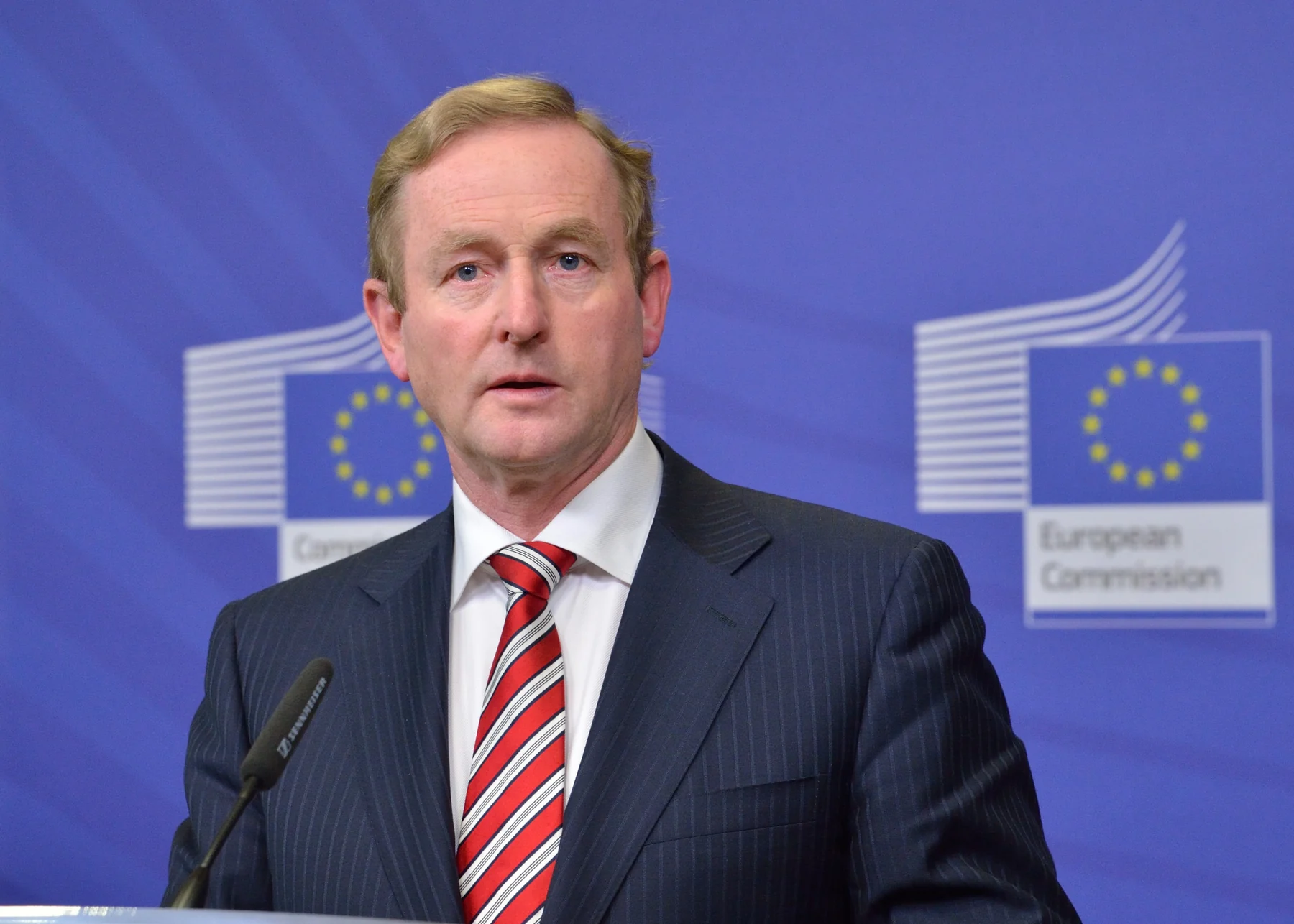
Enda Kenny was born in County Mayo in 1951. The official biography records education at St Gerald’s College, Castlebar, and St Patrick’s College, Drumcondra, followed by work as a primary teacher. He entered the Dáil in a 1975 by-election brought about by his father’s death. At twenty-four he was the youngest member of that Dáil. The constituency connection became a durable element of his public life. This profile retains the official source’s birth-year precision rather than inserting a day or a hospital location not verified in the selected records.
Sources for this section: [1]
Experience in junior and Cabinet office
Kenny held minister-of-state responsibilities at education and labour in 1986 under Garret FitzGerald. In December 1994 he became minister for tourism and trade in John Bruton’s government. These appointments preceded his leadership of Fine Gael and gave him experience within different administrations. A parliamentary career can include periods in opposition as well as executive work; the existence of a long Dáil tenure does not imply uninterrupted ministerial office. The government chronology is most useful when each office retains its own dates and institutional rank.
Sources for this section: [1]
Party leadership and the 2011 result
He became Fine Gael leader in 2002. The 2011 election returned seventy-six Fine Gael members, making it the largest party in the new Dáil. The official statistics record 801,628 first preferences, or 36.10 percent of valid first preferences. In Mayo, Fine Gael won four of the five contested seats. These are measures of a party result, not a national personal vote for Kenny. They also do not, without coalition and parliamentary records, establish who could secure the nomination to head a government.
The premiership began through parliamentary nomination
The official biography dates Kenny’s nomination as Taoiseach to 9 March 2011. Fine Gael’s seat total fell short of a majority of the 166-member House, and government depended on parliamentary support beyond its own members. Article 13 identifies presidential appointment on the nomination of Dáil Éireann as the constitutional route. That framework helps explain how a strong election result and a government appointment relate without treating them as the same act. The accompanying guide uses the 2011 return to examine why even official seat percentages can use different denominators.
A constitutional change within a wider social debate
During Kenny’s premiership the marriage-equality proposal was put to voters on 22 May 2015 and approved. The independent Referendum Commission guide explained that detailed rules about marriage would remain in legislation. The ensuing Marriage Act changed civil-registration provisions and separately addressed religious bodies and solemnisation. These records place the political event within its legal and civic process. They do not make a referendum the personal achievement of one officeholder or imply that every form of ceremony was governed in an identical way.
Return to government and departure
Following the 2016 election, Kenny was nominated Taoiseach again on 6 May. The government biography dates his retirement from the office to 14 June 2017, when the transition to Varadkar took place. His premiership therefore spanned two government formations. The official page contains an erroneous reference to an EU Council presidency in 2016; that sentence is not adopted here. His supported record remains substantial without it: a long constituency career, party leadership, ministerial experience and the formation of governments in 2011 and 2016.
Sources for this section: [1]
Quick answers
Frequently asked questions about Enda Kenny
- Did Fine Gael’s 2011 result itself appoint Kenny?
- No. The election supplied Dáil members; nomination and presidential appointment were separate constitutional steps.
- Does the profile assert an exact birth day?
- No. It retains 1951, the precision established by the selected official biography.
Keep exploring
Lives connected to this story
- Garret FitzGerald
Read the earlier Fine Gael Taoiseach under whom Kenny served as minister of state.
- Leo Varadkar
Follow the minister who succeeded him as Taoiseach.
- Micheál Martin
Compare the opposing party leader’s response to the 2011 result.
Sources and further reading
Explore the evidence
These references support the biography and offer further reading. Official records, first-person accounts and independent reporting provide different perspectives; image records document attribution and licensing.
- 1. Department of the TaoiseachFormer Taoisigh, updated 23 March 2026: selected biographies
Official biography gives birth year and a Mayo location; retained at year/county precision. Its sentence dating the rotating EU Council presidency to January–June 2016 is excluded as erroneous; no such date is repeated as a fact.
- 2. Houses of the Oireachtas2011 general election: results, transfers, explanatory notes and statistics
Seat and first-preference data are distinguished. The contested-seat table excludes the outgoing Ceann Comhairle while the whole-House party list includes him.
- 3. Office of the Attorney General, electronic Irish Statute BookConstitution of Ireland, Articles 13, 16.6, 28.9–11 and 41.4
- 4. Referendum Commission; archived by Electoral CommissionIndependent guide to the marriage and presidential-age referendums, 2015, pages 3–5
- 5. Electoral CommissionMarriage referendum and age of presidential candidates referendum: historical outcomes
- 6. Houses of the Oireachtas / electronic Irish Statute BookMarriage Act 2015, original enacted text, selected sections