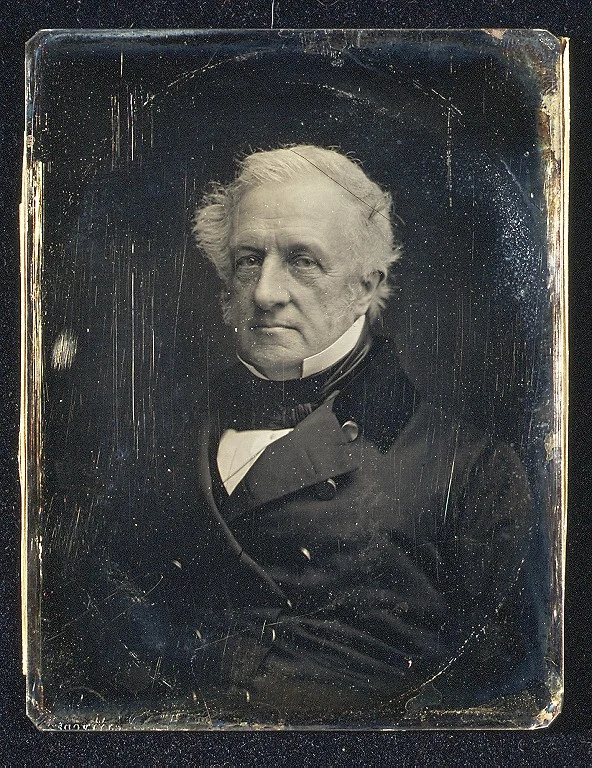
In this biography
Quick facts
- Born
- 1881
- Died
- 1953
- Birthplace
- Virginia, United States
- Country
- United States
- Nationality
- Not independently established
- Known for
- Popularising self-service grocery retail through Piggly Wiggly and pursuing later automated shopping systems
Why this life matters
Popularising self-service grocery retail through Piggly Wiggly and pursuing later automated shopping systems.
Timeline
Key moments
Birth
Clarence Saunders was born in Virginia, United States.
Retail format
Opened Piggly Wiggly in Memphis.
Patent
The self-serving-store patent was granted.
Commercial reversal
Lost control after the stock-market episode.
Death
Clarence Saunders died in 1953.
Grocery work supplied the practical setting
Clarence Saunders was born in Virginia in 1881 and grew up partly in Tennessee. Work in Clarksville’s grocery trade preceded a sales position in Memphis. The experience placed him close to the routines of retail: clerks collected customers’ requested goods, while wholesale businesses supplied the stores. His later innovation addressed how the customer moved through that system. It changed the division of work between shopper and employee, rather than inventing the idea of selling groceries or eliminating every task performed by store staff.
Self-service became a reproducible format
Saunders opened a Piggly Wiggly store in Memphis in 1916. Customers selected goods from accessible displays and proceeded to a checking and payment point. The business expanded through franchises, making the arrangement available beyond the original store. His patent application, filed in October 1916 and granted in October 1917, described a particular layout and controlled route. The distinction matters: a historical store, a franchise business and a patent are connected records, but each establishes a different part of his work.
The patent made the operating idea concrete
The patent divided the premises into a lobby, sales area and rear stock space. Shelving created a circuitous route through the displayed merchandise, and the exit arrangement directed shoppers to a checking station. Customers undertook selection, while staff still checked, billed, wrapped and received payment. This was a redistribution of labour supported by spatial design. The document also made business claims about efficiency, but those claims belong to the applicant’s case. They do not supply an independently verified result for every store using self-service.
Sources for this section: [3]
Commercial reversals did not end the experiments
Saunders lost control of Piggly Wiggly after the 1923 stock-market episode. He later developed the Sole Owner stores and pursued automated shopping through Keedoozle. That later venture sought to connect customer choice with mechanical retrieval, but did not become a profitable system. He died in 1953. His career joins a successful, widely adopted retail format with repeated difficulty sustaining his own subsequent businesses. The historical significance is therefore more specific than uninterrupted commercial triumph: he helped make self-service reproducible while continuing to experiment with how selection, handling and payment could be organised.
Quick answers
Frequently asked questions about Clarence Saunders
- Did self-service mean no staff handled the sale?
- No. The patent kept checking, billing, wrapping and payment at a designated station.
- Was the patent granted when the store opened?
- The store began in 1916; the application was filed that October and the patent was granted in October 1917.
Keep exploring
Lives connected to this story
- Henry Ford
Explore Henry Ford’s separate career as automobile manufacturer and founder of ford motor company; compare the work and institutions in context.
- Richard Warren Sears
Read Richard Warren Sears’s documented work and the related study: Sears’s 1906 Chicago Plant: Catalogue to Dispatch.
- Aaron Montgomery Ward
Read Aaron Montgomery Ward’s documented work and the related study: Ward’s 1872 Catalogue and the Later Postal Network.
Sources and further reading
Explore the evidence
These references support the biography and offer further reading. Official records, first-person accounts and independent reporting provide different perspectives; image records document attribution and licensing.
- 1. Mike Freeman / Tennessee EncyclopediaClarence Saunders
Historical and company accounts give different September 1916 opening days; this biography states the supported month/year rather than silently treating the dates as identical. Exact 1953 death-day disagreement is also not resolved by an unsupported choice.
- 2. Piggly Wiggly LLCOur History
- 3. Clarence Saunders / original United States patentUS1242872A, Self-serving store
- 4. Arian Finley / Visit ClarksvilleClarence Saunders