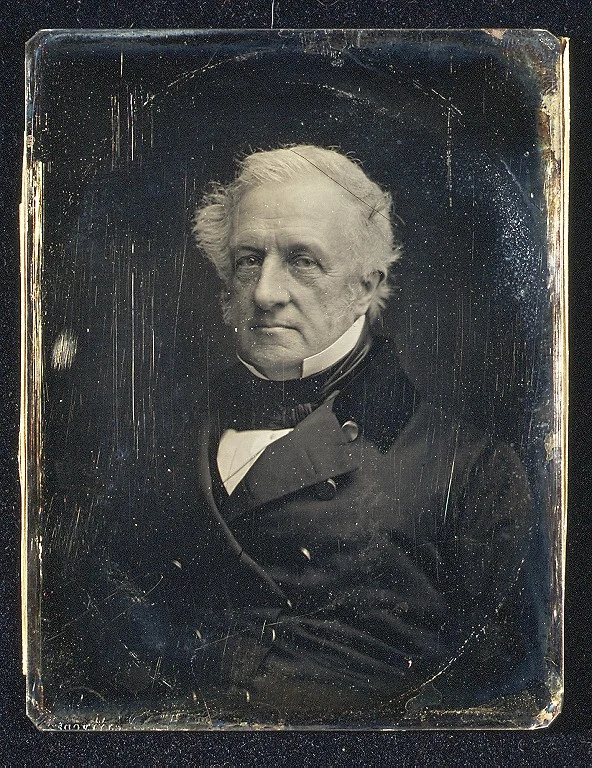
In this biography
Quick facts
- Born
- 1843
- Died
- 1913
- Birthplace
- New Jersey, United States
- Country
- United States
- Nationality
- Not independently established
- Known for
- Building a general-merchandise catalogue business and pursuing legal protection of Chicago’s lakefront park
Why this life matters
Building a general-merchandise catalogue business and pursuing legal protection of Chicago’s lakefront park.
Timeline
Key moments
Birth
Aaron Montgomery Ward was born in New Jersey, United States.
Chicago work
Entered the city’s retail trade.
Catalogue business
Launched a general-merchandise mail-order undertaking.
Death
Aaron Montgomery Ward died in 1913.
Retail experience preceded the catalogue
Aaron Montgomery Ward was born in New Jersey in 1843 and grew up in Niles, Michigan. His early working life included factory and brickyard employment before retail work. He moved to Chicago in 1865 and worked in the city’s expanding merchandise trade. This experience gave him knowledge of goods, customers and the distribution system through which products reached them. His later business addressed a practical difference between urban shopping and rural access: a distant customer could not easily compare the selection available in a large city store.
Sources for this section: [1]
A printed offer reached customers at a distance
In 1872 Ward established his mail-order business and issued a single-sheet catalogue listing 163 items. The catalogue supplied descriptions and prices that a rural customer could consider without first travelling to Chicago. Subsequent editions expanded substantially. This was a method of organising retail trade, not the invention of sending an object through the post. Earlier specialist catalogues existed, while Ward’s undertaking developed a broad general-merchandise market. Its significance lay in the scale and range of the offer and in the organisation needed to supply it.
Sources for this section: [2]
Growth depended on more than the printed page
The business required purchasing, storage, communication and transport as its catalogue expanded. A large Chicago complex began construction in 1907, long after the first sheet. Later postal changes also improved rural access, but the original business preceded Rural Free Delivery’s 1896 experiments and Parcel Post’s 1913 beginning. Those dates make the sequence clear. Ward did not wait for the complete twentieth-century delivery network before starting; an earlier selling model grew within changing systems of communication and carriage. The catalogue and the network supported each other without sharing one origin date.
The businessman also contested development
Ward became known in Chicago for opposing buildings and other obstructions on the lakefront park. His injunctions and later legal battles sought to enforce restrictions preserving public open space. These efforts met resistance from officials and others who favoured particular projects. He died in 1913, leaving a legacy that extended beyond the company carrying his name. Retail expansion and the defence of a park may seem different activities, but both placed him within arguments about how a growing city’s resources should be used. His later reputation reflects both strands.
Sources for this section: [1]
Quick answers
Frequently asked questions about Aaron Montgomery Ward
- Did Ward’s catalogue begin with Rural Free Delivery?
- No. His 1872 catalogue preceded the 1896 rural-delivery experiments by more than twenty years.
- What else is Ward remembered for?
- He pursued legal action to preserve Chicago’s lakefront park as public open space.
Keep exploring
Lives connected to this story
- George Eastman
Explore George Eastman’s separate career as photography entrepreneur, kodak founder and philanthropist; compare the work and institutions in context.
- Richard Warren Sears
Read Richard Warren Sears’s documented work and the related study: Sears’s 1906 Chicago Plant: Catalogue to Dispatch.
- Clarence Saunders
Read Clarence Saunders’s documented work and the related study: Piggly Wiggly’s Patent: The Route to Checkout.
Sources and further reading
Explore the evidence
These references support the biography and offer further reading. Official records, first-person accounts and independent reporting provide different perspectives; image records document attribution and licensing.
- 1. Chicago Park DistrictWard(A.Montgomery)Park: historical biography
The district’s park history gives 1843, whereas its bust caption gives 1844. The fuller historical biography is followed here; no precise birth date is asserted.
- 2. Jojo Galvan / Chicago History MuseumMontgomery Ward’s First Catalog
- 3. Smithsonian National Postal MuseumRFD: To the Country
- 4. United States Postal ServiceUniversal Service and the Postal Monopoly: A Brief History