
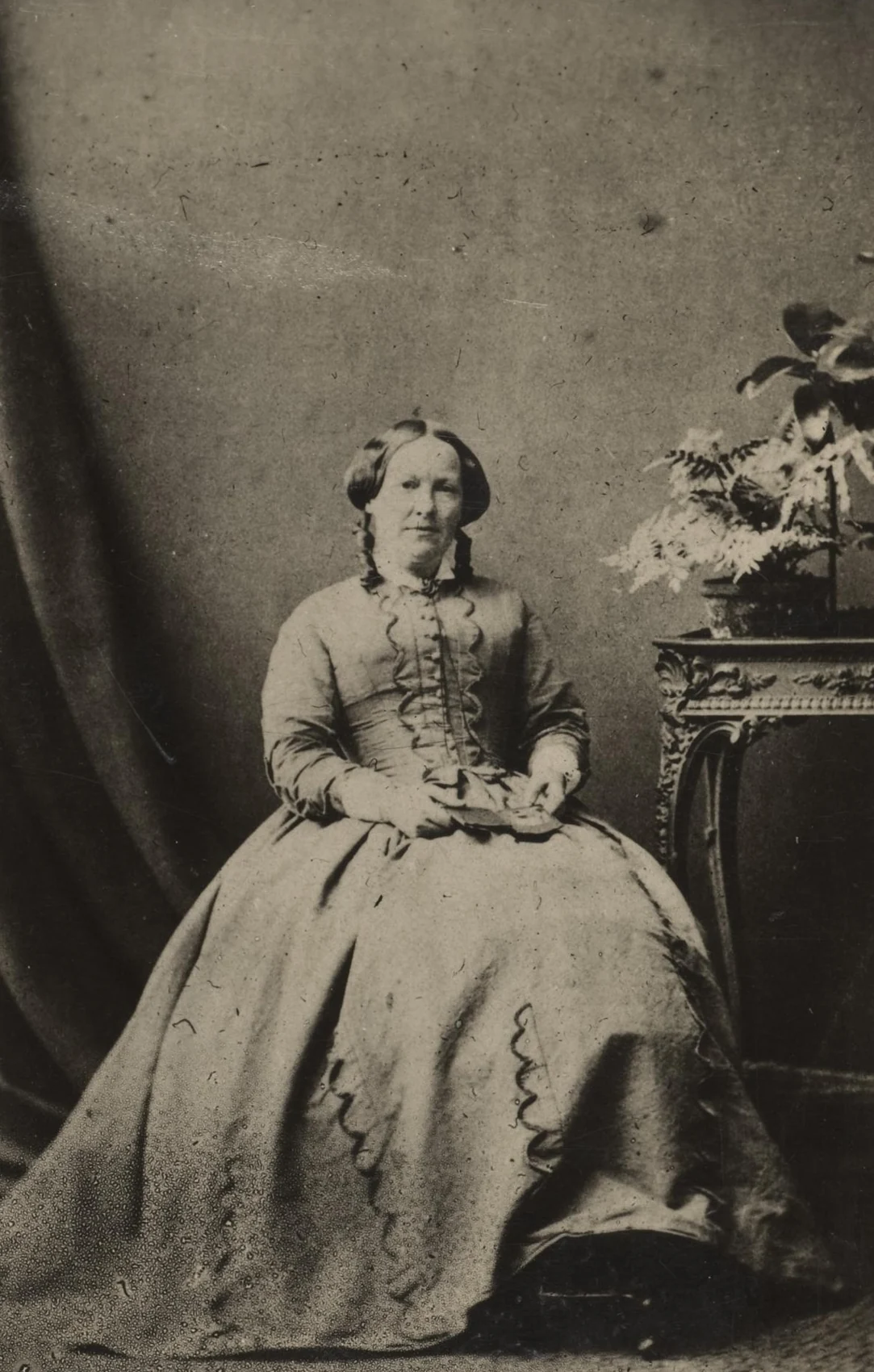
In this biography
Quick facts
- Born
- 31 October 1825
- Died
- 3 April 1910
- Birthplace
- Near Melrose, Scotland
- Country
- Australia
- Nationality
- Not independently established
- Known for
- Proportional representation and South Australian civic reform
Why this life matters
Her pamphlet and subsequent annotations show how an electoral design can change as its author tests it against local politics.
Timeline
Key moments
Migration
Moved with her family to South Australia.
Electoral pamphlet
Published a South Australian application of Thomas Hare’s proposal.
Convention candidacy
Stood unsuccessfully for the federal convention.
From Scotland to South Australia
Spence was born near Melrose and moved to South Australia with her family in 1839. She worked as a governess and teacher, and published fiction before electoral reform became the work for which she was most widely remembered. In the colony, teaching, journalism and novel writing gave her several ways to address a public audience. Those roles also help explain why she treated electoral arrangements as something ordinary readers could examine, rather than as a subject for legislators alone.
Making an electoral system readable
Her encounter with Thomas Hare’s representation scheme led to an 1861 pamphlet addressed to South Australian readers. A version preserved by the State Library carries later annotations in her hand. The layers of print and handwriting document a sustained interest: she reconsidered how large districts should be and what might happen when a representative felt bound to secure particular local favours.
Public work beyond the pamphlet
Spence also worked on care arrangements for children and became a public lecturer. Her involvement in social reform put the design of representative institutions alongside questions about who received public attention. In 1897 she ran for election to the Australasian Federal Convention. Her unsuccessful candidacy nonetheless shows that a woman could seek a role in debating federation in South Australia before women had uniform federal electoral rights.
An argument that could be revised
The pamphlet and its annotations allow a reader to distinguish a proposal put into circulation from a later reconsideration of its machinery. Spence’s public career is useful to study precisely because it contains both: the act of explaining a system to others and the willingness to keep testing its assumptions after publication.
Sources for this section: [2]
Quick answers
Frequently asked questions about Catherine Helen Spence
- Did Spence win a seat at the 1897 convention?
- No. Her candidacy and the result are separate milestones.
Keep exploring
Lives connected to this story
- Kate Sheppard
Compare a New Zealand organiser’s route to enfranchisement.
- Vida Goldstein
Follow the move from public advocacy to an early federal campaign.
- Mary Lee
Explore Mary Lee’s career in suffrage organiser and advocate for working women and the documented study South Australia’s 1894 Suffrage: Voting and Candidacy.
Sources and further reading
Explore the evidence
These references support the biography and offer further reading. Official records, first-person accounts and independent reporting provide different perspectives; image records document attribution and licensing.