In this biography
Quick facts
- Born
- 26 March 1951
- Birthplace
- Corvallis, Oregon, United States
- Country
- United States
- Nationality
- Not independently established
- Known for
- Co-leading dilute-gas Bose–Einstein condensation experiments and investigating research-based science teaching
Why this life matters
His career connects two different experimental questions: how atoms behave under controlled conditions and how students learn under specified instructional conditions.
Timeline
Key moments
Born in Oregon
Wieman was born on 26 March.
Dilute-gas condensation
Co-led the Boulder condensate programme with Eric Cornell.
Teaching comparison
Co-authored a controlled comparison in a large introductory physics course.
A research education shaped by lasers
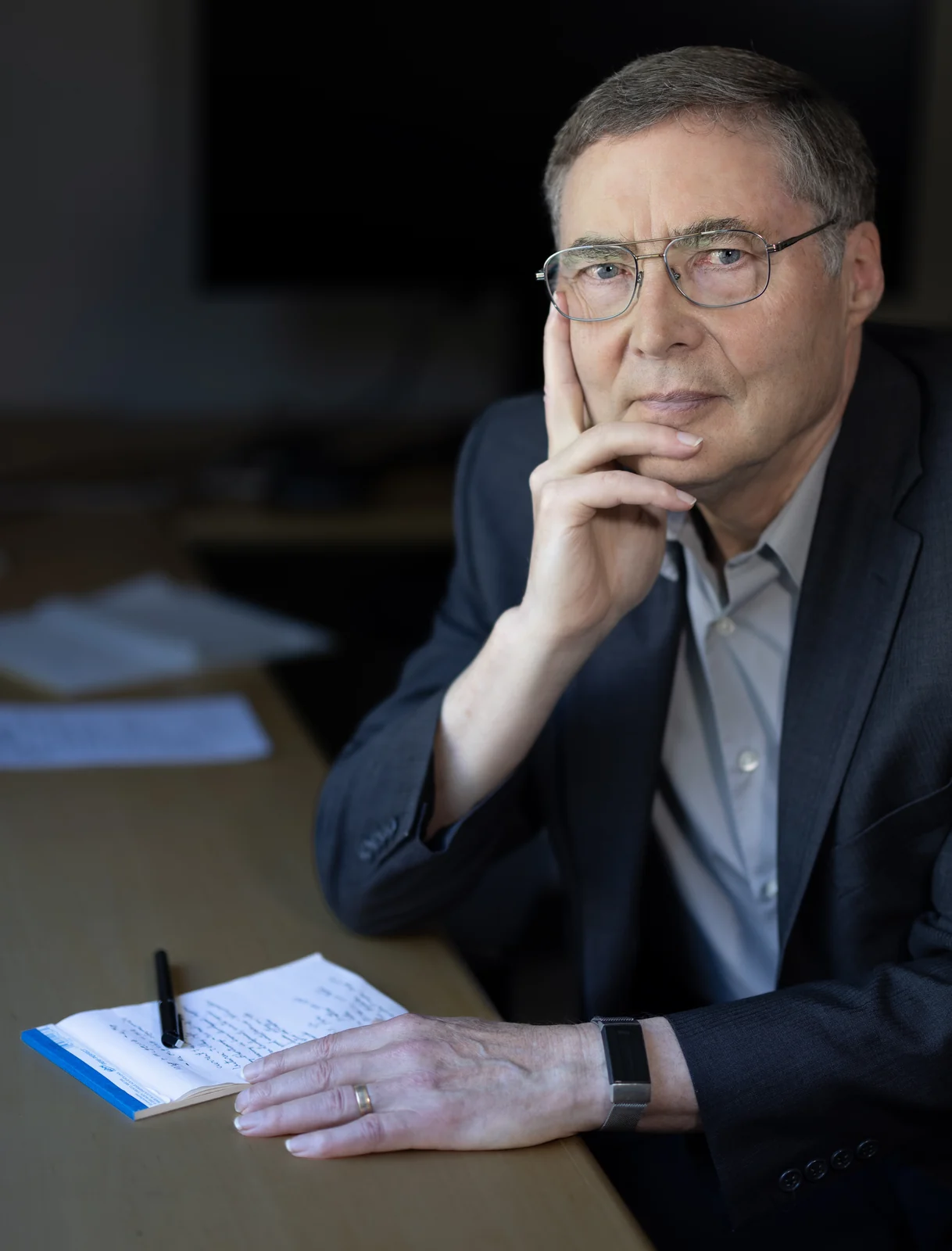
Carl Edwin Wieman was born in Corvallis, Oregon, in 1951. He studied at MIT before moving to Stanford for graduate research with Theodor Hänsch. His autobiography describes work on narrowband dye lasers and precision hydrogen spectroscopy, followed by an independent interest in atomic parity violation. These were demanding experiments in which the preparation of a source and the interpretation of a measured signal had to be developed together. That background became an important part of the research programme he later built in Boulder.
The Boulder programme and Eric Cornell
After working at Michigan, Wieman accepted a position at the University of Colorado in 1984. His group pursued precision measurements and laser cooling. Eric Cornell joined the effort, and their collaboration with students and colleagues produced the 1995 dilute-rubidium condensate. Wieman shared the 2001 physics Nobel Prize with Cornell and Wolfgang Ketterle. The award recognises a landmark, but the underlying work was a group programme involving repeated improvements in cooling, trapping and observation rather than a single isolated calculation.
Teaching became another research problem
Wieman later made science education a major part of his work. The relevant shift was not from evidence to personal teaching advice, but toward examining learning under specified conditions. In 2011 he co-authored a study with Louis Deslauriers and Ellen Schelew comparing instruction in two large introductory physics sections at the University of British Columbia. The paper reported greater engagement and higher measured learning in the section using research-based instruction. Its claim concerned a particular comparison, not an unlimited promise about every classroom or learner.
Sources for this section: [1]
Two research fields, two kinds of conclusion
Wieman joined Stanford in 2013, holding appointments in physics and education. That move made institutional space for a programme already connecting scientific expertise with research on learning. The teaching study and the condensate experiment remained different kinds of investigation: one concerned instructional conditions and the other a physical state of an atomic gas. His career connects them through explicit questions and measurements. His educational influence is best assessed through the research programme and its evidence, rather than through Nobel status alone.
Quick answers
Frequently asked questions about Carl Wieman
- Who shared Carl Wieman’s 2001 Nobel Prize?
- Eric Cornell and Wolfgang Ketterle shared the physics prize with Wieman for dilute-gas condensation and early studies of condensates.
- What did Wieman’s 2011 education paper compare?
- It compared a defined set of learning objectives taught using traditional lecture and a research-based instructional approach in two large physics-course sections.
Keep exploring
Lives connected to this story
- Alan Hodgkin
Compare another experimental career in which a model’s assumptions and a measurement’s meaning need to be kept explicit; no collaboration is implied.
Sources and further reading
Explore the evidence
These references support the biography and offer further reading. Official records, first-person accounts and independent reporting provide different perspectives; image records document attribution and licensing.
- 1. Louis Deslauriers, Ellen Schelew and Carl Wieman / ScienceImproved Learning in a Large-Enrollment Physics Class
- 2. Science / Williams College teaching-centre copyImproved Learning in a Large-Enrollment Physics Class: accessible author paper
The instructional package and instructor preparation changed together. The paper is not described as an isolated test of a clicker, group discussion or teacher experience alone.
- 3. Stanford UniversityCarl Wieman: physics and education faculty biography
- 4. Stanford Graduate School of EducationNobel laureate appointed Stanford professor of physics and education
- 5. Nobel Prize OutreachCarl Wieman — Facts
- 6. Nobel Prize OutreachCarl Wieman — Biographical