

The short answer
What can the 2011 large-class teaching comparison establish about learning, and which factors were bundled?
Read the evidence
Intervention, outcome and generalisation
The paper supports the tested package more directly than claims about isolated tools or every future course.
| Record or test | What it establishes | What remains different |
|---|---|---|
| 2011 comparison | Reports learning and engagement under two specified instructional conditions. | Does not isolate the contribution of every practice. |
| Instructional design account | Describes an integrated deliberate-practice framework. | Owning a teaching device is not the same intervention. |
| A proposed follow-up | Can vary one component or measure later retention. | Those new questions are not results already supplied by the original study. |
A defined comparison rather than a teaching slogan
The 2011 study compared two large sections of an introductory physics course at the University of British Columbia in Canada over a defined set of topics and objectives. One received three hours of traditional lecture from an experienced, highly rated instructor. The other received three hours of research-based instruction from a trained but less experienced instructor. The authors reported increased attendance, engagement and measured learning in the latter section. This is stronger information than a general claim that students enjoy an activity, but its meaning still depends on the study’s particular comparison and outcome measures.
Sources for this section: [1]
Several practices formed one instructional package
The full paper describes a deliberate-practice framework: challenging questions, predictions, reasoning, feedback and tasks designed to work together. It explicitly treats the integration of those practices as important. The experiment therefore should not be reduced to the claim that one isolated ingredient—group discussion, a clicker or a change of lecturer—caused the entire result. Teacher preparation and the instructional design were part of the implemented conditions. A reader can recognise the package’s successful comparison without assigning its effect precisely to a component the study did not separately vary.
Sources for this section: [2]
Career context is not additional trial evidence
Wieman’s earlier cold-atom work explains why this researcher is notable, but a physics Nobel Prize cannot strengthen a classroom result by itself. The primary study must carry the claim about learning. University descriptions of his education work help establish the broader programme and its goals, while the measured comparison remains tied to its students, topics and instructional interval. In particular, an immediate learning test should not be silently relabelled as a measurement of lifelong retention. Different follow-up periods and educational settings require their own evidence.
A component-testing exercise
Imagine a school that adopts the whole tested package, and another that only buys a classroom-response device. A student says the paper guarantees equal gains in both schools because both have copied active learning. The supported answer is no: the isolated device is not equivalent to the integrated instructional design. Next propose a follow-up comparison that keeps topics, assessment and teacher support similar while varying one practice. That could address the component question more directly, although implementation and setting would still matter. These are original study-design examples, not additional participants or results from the 2011 paper. They show how to move from a promising comparison to a sharper next research question.
Continue the chronology
Related history guides
BEC Evidence: Narrow Peak and Transition
Read the 1995 rubidium-condensate signatures together, distinguishing a colder thermal cloud from a new component and a corroborating expansion test.
Read the timeline1949–1950; retrospective lecture 1989Ramsey’s Separated Fields and Interference
Compare Ramsey’s 1950 resonance calculation with his later explanation of separated fields, including phase coherence and a worked timing exercise.
Read the timelineBiography context
Explore Canada through connected lives
Connected biographies
Researchers and related approaches
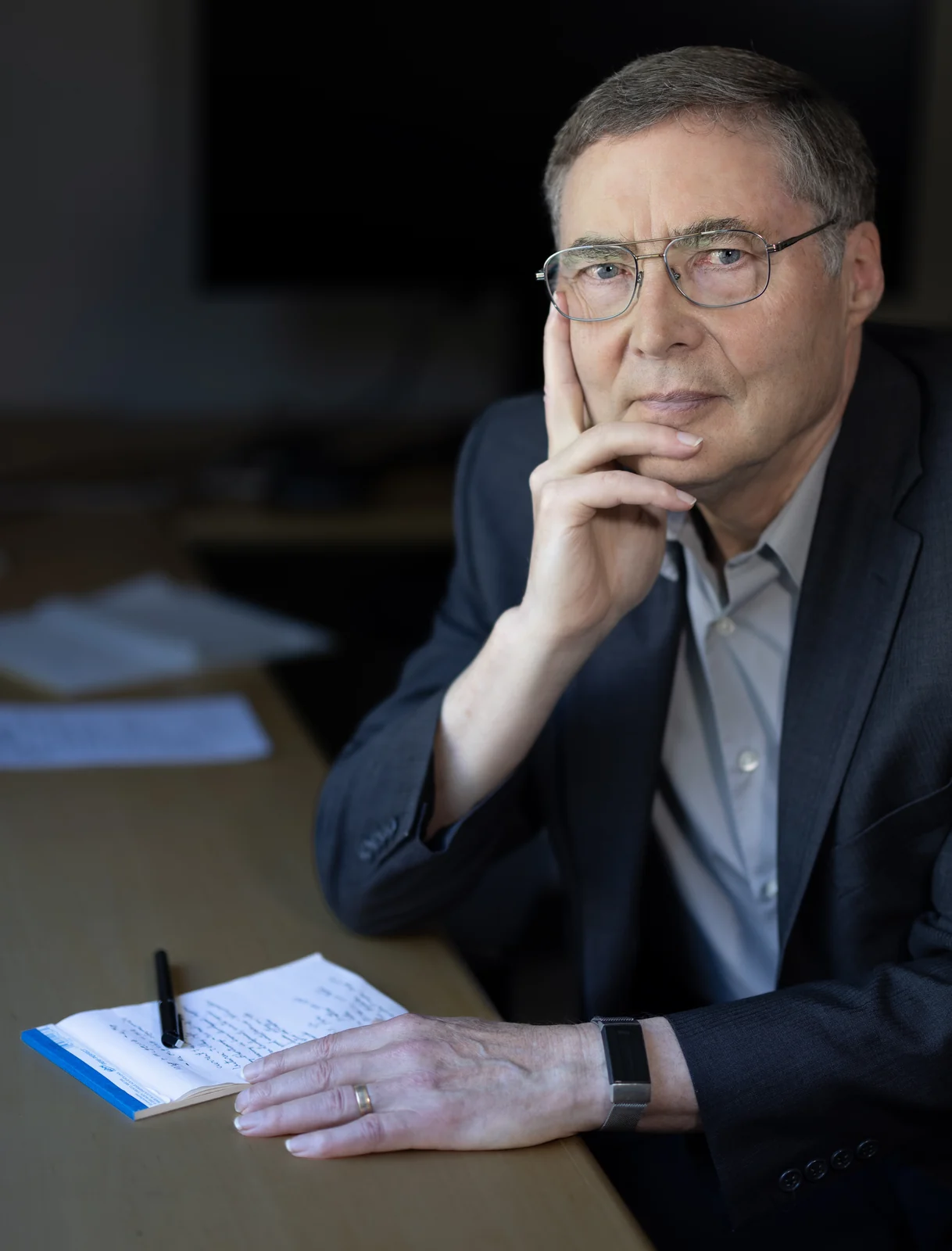
1951–
Carl Wieman
Experimental physicist and science-education researcherCarl Wieman developed precision atomic experiments and a condensate programme in Boulder, then applied empirical research methods to science teaching.Read biographyQuick answers
Common questions
- Did the study test one isolated active-learning tool?
- No. It implemented an integrated package of reasoning tasks, preparation and feedback within a defined teaching comparison.
- Does the result prove lifelong retention improved?
- The comparison should be described using its actual assessments and interval; a claim about lifelong retention would require different follow-up evidence.
Primary and institutional sources
How this history was checked
The 2011 abstract and accessible paper describe the intervention and outcomes. The original exercise asks what a follow-up would need to vary. This article was reviewed on 7 November 2026.
- Louis Deslauriers, Ellen Schelew and Carl Wieman / ScienceImproved Learning in a Large-Enrollment Physics Class
- Science / Williams College teaching-centre copyImproved Learning in a Large-Enrollment Physics Class: accessible author paper
- Stanford UniversityCarl Wieman: physics and education faculty biography
- Stanford Graduate School of EducationNobel laureate appointed Stanford professor of physics and education
- Nobel Prize OutreachCarl Wieman — Facts
- Nobel Prize OutreachCarl Wieman — Biographical