In this biography
Quick facts
- Born
- 23 September 1917
- Died
- November 2006
- Birthplace
- Calcutta, Bengal, British India, now Kolkata, India
- Country
- India
- Nationality
- Not independently established
- Known for
- Natural-product chemistry, especially indole alkaloids and coumarins
- Research doctorate
- DSc, University of Calcutta, 1944
- Bhatnagar Prize
- Chemical Sciences, 1961
- Khaira professorship
- University of Calcutta, 1962–1982
- Rajya Sabha
- Nominated member, 1982–1990
Why this life matters
Her career connects exacting molecular research with the laboratories, teaching and collaborations that made sustained scientific work possible in India.
Timeline
Key moments
Born in Calcutta
Born on 23 September.
Chemistry education
Completed honours and master’s studies.
Research doctorate
Awarded a DSc for research on indole alkaloids and coumarins.
Research abroad
Worked in Wisconsin, Pasadena and Zürich.
Bhatnagar Prize
Recognised for a school of natural-product chemistry.
Science Congress leadership
Served as general president.
Parliamentary service
Served as a nominated Rajya Sabha member.
Death
Died in November; the exact day conflicts between sources.
A research education in Calcutta
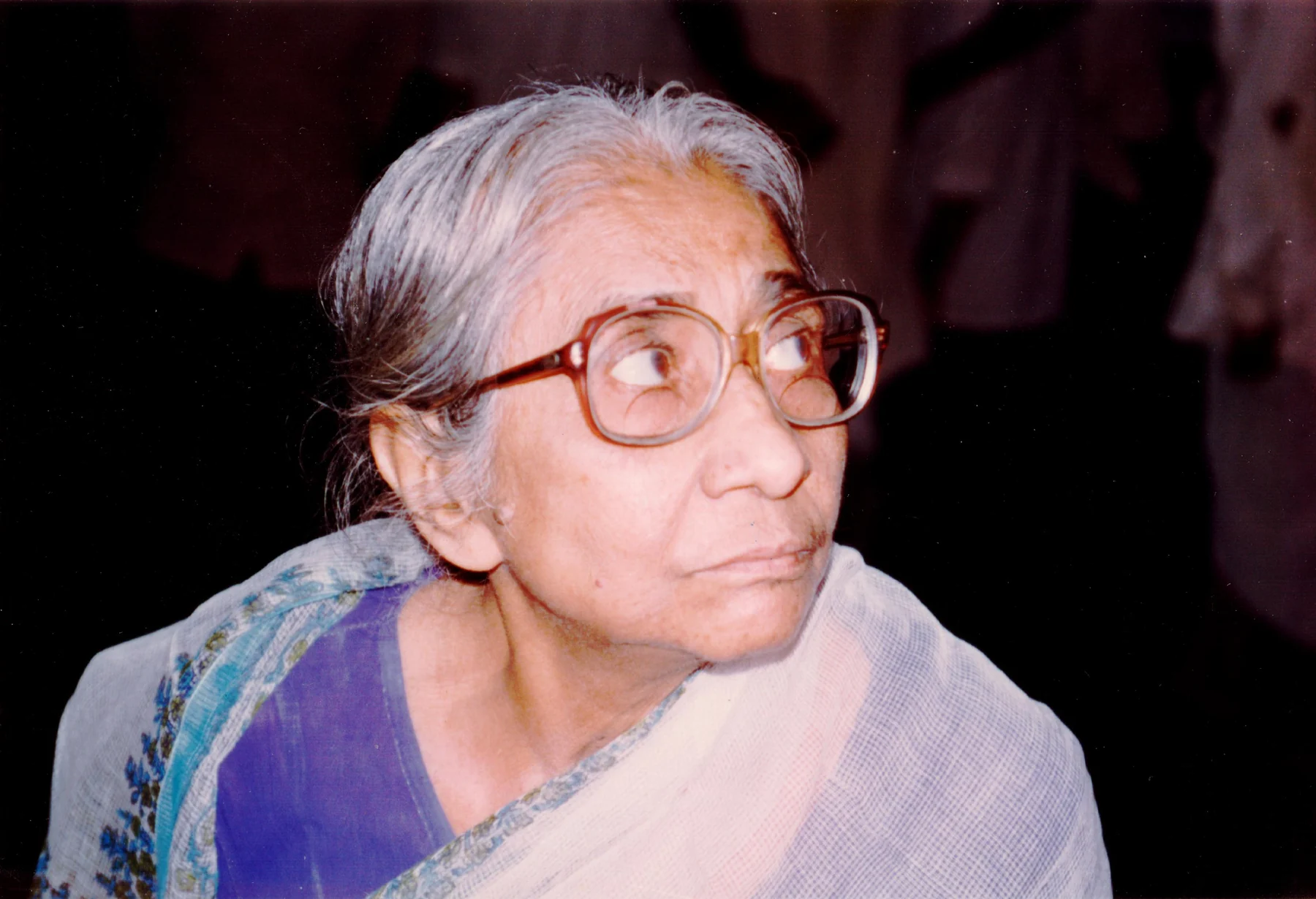
Asima Chatterjee was born in Calcutta on 23 September 1917 and studied chemistry when opportunities for women were restricted. After graduating from Scottish Church College in 1936, she completed an MSc at Calcutta in 1938 and began research with Prafulla Kumar Bose. Her 1944 DSc concerned naturally occurring indole alkaloids and coumarins. The academy memoir identifies this as the first research DSc awarded to a woman by an Indian university. That carefully defined distinction should not become the broader and inaccurate claim that no Indian woman had previously earned a science doctorate anywhere.
International experience supported a continuing Indian programme
Chatterjee founded the chemistry department at Lady Brabourne College in 1940. During research leave from 1947 she worked with Lloyd Parks at Wisconsin, László Zechmeister at the California Institute of Technology and Paul Karrer at Zürich. Their subjects included glycosides, carotenoids and indole alkaloids. She returned to India and became a reader at Calcutta in 1954, then Khaira Professor in 1962. Her career was therefore neither an uninterrupted progression within one laboratory nor a permanent move overseas: knowledge and collaborations developed abroad supported a long programme of teaching and investigation in Calcutta.
Plant compounds posed different kinds of questions
Her 1961 Shanti Swarup Bhatnagar citation recognises an active school of advanced research in natural products, particularly alkaloids and coumarins. Identifying which compounds a plant contains is one task; determining their molecular arrangement is another. A1976 paper with Avijit Banerji, Priyalal Majumder and Rekha Majumder makes the difference concrete. Its abstract reports indolic bases isolated from Rhazya stricta leaves, a proposed structure for new rhazinaline and spectroscopic confirmation of geissoschizine. The latter mattered to questions about how plants construct other alkaloids. These are chemical findings, with value beyond whether a substance becomes a medicine.
Structure work belonged to named collaborations
A 1982 Journal of Organic Chemistry paper credits Chatterjee, Ashim Kumar Ghosh and Edward W. Hagaman for carbon-13 nuclear magnetic resonance analysis of flexicorine. Its title specifies a structural investigation of a diindole alkaloid from Rauwolfia reflexa. It supplies a better description of the contribution than a vague claim that she discovered chemotherapy. Her publications extended across isolation, stereochemistry, synthesis and reactions. The coauthors also matter: the record shows a research community combining botanical material, chemical expertise and analytical techniques, rather than one person independently performing every part of every investigation.
Teaching required laboratories as well as lectures
Chatterjee held the Khaira chair until 1982 and headed Calcutta’s chemistry department from 1969 to 1979. Her memoir describes scarce early scholarships and laboratory resources, followed by efforts to secure equipment, research space and support for natural-product chemistry. She became general president of the Indian Science Congress in 1975 and later served as a nominated Rajya Sabha member. These were different forms of responsibility: supervising research, organising institutions and participating in public life. The parliamentary record establishes her nominated service in 1982–1990 without turning that appointment into an earned academic qualification.
A legacy that needs precise claims
Chatterjee pursued the possible practical uses of plant products as well as fundamental chemistry. Institutional commemorations associate her with Ayurvedic formulations and pharmacological research, but those summaries do not establish current clinical effectiveness or freedom from adverse effects. Her chemical papers should be read for the questions they actually tested. She died in November 2006; institutional and publisher records disagree over the day. Remembering her with that uncertainty visible preserves both her substantial achievements and the standards of evidence that made those achievements meaningful.
Quick answers
Frequently asked questions about Asima Chatterjee
- What did Asima Chatterjee study?
- She studied natural products, especially alkaloids and coumarins, using isolation, structural analysis, chemical transformation and synthesis.
- Did she discover cancer chemotherapy?
- That is too broad. Her work contributed to natural-product chemistry; individual chemical findings and clinical development require separate attribution and evidence.
- Why is her exact death date not given?
- The INSA record and memoir give 24 November 2006, while a later publisher dedication gives 22 November. Both agree on November 2006.
Keep exploring
Lives connected to this story
- Janaki Ammal
Compare another Indian woman’s research education, experiments and institution building.
- C. V. Raman
Explore another Indian scientific career through instruments, collaborators and research institutions.
- C. N. R. Rao
Compare a materials-chemistry career with another Indian chemistry research tradition.
Sources and further reading
Explore the evidence
These references support the biography and offer further reading. Official records, first-person accounts and independent reporting provide different perspectives; image records document attribution and licensing.
- 1. Indian National Science AcademyAsima Chatterjee, biographical memoir by Julie Banerji (2007)
Full 33-page academy memoir acquired and read. Julie Banerji was Chatterjee’s daughter and collaborator. Its commemorative assessment and sweeping therapeutic claims are not independent clinical evidence. The memoir dates fellowship to 1960; the current fellow record says 1961. Election year omitted.
- 2. Indian National Science AcademyAsima Chatterjee: fellow record
- 3. Council of Scientific and Industrial ResearchAsima Chatterjee:1961 prize citation
- 4. National Book Trust, IndiaWomen Scientists in India: Asima Chatterjee entry
Institutional biographical entry read through indexed text; used for dated appointments and training, not therapeutic recommendations.
- 5. Chemical Society of Japan / Oxford AcademicAlkaloids of Rhazya stricta: rhazinaline and geissoschizine (1976)
Publisher abstract and byline read. Full five-page methods were not accessible; no claim to have inspected spectra, yields or clinical outcomes. The issue is July 1976; 19 April 2006 is the digital publication label.
- 6. American Chemical SocietyFlexicorine carbon-13 NMR study (1982), DOI 10.1021/jo00348a026
Publisher record, byline and title read. Full paper not acquired. Uses the 1982 issue date, not the 2002 digital posting. No independent spectral reanalysis is claimed.
- 7. Rajya Sabha SecretariatWomen Members of Rajya Sabha: nominated members table
- 8. De Gruyter; editors Dilip Kumar Maiti and Bubun BanerjeePublisher preview: dedication to Asima Chatterjee (2025)
The preview dedication gives 23 September 1917 to 22 November 2006, conflicting with the INSA record and memoir’s 24 November. Exact death day withheld from schema facts.