
The short answer
Two petitions can concern the same conflict while asking for different action. The date when a petition was written can also differ from the date Parliament received it.
Evidence and interpretation
What each record can establish
Read each record in the context in which it was produced.
| Record | Evidence it supplies | Limit of inference |
|---|---|---|
| 1865 account | A dated request for inquiry | That an inquiry took place |
| 1866 catalogue | Restoration request, presentation and printing | A decision restoring land |
| Implementation record | Action taken on a defined request | What the petitioner intended beyond the record |
Chronology
A timeline of the turning points
Request for inquiry
Tāmihana seeks an impartial inquiry into the events in Waikato.
Restoration petition
The National Library catalogue records presentation to the House.
State the remedy in each record
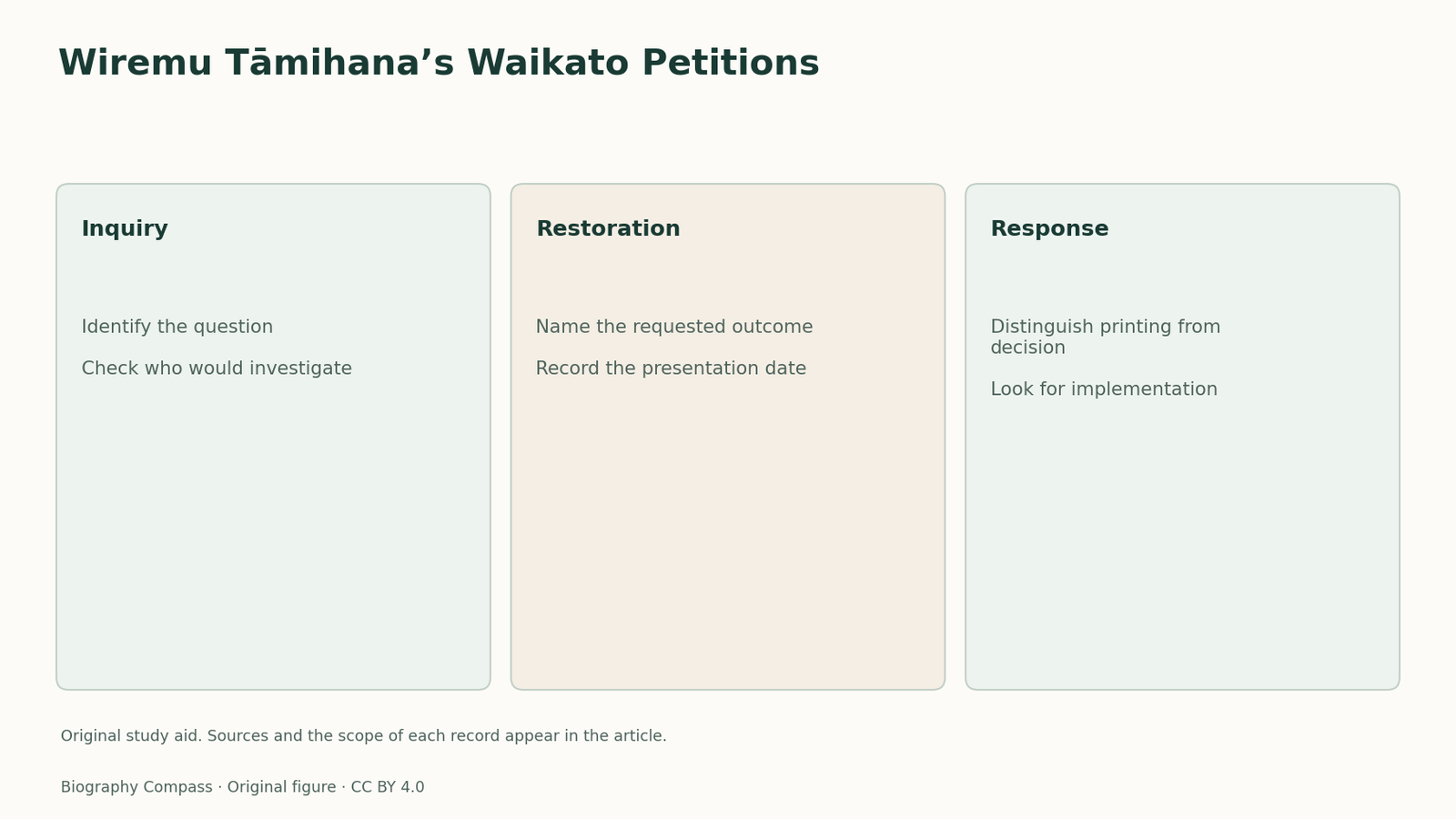
The Dictionary of New Zealand Biography describes Tāmihana’s July 1865 request for an impartial inquiry into the conflict. The National Library entry for a separate 1866 petition identifies a request for restoration of Waikato and a date of presentation to the House. Write the remedies in different columns. A request for inquiry asks a body to investigate, while a request for restoration specifies a material outcome.
Distinguish submission and parliamentary action
The 1866 catalogue title identifies presentation and an order to print. Those facts establish steps in receiving and circulating the petition. They do not themselves return land. For a claim that a body granted a remedy, look for a decision, order or other official act that does so. An archive can preserve a demand precisely even when it provides no evidence of immediate satisfaction.
Read the archive name as metadata
The catalogue transcribes a form of the name without modern macrons. Search variants can recover records that a single spelling misses. Preserve the record title when identifying it, and use the modern biographical form in exposition. Record a language or translation note if comparing wording, since the choice of rendering may change the force of a request.
Construct a claim-and-response sheet
Make a sheet with columns for date written, date received, requested action, recipient response and implementation. Enter only the fields supplied by each document. Leave the rest blank rather than filling them from the next document with a similar title. An unanswered field tells you what kind of record to seek next.
Continue the chronology
Related history guides
Biography context
Explore New Zealand through connected lives
Connected biographies
People behind the records
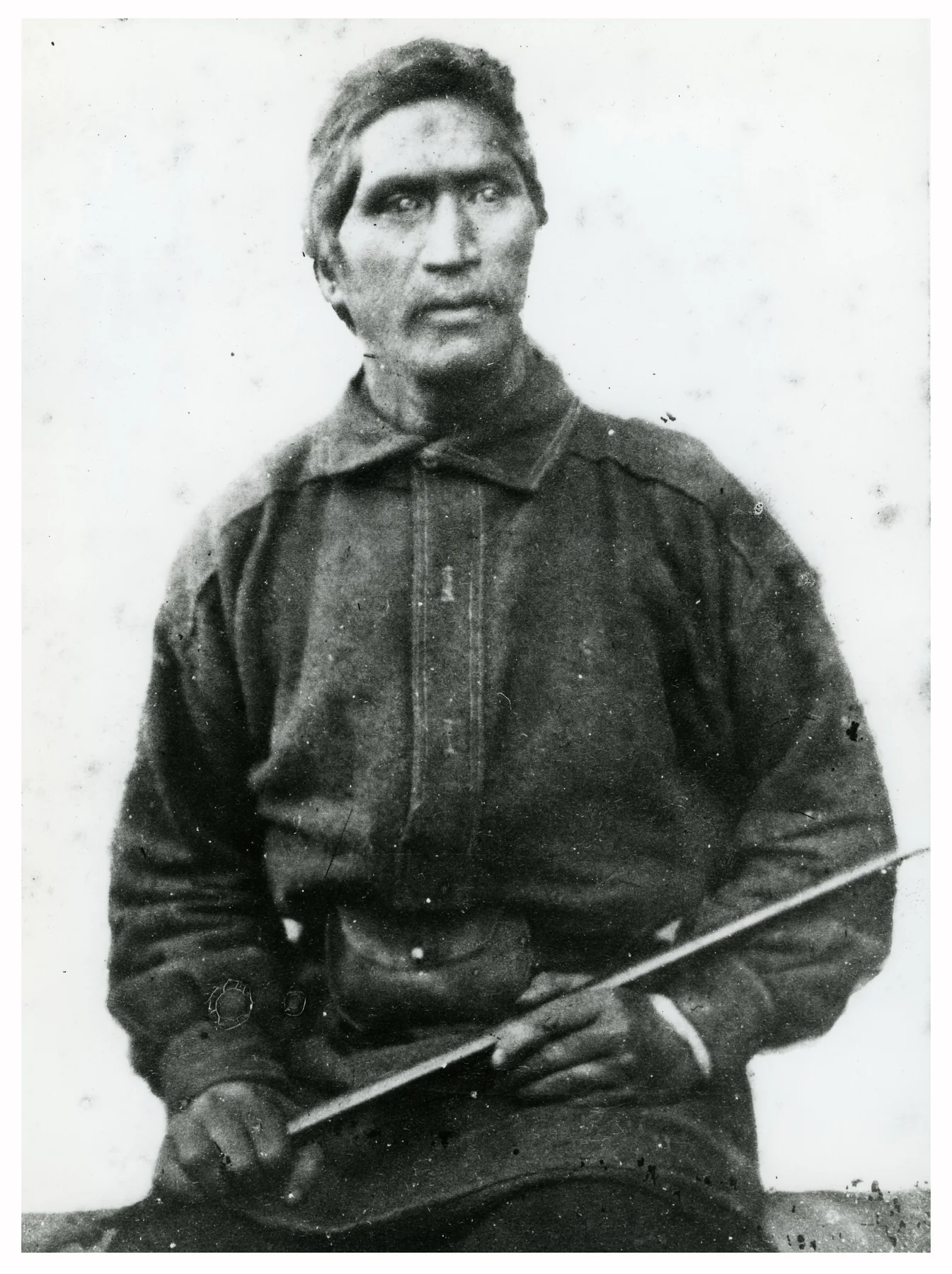
c. 1805–1866
Wiremu Tāmihana
Ngāti Hauā leader, teacher and diplomatTāmihana helped bring iwi into the Kīngitanga and sought inquiry and redress through negotiation and petition.Read biographyQuick answers
Common questions
- Did the order to print restore Waikato land?
- It records the circulation of the petition in Parliament. Restoration would require evidence of a separate decision and its execution.
Primary and institutional sources
How this history was checked
The records below support the chronology and the evidence comparison. The reading exercise is original. This article was reviewed on 5 November 2026.