
The short answer
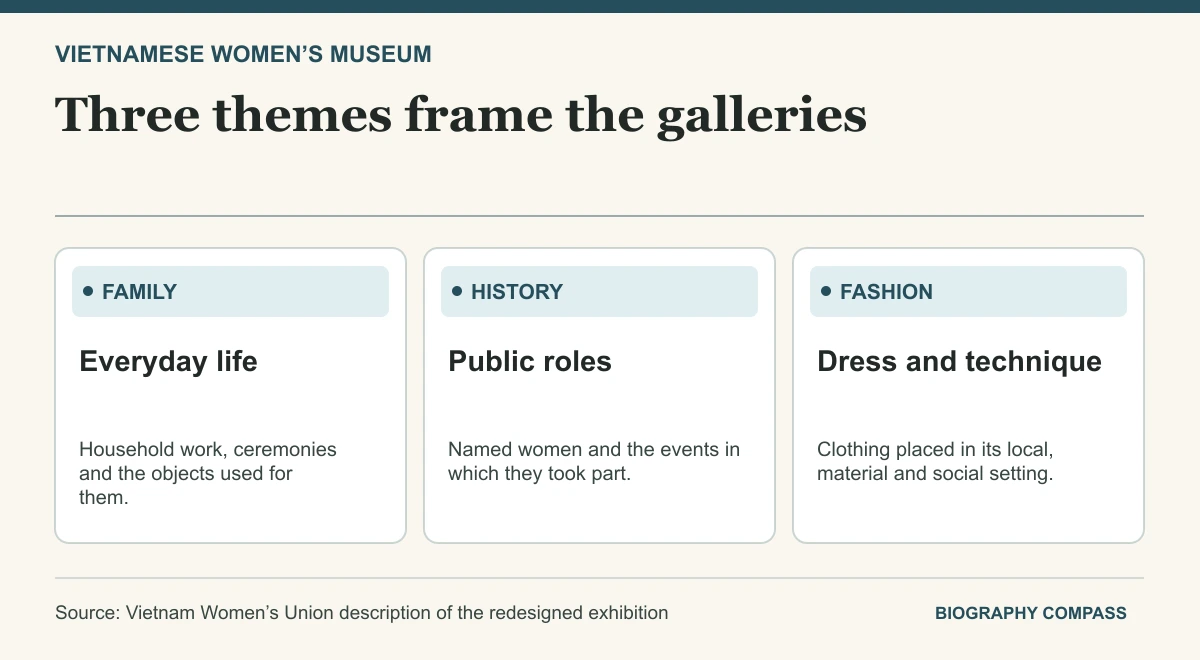
A 1987 decision established the Vietnamese Women’s Museum under the Vietnam Women’s Union. It opened in 1995 and presented a redesigned permanent exhibition in 2010. The redesign made the subject visible from three directions: everyday family life, women’s historical roles and clothing as material evidence.
Compare the records
How to read the three gallery themes
Each theme places its objects alongside a different kind of information about women’s lives.
| Theme | Subject | What to look for |
|---|---|---|
| Women in Family | Household and family life | An object in the context of work or a ceremony. |
| Women in History | Women’s participation in events and public life | A named person, place or historical moment. |
| Women’s Fashion | Dress and adornment | Materials, skills, regional traditions and occasion. |
Chronology
A timeline of the turning points
A museum is authorised
Phạm Văn Đồng signed the government decision establishing the museum.
Visitors admitted
The building opened as a public museum in Hanoi.
Reworked permanent galleries open
New displays organised the museum’s account around family, history and fashion.
From the establishment decision to the opening
The 1987 establishment decision, signed by Phạm Văn Đồng, gave the Vietnam Women’s Union a museum with a collecting, research and exhibition role. The Cultural Heritage Department records 20 October 1995 as the public opening. That date marks the point at which the collection became a public exhibition and falls on the anniversary of the founding of the Vietnam Women’s Union.
Why the museum changed the permanent galleries
The Women’s Union describes the post-renovation permanent displays through three themes: Women in Family, Women in History and Women’s Fashion. Their arrangement allows an object to answer a question about everyday work, a public event or clothing and technique. A dress, for instance, can be studied for how it was made, then placed in the setting in which its wearer used it.
How to compare two national museums
The Museum of Ethnology introduces particular communities and supplements its object displays with a garden of buildings. The Women’s Museum uses its three themes to bring material from different communities into the same account of women’s lives. Reading both can give a single object two contexts. The ethnology label can identify where it was made, while the women’s museum’s thematic approach can help explain the work or social occasion associated with it.
Continue the chronology
Related history guides
How the Vietnam Museum of Ethnology Took Shape
Compare the Ethnology Museum’s community galleries and full-scale buildings.
Read the timeline1962–1966How Vietnam Established Its National Fine Arts Museum
See how the Fine Arts Museum uses media as another way to place objects in context.
Read the timelineConnected biographies
People connected to this history
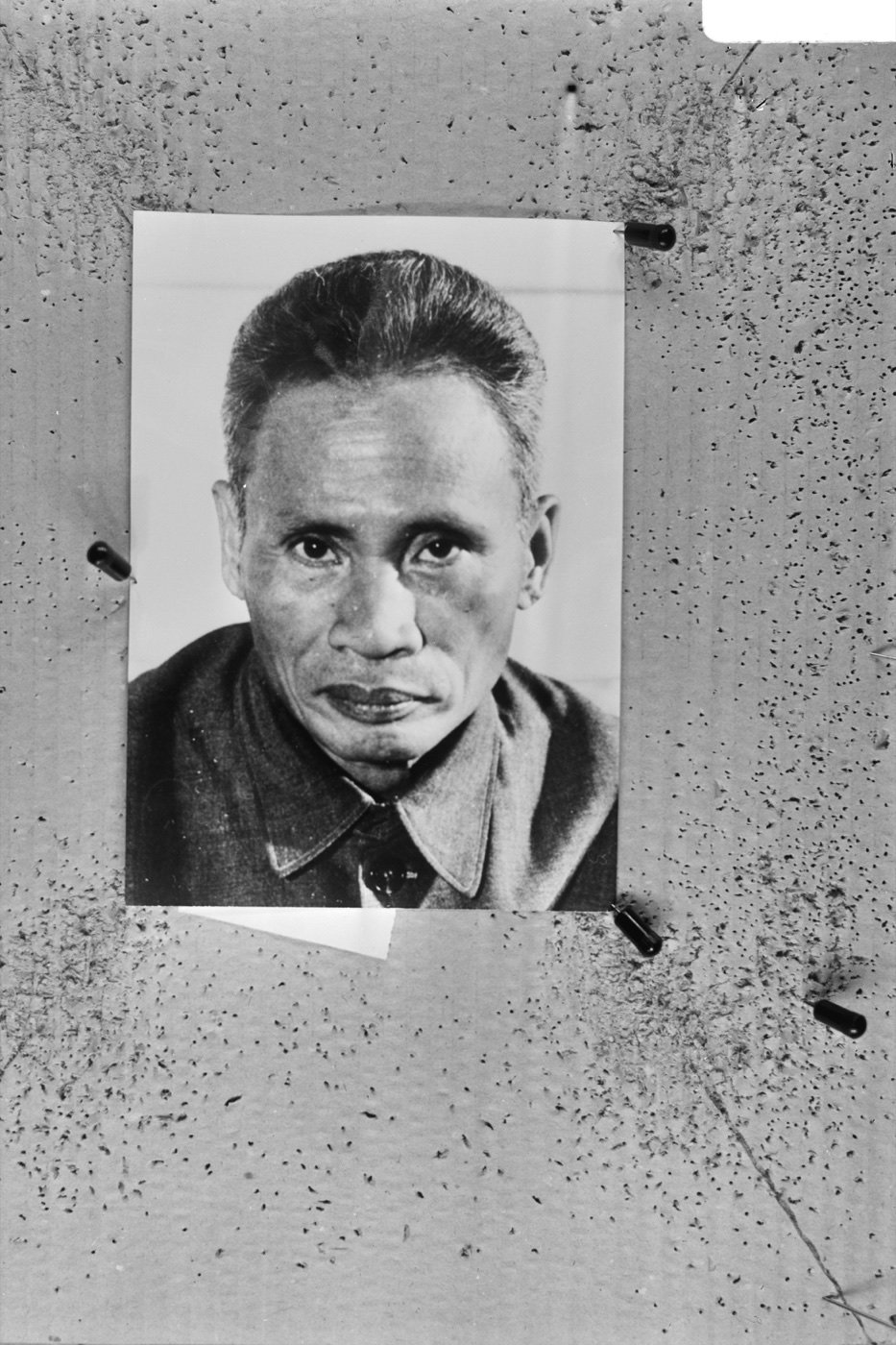
1906—2000
Phạm Văn Đồng
Prime minister and diplomatThe revolutionary diplomat who led the Democratic Republic of Vietnam at Geneva and then headed its government through war, reunification and the failures of postwar central planning.Read biographyQuick answers
Common questions
- When did the Vietnamese Women’s Museum open?
- The museum opened to the public in Hanoi on 20 October 1995, eight years after the decision establishing it.
- What are the three permanent themes?
- Women in Family, Women in History and Women’s Fashion.
Primary and institutional sources
How this history was checked
Dates, legal milestones and historical claims are checked against the official and institutional records below. This article was reviewed on 19 November 2026.