
The short answer
A coalition needs a shared purpose without erasing the organisations that join it. The UDF declaration is a concise record of how an anti-apartheid front expressed that purpose at its national launch.
Evidence and interpretation
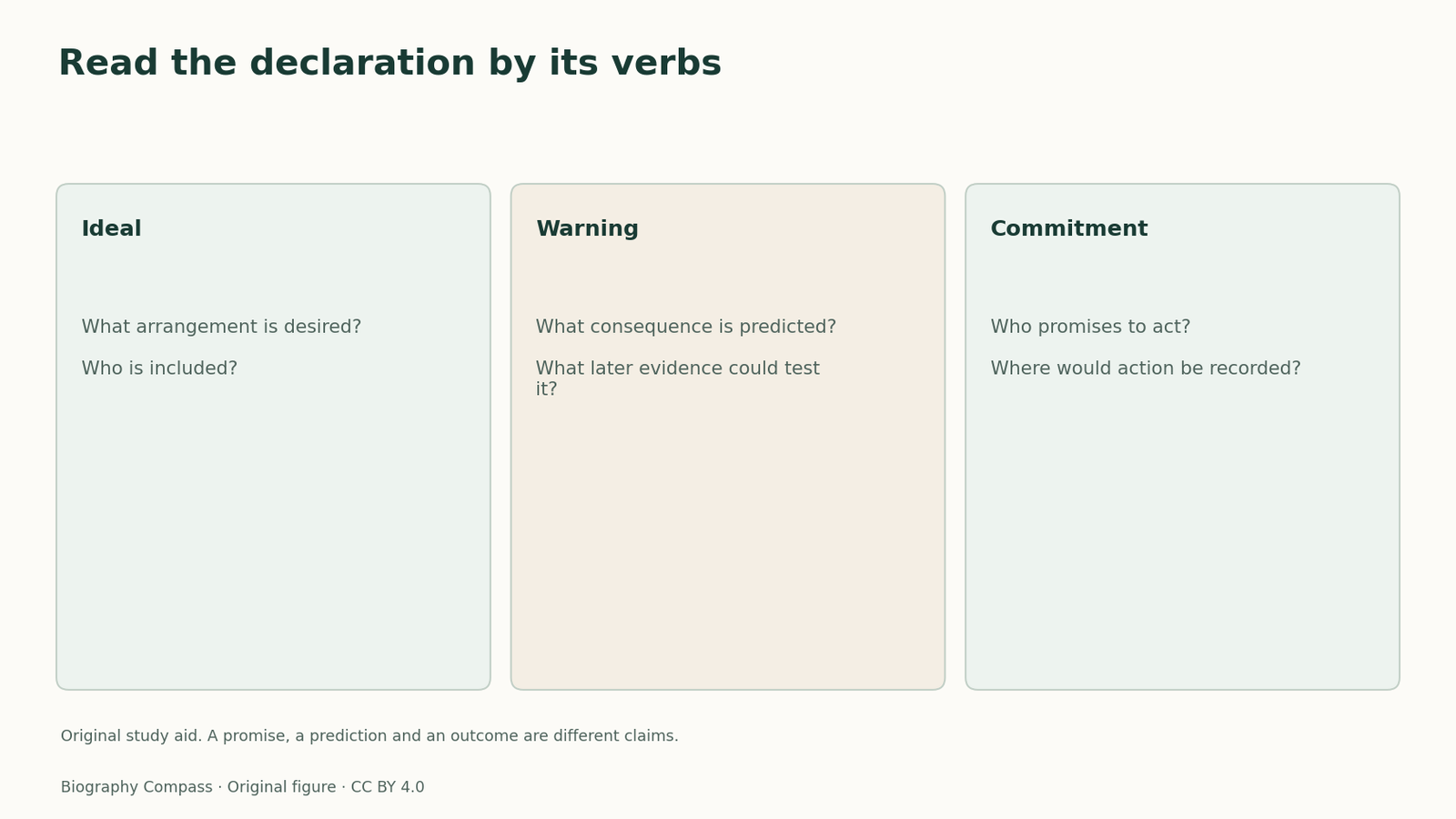
Three kinds of statement in a political declaration
A record can contain all three without giving them the same evidential status.
| Record | What to identify | What to investigate next |
|---|---|---|
| Ideal | The desired political arrangement | How different participants understood it |
| Warning | A predicted consequence | Evidence from the period that followed |
| Commitment | An action the organisation promises | Records showing whether and how it acted |
Chronology
A timeline of the turning points
National launch
The declaration locates the launch at Rocklands in Mitchells Plain.
Leadership under detention
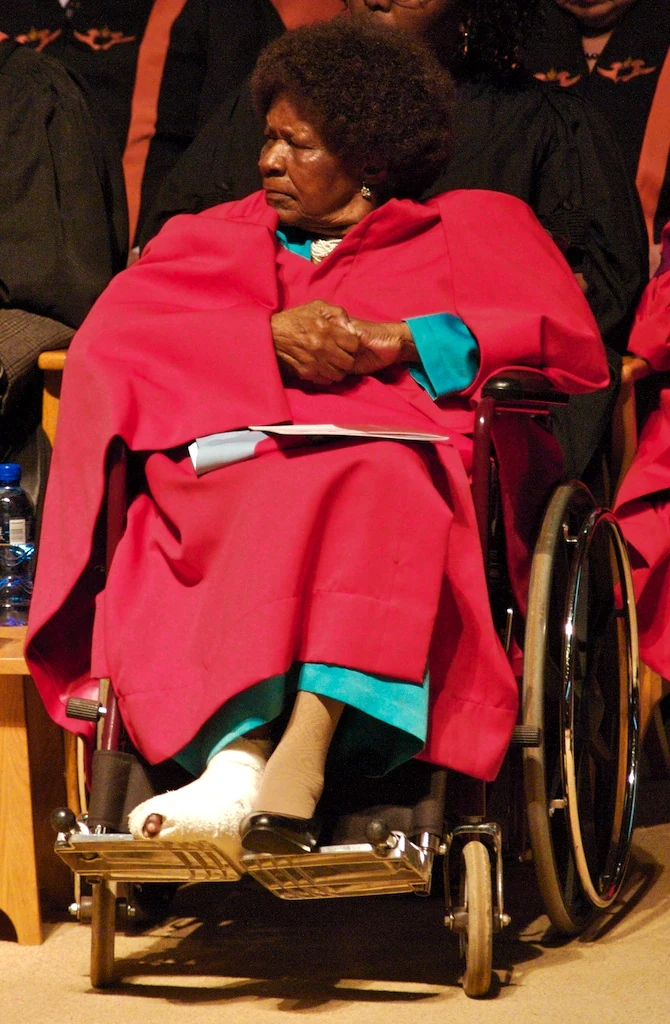
Albertina Sisulu was elected a co-president while in jail.
Establish the record
SAHA catalogues the declaration under collection AL2431, identifies the UDF as creator and dates it to 20 August 1983. The text names Rocklands Civic Centre, Mitchells Plain. The catalogue and document therefore support identification before interpretation.
A catalogue entry describes a record. It does not independently verify every prediction or political claim made inside it.
A programme of opposition and cooperation
The declaration rejected the constitutional proposals and Koornhof Bills, called for a non-racial democracy and brought together community, worker, student, women’s, religious and sporting organisations. It pledged consultation, education, organisation and common action.
Those commitments describe what the front said it would do. They are not proof that every affiliate agreed on every tactic, or that every promised form of consultation occurred.
Sources for this section: [1]
Warnings are not retrospective results
The text anticipated continuing hardship, division and exploitation under the government’s proposals. Read those passages as the declaration’s political diagnosis and forecast, rather than as a later statistical report.
SAHO’s organisational account places Albertina Sisulu within the preparations and leadership, while the government biography confirms election during imprisonment. That connects the personal and institutional stories without making her the document’s sole author.
An exercise in verbs and authority
Sort a paragraph into three categories: an ideal, a warning and a commitment to act. Then ask what later record would be needed to test implementation. Reference answer: a declaration can establish the stated commitment; minutes, campaign records or testimony would be needed to examine its delivery.
The same method prevents a large crowd estimate from becoming a substitute for analysis. This study does not select one of the differing attendance figures in later summaries. Its main evidence is the declaration’s wording and provenance.
Continue the chronology
Related history guides
Biography context
Explore South Africa through connected lives
Connected biographies
People behind the records
Quick answers
Common questions
- Does the declaration prove all its promises were fulfilled?
- No. It establishes stated commitments; implementation requires further evidence.
Primary and institutional sources
How this history was checked
Read the selected records below alongside this explanation. A later recollection, an advocacy text and a court ruling answer different questions; cited excerpts do not stand for a complete archival survey. This article was reviewed on 4 November 2026.
- United Democratic Front; three-page document, South African History Archive collection AL2431, A1.2.2.2.5Declaration of the United Democratic Front, 20 August 1983
- South African History Archive, AL2431_A1.2.2.2.5_p1_3Declaration of the United Democratic Front: catalogue record
- South African History Online; selected organisational historyAlbertina Sisulu and the organisations she was connected to
- Government Communication and Information System, centenary publication, 2018Albertina Sisulu Biography