
The short answer
An old warship goes to the breaker’s yard, but Turner gives the journey the scale of a historical farewell. The painting changes the facts in order to make the event mean more than a transport operation.
Chronology
A timeline of the turning points
Trafalgar
Temeraire distinguished herself in the battle, including defending Victory.
A changing naval role
Peace reduced the need for great warships; the vessel later served off Sheerness.
The final tow
Two steam tugs moved the stripped hull to Rotherhithe for breaking.
The painted farewell
Turner exhibited his imaginative reconstruction at the Royal Academy.
National collection
The picture entered the collection through the Turner Bequest.
Identify the work before interpreting the symbol
The National Gallery’s painting NG524 is an oil on canvas, 90.7 by 121.6 centimetres, exhibited in 1839. Its longer title ends with 1838 because that was the year of the ship’s last journey. Confusing those dates collapses an event into the artwork that reimagined it. The portrait above supplies artist context; the linked collection record shows the actual painting.
The composition gives a large pale sailing vessel and a small dark steam tug an unequal but interdependent relationship. Scale and dignity belong to the older ship, practical movement to the smaller machine. Before assigning them a fixed allegorical meaning, notice how the image makes each necessary to the encounter.
What happened to the real Temeraire
Temeraire’s reputation rested on service at Trafalgar in 1805. Peace after 1815 left many major warships without their former role. By 1838 this ageing vessel had been sold for breaking. Reusable equipment, including masts and yards, was removed before the journey to John Beatson’s yard at Rotherhithe.
The real operation involved two tugs and a mastless hull, not a fully dignified warship sailing under its own power. Judy Egerton’s catalogue account grounds that distinction in ship records and contemporary reporting. A remembered naval achievement and a routine commercial disposal meet in the subject, but they are not the same historical moment. The painting depends on the distance between them.
The deliberate changes are part of the argument
Turner restored lower masts and some rigging, and replaced the vessel’s darker paint scheme with white and gold. The ship appears almost spectral rather than merely dismantled. He also changed the tug’s arrangement so that smoke passes dramatically through the older vessel’s masts. These choices make the picture a construction, not an eyewitness diagram.
The differences should not be corrected away in the reader’s imagination. They direct attention to what the old vessel once represented and to the new force moving it towards destruction. Turner’s dispute with an engraving that altered the tug is particularly revealing: an apparently more plausible mechanical detail could undermine the visual relationship he had intentionally made.
Why the sunset is more than weather
The fiery sky gives the departure an elegiac atmosphere, while the pale moon introduces another temporal register. The National Gallery points out that the sunset does not fit the journey’s literal geography. It is an imaginative device, reinforcing transition rather than documenting an observed hour. Light gives the scene its emotional structure.
This is consistent with Turner’s wider practice of transforming observations through pictorial invention. His paintings can bring several viewpoints into a single composition, while sketches preserve the experience from which invention begins. For this work, a useful question is how an ordinary act of towing becomes an encounter between memory and present necessity. That is an interpretation to test against the image, not a hidden code that replaces looking.
Not simply an anti-steam manifesto
The contrast between sail and steam can suggest loss without making Turner an unqualified enemy of technology. He travelled using modern transport and later made the railway a major subject in Rain, Steam, and Speed. The National Gallery explicitly describes his attitude to industrial modernity as ambiguous. Mourning an old vessel and recognising new machinery could coexist.
A productive comparison therefore asks how the two pictures distribute power, movement and atmosphere rather than forcing them into opposite political slogans. The tug is small but effective; the railway engine has extraordinary forward energy. Turner makes change visible and emotionally complicated. Neither nostalgia alone nor a simple celebration of progress exhausts what these images allow viewers to consider.
Continue the chronology
Related history guides
Biography context
Explore United Kingdom through connected lives
National Gallery NG524
The collection record includes the painting, object facts and its account of Turner’s deliberate changes.
Explore the biographiesArtist biographyJ. M. W. Turner
Read about training, travel, printmaking, modern subjects and the national bequest.
Explore the biographiesEngineering contextIsambard Kingdom Brunel
The engineer of the Maidenhead bridge in Turner’s later railway painting.
Explore the biographiesConnected biographies
Art and an engineered modern world
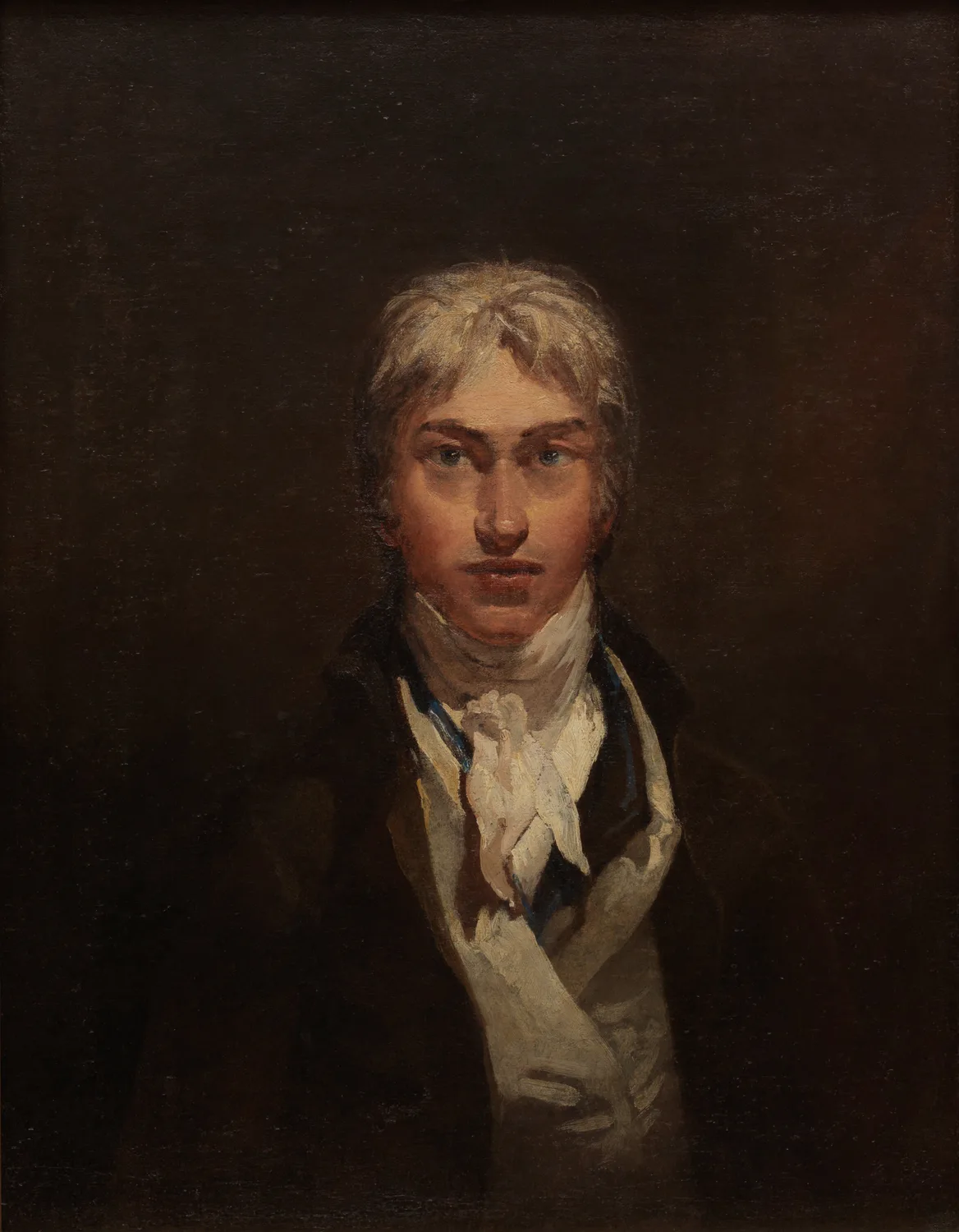
1775–1851
J. M. W. Turner
Painter, watercolourist and printmakerJ. M. W. Turner was an English artist whose landscapes, watercolours and prints transformed observed places into ambitious studies of light, history and change.Read biography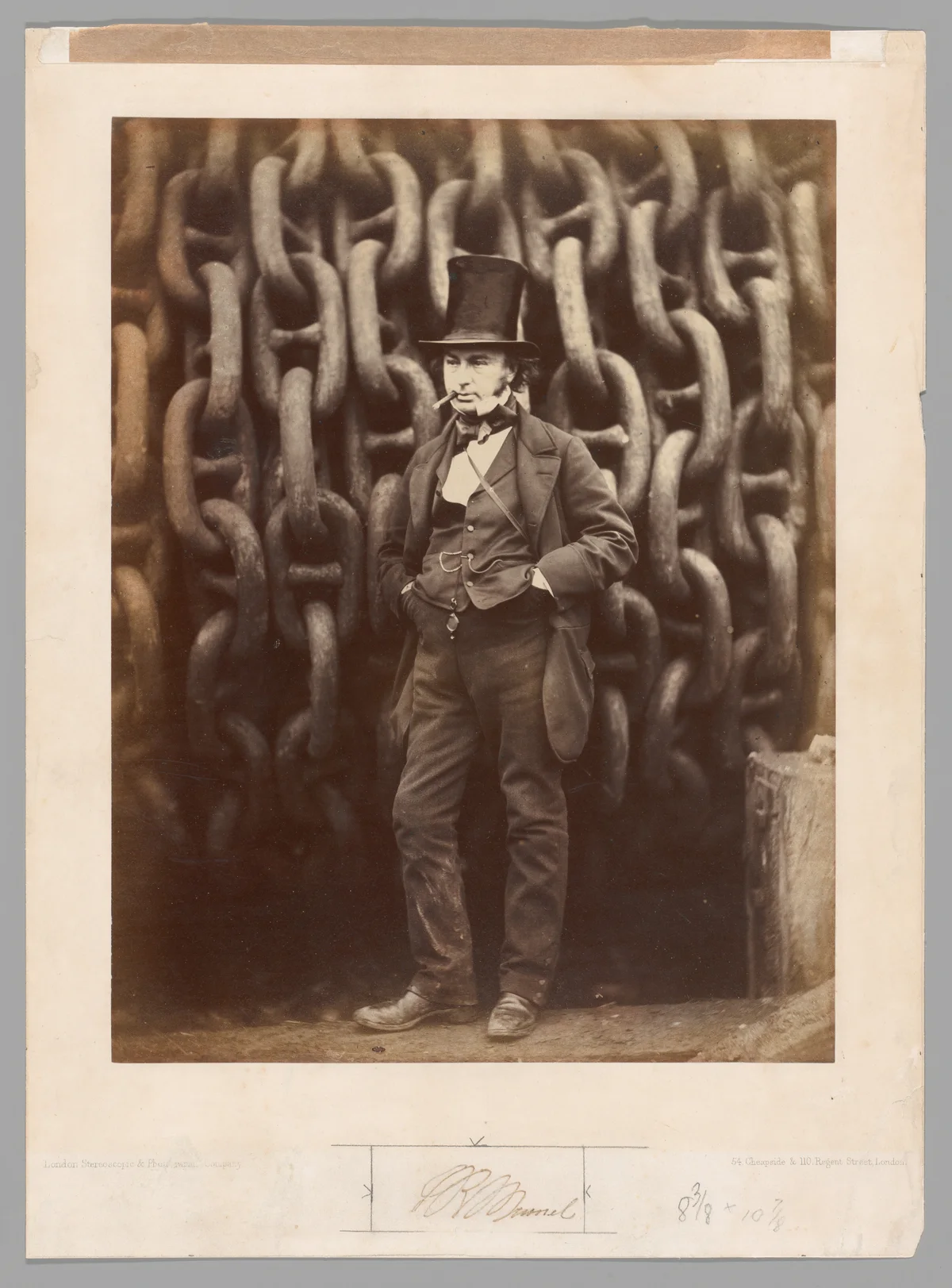
1806–1859
Isambard Kingdom Brunel
Consulting civil engineer for railway, bridge, dock and steamship enterprisesIsambard Kingdom Brunel ran an engineering practice serving railway and maritime companies. As the Great Western Railway’s engineer, he helped connect London and Bristol in 1841. His ships and structures combined technical ambition with financial risk and depended on investors, contractors and workers.Read biographyQuick answers
Common questions
- Is the painting dated 1838 or 1839?
- The final tow happened in 1838, which appears in the long title. The painting is catalogued as 1839 and was exhibited that year.
- Were the ship’s masts still standing on its final journey?
- No. Reusable masts and yards had been removed. Turner restored masts in the painting to give the ship a different visual presence.
- Does the painting prove Turner opposed steam power?
- No. It can mourn the ship’s passing while acknowledging modern technology. His interest in railways and steam travel complicates a simple anti-industrial reading.
Primary and institutional sources
How this history was checked
The object record, in-depth discussion and selected Egerton catalogue passages were read, including the work’s dimensions, exhibition, tow, sale preparation and altered engraving. The guide also uses the Met’s account of Turner’s working methods and the National Gallery’s railway interpretation. It does not claim an eyewitness account, a complete technical examination or a visit to the painting. This article was reviewed on 23 October 2026.
- National GalleryJoseph Mallord William Turner: career, bequest and documented slavery investment
- Metropolitan Museum of Art / Elizabeth E. BarkerJoseph Mallord William Turner, 1775–1851: training, travel and printmaking
- Paul Mellon CentreTurner artist subject guide: concise chronology and collection context
- The HuntingtonJoseph Mallord William Turner: life dates and the bequest
- National GalleryThe Fighting Temeraire, NG524: overview, in-depth account and key facts
- National Gallery / Judy EgertonThe Fighting Temeraire: selected object, provenance, engraving and ship-history catalogue passages
- National GalleryRain, Steam, and Speed, NG538: technology and perspective
- J. M. W. Turner / Wikimedia CommonsExact self-portrait, creator, public-domain basis and file history
- Wikimedia Commons / Tate sourceComplete current self-portrait JPEG