
The short answer
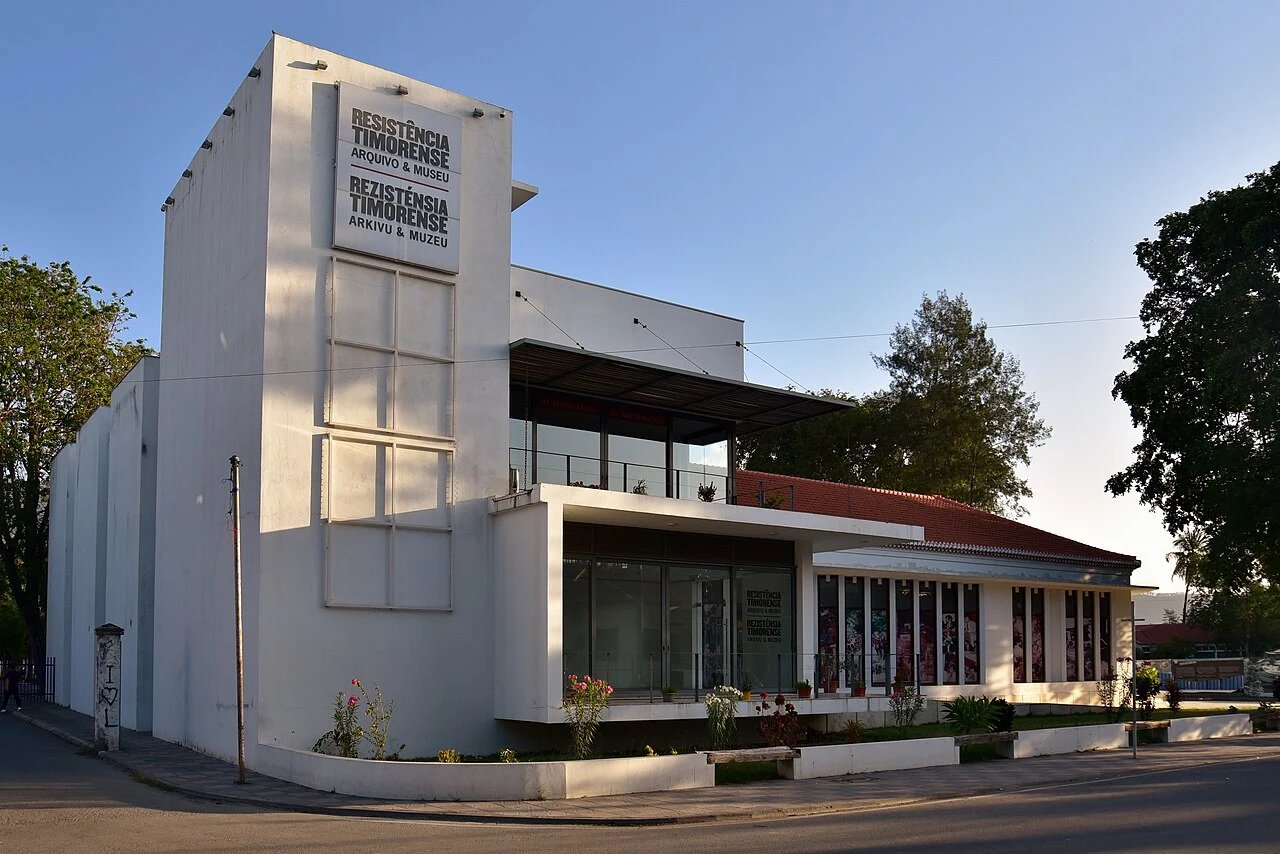
A photograph on a museum wall may also be an archival record, with a maker, a date and a history of custody. Dili’s Timorese Resistance Archive and Museum brings these uses together. Its first phase in 2005 and its headquarters inauguration in 2012 explain why both dates appear in accounts of the institution.
Compare the records
Read an exhibition and an archive differently
The same photograph can appear in a public display, a catalogue and a published history.
| Record | What to look for | Question it can answer |
|---|---|---|
| Exhibition caption | The event or person that illustrates the gallery narrative. | Why was this item selected for display? |
| Archive description | The collection, creator, date and associated documents. | Where does the item sit among other records? |
| Opening programme | The date, institution and publications associated with an event. | Which part of the museum opened in 2012? |
Chronology
A timeline of the turning points
First phase
The government’s development plan records completion of the initial phase of the archive and museum.
Digitised material available
The plan described hundreds of important resistance documents already digitised and accessible online.
Headquarters inaugurated
The official programme announced the opening and the launch of a Tetum edition of a work on Konis Santana.
Why there are two opening dates
The government’s strategic plan looked back on the completion of the first phase in 2005 and described digitised documents available online. The May 2012 programme, in turn, specified the inauguration of the headquarters building. The earlier reference dates work already accomplished. The later one dates a public occasion at a building. Digital access to some of the material was possible before that inauguration.
Following an image beyond the wall
Imagine finding a photograph of a meeting in a gallery devoted to the independence struggle. A caption might identify the participants and explain why the meeting mattered. The archive raises additional questions: who created the image, what other records accompanied it, and what does its description actually establish? Looking for a related group of papers or images in the catalogue makes it possible to test an identification against surrounding evidence.
A book launch at the opening
The official programme also announced a Tetum edition of José Mattoso’s work on Konis Santana and the Timorese resistance. Its place in the opening ceremony reveals a less visible form of access. A researcher might encounter the material in a digitised document, a museum display or a published account in Tetum. These encounters can inform one another while preserving the distinction between an original document and a later author’s interpretation.
Continue the chronology
Related history guides
Why Timor-Leste’s Tais Weaving Entered UNESCO’s Urgent List
Compare the work of documenting a textile with preserving its makers’ identities.
Read the timeline2001–2005How Timor-Leste’s Truth Commission Built the Chega! Report
See how the CAVR collected testimony for a different documentary purpose.
Read the timelineConnected biographies
People connected to this history
Quick answers
Common questions
- What happened at the museum in 2005?
- The government recorded the completion of its first phase that year.
- What opened on 20 May 2012?
- The inauguration programme identified the archive and museum’s headquarters building in Dili.
Primary and institutional sources
How this history was checked
Dates, legal milestones and historical claims are checked against the official and institutional records below. This article was reviewed on 19 November 2026.
- Government of Timor-LesteInauguration of the archive and museum, May 2012
- Government of Timor-LesteStrategic Development Plan, social capital and the museum’s first phase
- Casa Comum / Fundação Mário Soares e Maria BarrosoTimorese Resistance Archive holdings
- Timor-Leste TourismTimorese Resistance Archive and Museum