
The short answer
Begin with a play's dramatic situation, then listen for the competing versions of life its characters offer. These five selections introduce memory, desire, family pressure, grief and fragile companionship in Williams's theater. They are a starting route, not a complete bibliography. The dates below identify stage productions rather than the publication dates of editions you may encounter.
Production chronology
Five plays, with the dates labeled
These dates identify the selected original stage productions. They do not date every published edition, film, revival or earlier version of a work.
| Selected play | Stage opening | Useful reading focus | Separate event |
|---|---|---|---|
| The Glass Menagerie | Chicago: 26 December 1944; Broadway: 31 March 1945 | Narration, memory and theatrical presentation | The 1945 date here is Broadway, not its first Chicago opening. |
| A Streetcar Named Desire | Original Broadway: 3 December 1947 | Space, status, desire and credibility | Pulitzer: 1948; film with Vivien Leigh: 1951. |
| The Rose Tattoo | Original Broadway: 3 February 1951 | Grief, humor and community | This is a Broadway date, not a film date. |
| Cat on a Hot Tin Roof | Original Broadway: 24 March 1955 | Inheritance, intimacy and withheld information | Pulitzer: 1955; a separate award event in the same year. |
| The Night of the Iguana | Original Broadway: 28 December 1961 | Temporary encounters and companionship | This is a Broadway date, not a film date. |
Chronology
A timeline of the turning points
The Glass Menagerie
Opened in Chicago on 26 December 1944; its original Broadway production opened on 31 March 1945.
A Streetcar Named Desire on Broadway
The original Broadway production opened at the Ethel Barrymore Theatre, directed by Elia Kazan.
Streetcar's Pulitzer
The Pulitzer Prize for Drama followed the play's 1947 Broadway opening.
The Rose Tattoo on Broadway
The original Broadway production opened at the Martin Beck Theatre. The Streetcar film also dates from 1951, a separate event.
Cat on a Hot Tin Roof on Broadway
The original Broadway production opened at the Morosco Theatre; the play won the 1955 Pulitzer Prize for Drama.
The Night of the Iguana on Broadway
The original Broadway production opened at the Royale Theatre, directed by Frank Corsaro.
Start with The Glass Menagerie's remembered world
The Glass Menagerie offers a compact introduction to Williams's theater. Its Chicago opening on 26 December 1944 preceded the Broadway opening on 31 March 1945. Tom Wingfield presents a remembered family, so begin by asking what a narrator can control: selection, emphasis, distance and the point at which a memory ends. Listen for differences between the person recalling events and the person caught inside them.
Read the stage directions alongside the dialogue, noticing how lighting, music or visual presentation could affect an audience. Eddie Dowling and Margo Jones directed the original Broadway production, with Paul Bowles's incidental music and Jo Mielziner's design. Those credits suggest a practical reading exercise: imagine how sound and space might complicate what the characters say.
Read Cat through family pressure and the control of information
Cat on a Hot Tin Roof's original Broadway production opened on 24 March 1955; the play also won the Pulitzer that year. Its setting is a room and gallery in a Mississippi Delta plantation house. Barbara Bel Geddes played Margaret, Ben Gazzara played Brick and Burl Ives played Big Daddy. These are stage credits, not a cast list for a later screen adaptation.
Use the family gathering to examine how money, inheritance and intimacy shape speech. Ask who needs an answer, who can postpone one and who benefits from uncertainty. Compare the pressure of this room with Streetcar's household. If an edition includes alternative endings or explanatory material, identify what belongs to that edition before treating every page as one unchanging performance text.
Widen the route with The Rose Tattoo and The Night of the Iguana
The Rose Tattoo opened on Broadway on 3 February 1951, directed by Daniel Mann. The Night of the Iguana followed on 28 December 1961, directed by Frank Corsaro. Their settings expand this selection beyond the houses of the best-known family dramas: the former uses a Gulf Coast village populated largely by Sicilians, while the latter gathers people at a Mexican coastal hotel.
Read these as opportunities to test a first impression of Williams. What happens to humor when it sits beside grief? Can a temporary encounter change how a character understands isolation? A hotel and a household offer different expectations of belonging. Comparing those spaces makes the selection more useful than assuming that every Williams play repeats the same Southern family story.
Choose a sequence that serves your question
For a broad introduction, read Menagerie, Streetcar and Cat, then add Rose Tattoo and Iguana. That route moves from narration and memory toward more crowded struggles over shared space, before widening the range of setting and tone. It is an editorial sequence rather than a ranking of artistic importance or a claim that the later titles are merely optional footnotes.
A production-history route instead follows the openings in the table: Menagerie, Streetcar, Rose Tattoo, Cat and Iguana. Keep a two-column notebook for each play: what is said, and what a production must do. Record entrances, silence, sound and changes of attention. This keeps reading connected to theater without requiring a particular performance to supply the only possible interpretation.
Keep the script, its editions and its adaptations in conversation
The play on a page, a particular staging and a film are related but distinct objects. Compare them by choosing one question—such as who controls a scene's point of view—rather than asking only whether an adaptation is faithful. In Streetcar, even the change from Tandy to Leigh already marks a different performance history. Film casting and release information belong beside, not inside, the original Broadway record.
The Harry Ransom Center's holdings include drafts, correspondence, galley proofs and production materials. Their existence reminds readers that plays develop through revision and collaboration. A published edition is a useful beginning, not automatic access to every manuscript or production. Use this guide to choose reading questions; consult an edition's own notes when investigating its particular text.
Biography context
Explore United States through connected lives
Williams beyond the selected plays
Place these productions within his education, writing career and surviving literary record.
Explore the biographiesExplore a thematic reading connectionJames Baldwin: desire and belonging
Compare another American writer's engagement with intimate life and social constraints.
Explore the biographiesConnected biographies
Explore writers, desire and the American stage
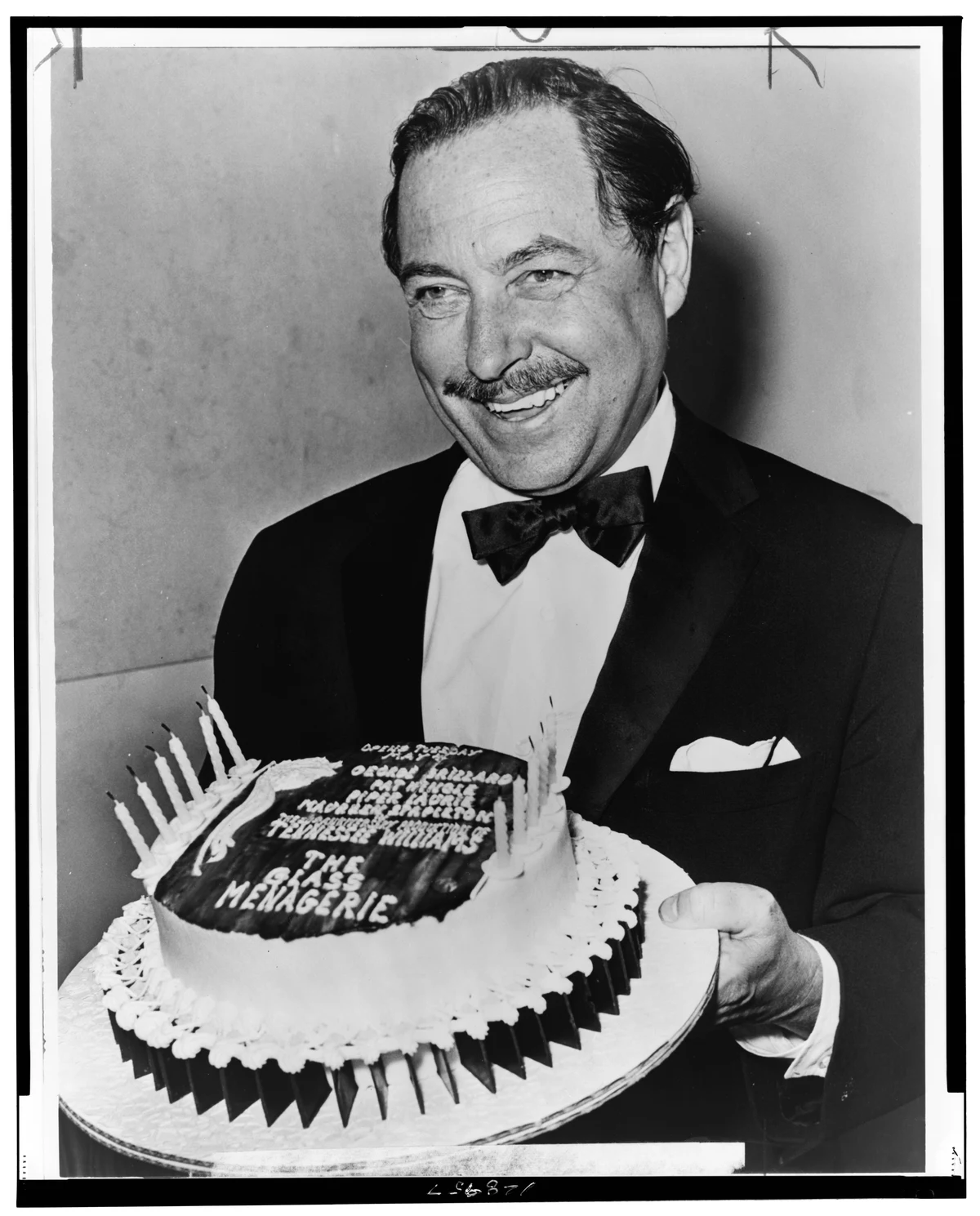
1911–1983
Tennessee Williams
Playwright, fiction writer and poetAn American playwright whose dramas joined lyrical language, theatrical invention and intimate conflicts over desire, memory, money and belonging.Read biography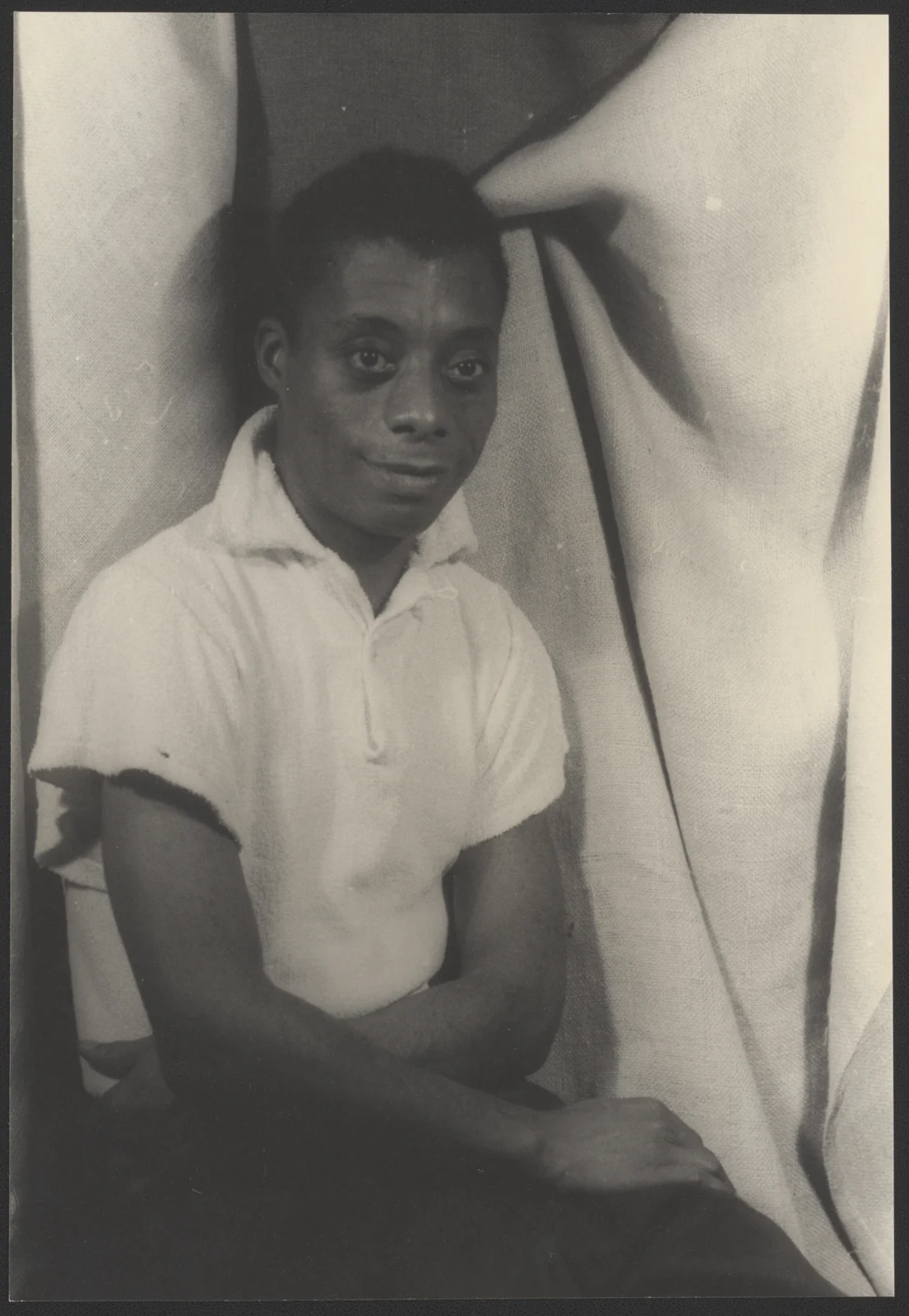
1924–1987
James Baldwin
Novelist, essayist, playwright and civil rights activistAn American writer whose fiction, essays and public interventions connected intimate questions of family, faith and desire with the unfinished struggle for racial justice.Read biographyQuick answers
Common questions
- Which Tennessee Williams play should I read first?
- The Glass Menagerie is a useful starting point for narration and memory. Follow it with A Streetcar Named Desire and Cat on a Hot Tin Roof, then widen the route with The Rose Tattoo and The Night of the Iguana.
- Why do I see both 1944 and 1945 for The Glass Menagerie?
- It opened in Chicago on 26 December 1944 and on Broadway on 31 March 1945. This guide labels those production dates instead of treating them as interchangeable publication years.
- Was Jessica Tandy or Vivien Leigh the original Blanche?
- Jessica Tandy played Blanche in the original 1947 Broadway Streetcar. Vivien Leigh played Blanche in the 1951 film. These are different productions in the play's history.
- Is this a complete list of Williams's plays?
- No. It is a selected five-play introduction with suggested reading routes. Williams wrote many other plays as well as fiction, poetry, essays and a memoir.
Primary and institutional sources
How this history was checked
The Broadway League's original-production records establish the stage dates and credits; the Pulitzer administrator fixes the award years, AFI identifies the film cast and year, and institutional archival guides describe the surviving materials. Reading routes and questions are editorial suggestions for this selected introduction. This article was reviewed on 21 October 2026.
- International Tennessee Williams SocietyTennessee Williams: The Big Three — Chicago and Broadway openings
- Internet Broadway Database, The Broadway LeagueThe Glass Menagerie — Original Broadway Production
- Internet Broadway Database, The Broadway LeagueA Streetcar Named Desire — Original Broadway Production
- Internet Broadway Database, The Broadway LeagueCat on a Hot Tin Roof — Original Broadway Production
- Internet Broadway Database, The Broadway LeagueThe Rose Tattoo — Original Broadway Production
- Internet Broadway Database, The Broadway LeagueThe Night of the Iguana — Original Broadway Production
- The Pulitzer PrizesDrama: Prize Winners by Category
- American Film Institute CatalogA Streetcar Named Desire (1951)
- Harry Ransom Center, University of Texas at AustinTennessee Williams Research Guide
- Harry Ransom Center, University of Texas at AustinTennessee Williams: An Inventory of His Collection