
The short answer
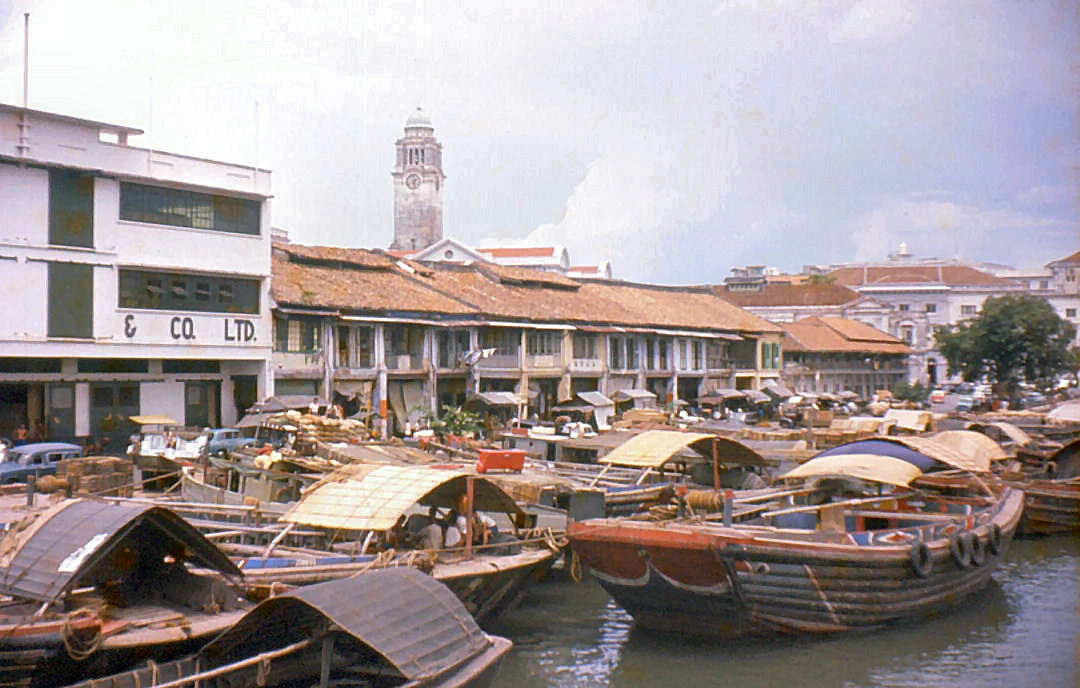
The clean-up often named for the Singapore River also covered the Kallang Basin. Cargo handling, workshops, homes and street food shared the banks of a working waterfront. Over a decade the programme changed how these activities handled waste and where some of them took place.
Reading the records
Where the clean-up happened
The project extended to the trades and settlements draining into the water.
| Change | Action | Effect |
|---|---|---|
| Pollution control | Intercept discharges and improve sanitation. | Reduce incoming waste. |
| Relocation | Move some trades and households. | Change polluting uses of the banks. |
| Channel works | Collect rubbish and dredge. | Remove material already in the rivers. |
Chronology
A timeline of the turning points
Upper Peirce Reservoir opening
Lee Kuan Yew issued a ten-year challenge to restore the rivers.
Multiple agencies joined the clean-up
The measures addressed polluting activities and the channels themselves.
Clean Rivers Commemoration
Lee marked the programme’s first decade.
The challenge named two waterways
Lee Kuan Yew set the challenge at the opening of Upper Peirce Reservoir in 1977. The Ministry of National Development’s history describes a programme that addressed both the Singapore River and the Kallang Basin. Pollution combined discharges from backyard trades, hawkers and farms with waste from settlements. Cleaning a channel therefore required changes upstream and on the banks as well.
Read dredging and relocation together
Dredging removed material already in the channels. Agencies also moved some households and trades and provided other places for activities to operate. The archived commemoration speech records how the government understood that work. A photograph of a cleaner river shows the physical outcome. To understand how the programme changed daily life, follow the records of relocation and the changes to where people worked.
The 1987 event marks one stage in a longer history
The Clean Rivers Commemoration marked a decade of work. A date found in a later waterfront or reservoir history may refer to a different project. Marina Barrage opened more than twenty years after the commemoration. The earlier work on water quality helps explain why the larger basin could take on a new role, while the physical transformation into a freshwater reservoir had its own timetable.
Continue the chronology
Related history guides
Connected biographies
People in this history

1923—2015
Lee Kuan Yew
Founding Prime Minister of Singapore, 1959–1990The lawyer and PAP founder who became prime minister in 1959, led Singapore through independence in 1965 and remained in cabinet after handing power to Goh Chok Tong.Read biographyQuick answers
Common questions
- Was the programme limited to the Singapore River?
- It also included the Kallang Basin.
- What does the 1987 milestone mark?
- The government commemorated the decade-long clean-up and recognised those who worked on it.
Primary and institutional sources
How this history was checked
Dates, legal milestones and historical claims are checked against the official and institutional records below. This article was reviewed on 19 November 2026.