
The short answer
The weighing scale was central to the move from kati to kilograms in Singapore’s markets. The Metrication Board had to consider how a customer could read the result and how a retailer could use the instrument in a busy stall. A redesigned steelyard and a saucer scale offered two ways to bring metric weighing to the counter.
At the market stall
Three instrument designs
A label saying kilograms gives the unit. The instrument determines how the trader and customer see the result.
| Instrument | How it reads | Practical implication |
|---|---|---|
| Traditional daching | A suspended steelyard with a counterweight | Its arrangement could make it hard for a customer to see the check being made. |
| Redesigned metric daching | The bar is horizontal at the relevant measure and the counterweight is captive | Makes the check easier to see. |
| Saucer scale | The goods rest on a pan and the scale shows the reading | Provides a metric alternative at the stall. |
Chronology
A timeline of the turning points
New instruments are offered
Retailers can use a redesigned metric daching or a saucer scale.
A compulsory switch is originally announced
A press statement names 1 January 1976 as the planned date for retail metrication.
Shoppers can ask for metric quantities
The policy allows practice and protects the right to purchase in metric measures.
Public education goes to the market
An information stall at Circuit Road Market is recorded in the archives.
What changed when the weighing equipment changed
In a traditional daching, a load is balanced against a counterweight on a bar. Baey Lian Peck recalled concerns about a counterweight being changed or the reading remaining out of sight. The board asked engineers at the University of Singapore to develop a metric form with a captive counterweight and a more visible check.
The board arranged imports of about 20,000 saucer scales in 1972 according to the National Library account. Baey recalled that many retailers chose the saucer design. His recollection describes the instrument choice and provides a different kind of evidence from a statutory deadline.
How the retail deadline changed
A July 1975 statement announced an intended change for 1 January 1976. The National Library’s account records why the government modified the compulsory retail plan after a public awareness survey. Shoppers could ask to buy in metric quantities, giving them practice while traders equipped their stalls.
In 1978 Baey could cite the resulting right to request a metric sale. The sequence shows why the original press statement and the later account need to be read together.
Why public visibility mattered
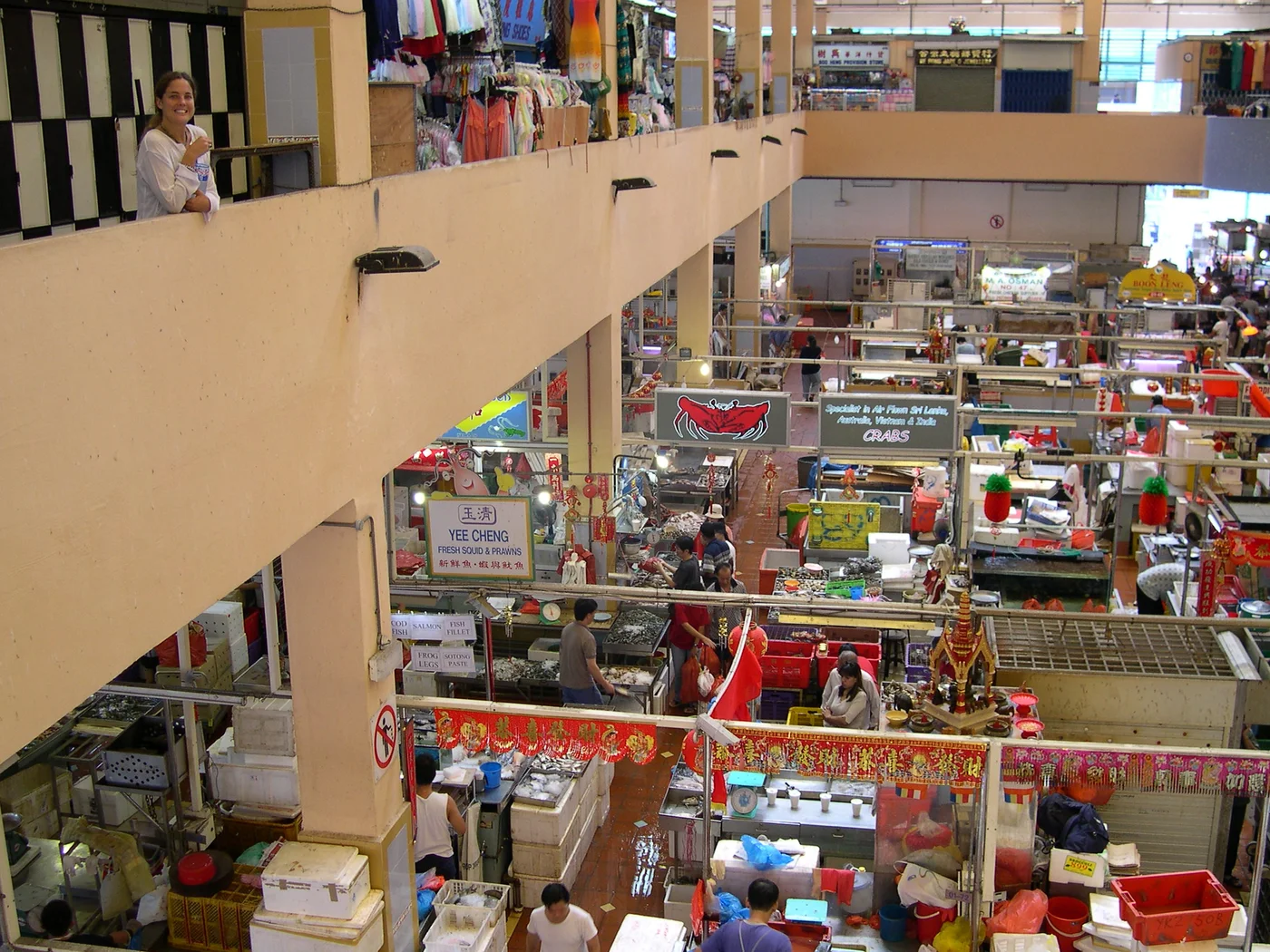
Buying the same amount by a different unit changes the number a customer expects to see. A legible scale and clearly posted unit price make it easier to compare a kilogram price across stalls. The photograph of a 1979 information stall at Circuit Road Market, reproduced by the National Library, documents that the campaign went where those comparisons happened.
Continue the chronology
Related history guides
How Singapore Planned Its Switch to Metric Measurement
Read how the government organised the earlier public-sector conversion.
Read the timeline1971–1978How Singapore’s Fabric Shops Switched from Yards to Metres
Compare the measurement problem that faced the textile trade.
Read the timeline1972How Malaysia’s 1972 Law Regulated Trade Scales
See how Malaysia addressed the accuracy of trade scales through legal verification.
Read the timelineConnected biographies
People connected to this history
Quick answers
Common questions
- What was a daching?
- A suspended steelyard scale that balanced a load against a counterweight.
- Did retail go fully metric on the first announced date?
- The initial compulsory plan was modified. The 1976 milestone enabled customers to ask to buy metric quantities and required traders to honour such requests.
Primary and institutional sources
How this history was checked
Dates, legal milestones and historical claims are checked against the official and institutional records below. This article was reviewed on 19 November 2026.