
The short answer
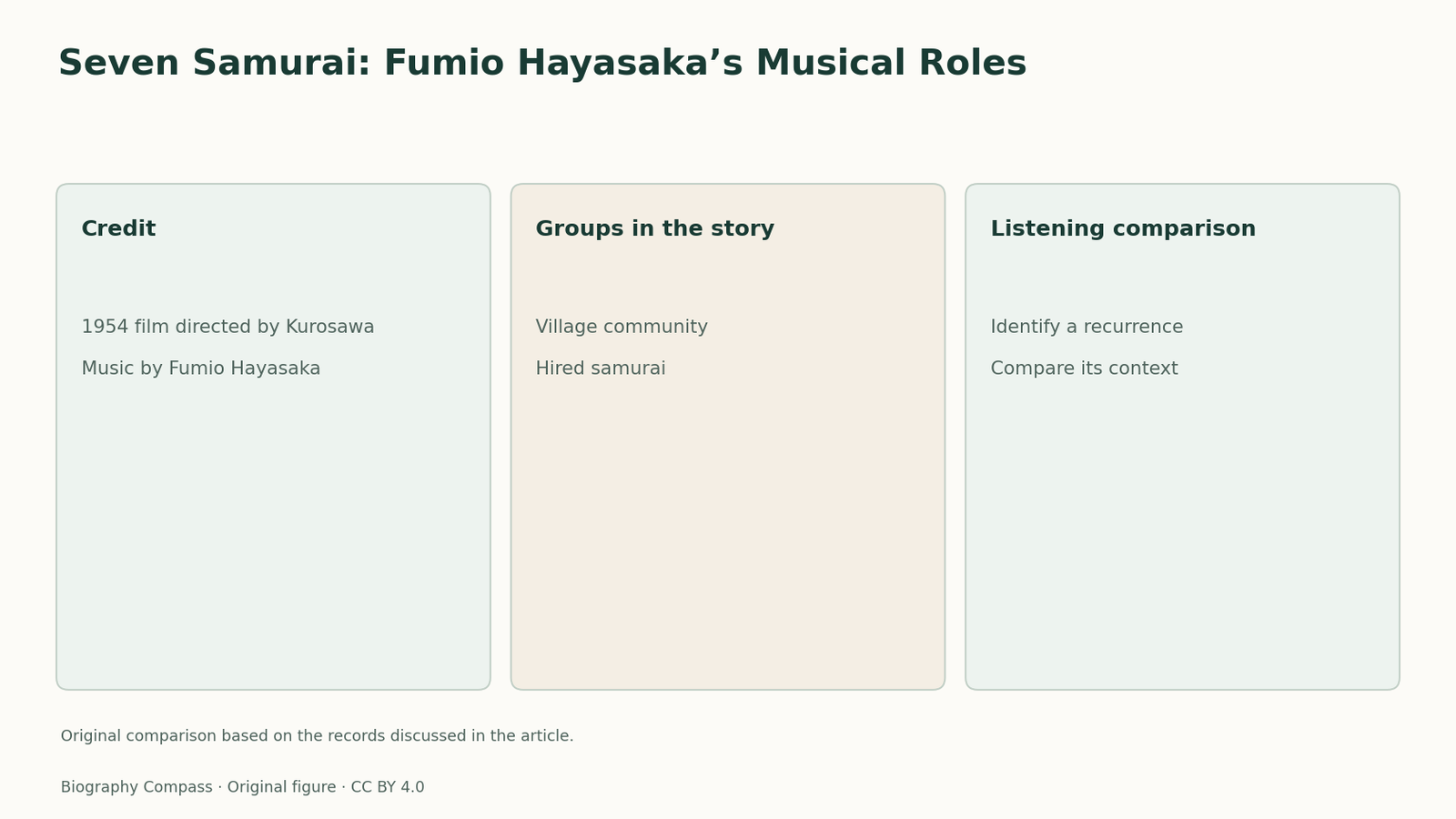
The Seven Samurai cast includes villagers, hired fighters and people whose ties cross those groups. Published production notes describe a score that can help viewers follow those relationships by ear.
Evidence comparison
Three records for studying the score
Use each source for the type of evidence it provides.
| Record | What to look for |
|---|---|
| Credit listing | Composer, director and release year |
| Production background | Documented motif examples and recollections |
| Your viewing note | Which cue returns and who is present |
The composer’s credit and its limits
The 1954 Seven Samurai credits Fumio Hayasaka for its music. Criterion’s synopsis establishes the film’s broad situation, a village hiring fighters to defend itself. These two pieces of information give a first point of entry into the score. They do not by themselves assign a sound to a character or a moment to a named cue. Record the credit first, then use a listening note to investigate particular musical decisions. A production history can offer suggestions about what to listen for, while a direct hearing supplies evidence about what happens in a specific scene.
A theme can be attached to a group
Turner Classic Movies describes musical motifs for groups and individuals, mentioning the peasants’ humming among the examples. This lets a viewer ask whether a recurring sound supports recognition of a group even when the scene focuses on an individual. A motif can join separated moments through a likeness a listener remembers. A scene’s pictured location may change while the sound keeps an association in place. An association identified in a production note gives a possible starting point, but its function in any one scene is best tested by describing what happens when it recurs.
Distinguish music from other soundtrack events
A note about film music should distinguish sounds that seem to come from people or objects in the story from music heard without a visible source. Listening also includes intervals when voices, movement or ambient sound draw attention. In a story involving different groups of people, a similar rhythm in two settings could be a musical return or a separate sound made during a scene. Write down which kind of event you heard before attempting a thematic interpretation. This is particularly helpful with a published description such as a humming chorus, which can refer to performance and musical function at once.
Track a cue against the film’s social arrangement
The story asks a community and a group of hired fighters to cooperate. That arrangement gives a listening comparison more structure than a catalogue of attractive melodies. Mark a scene that foregrounds villagers, one that foregrounds fighters and one that brings the groups together. Then compare the relationships between the heard sound and the group visible on screen. A shared setting does not guarantee a shared musical identity. If a theme crosses between settings, the listener can ask whether it follows a character, comments on the action or carries a memory of the group from an earlier scene.
A listening exercise based on recurrence
On a direct viewing, choose a short repeated musical idea that you can recognise by contour or rhythm without transcribing it. For each recurrence, record the people present, whether the idea enters before or after a cut, and whether speech competes with it. Compare two entries before assigning the cue a label. This keeps the observation accessible to someone without a score or technical training. It also separates what a programme guide can tell you from what your own attention supplies. A useful claim identifies the recurrence and the context that gives it a possible purpose.
Continue the chronology
Related history guides
Biography context
Explore Japan through connected lives
Connected biographies
People connected to the work
1914–1955
Fumio Hayasaka
ComposerFumio Hayasaka was a Japanese composer whose concert music and film scores developed alongside one another. His film work included Seven Samurai and Ugetsu.Read biography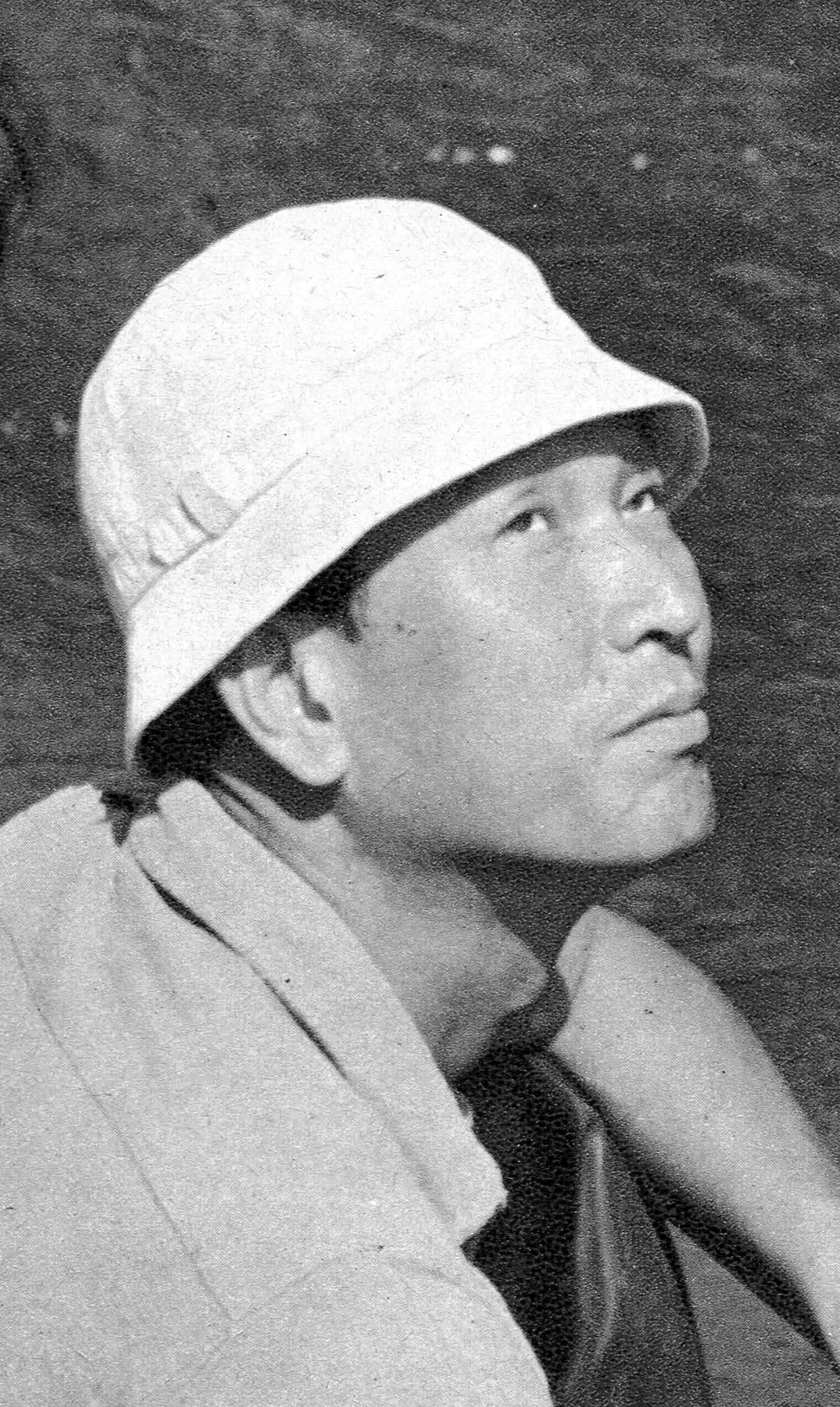
1910–1998
Akira Kurosawa
Film director and screenwriterAkira Kurosawa directed films across historical action, contemporary drama and literary adaptation. His work joined forceful visual storytelling with recurring questions about responsibility, social power and the stories people tell about themselves.Read biographyQuick answers
Common questions
- Who composed the music for Seven Samurai?
- Fumio Hayasaka has the film’s music credit.
- Does the film credit name individual cues?
- The cast and crew record identifies the composer. Specific cue labels require another record or direct comparison.
Primary and institutional sources
How this history was checked
Dates, legal milestones and historical claims are checked against the official and institutional records below. This article was reviewed on 13 November 2026.