
The short answer
Canada’s SCALE AI entered a major new phase in 2018: selection for the federal supercluster initiative in February, followed by a contribution agreement announced in December. The initiative aimed to move AI into industrial supply chains through collaboration among businesses and research institutions. Its origins are best understood by separating a competitive funding decision, an industry consortium, individual projects and the results later claimed for them.
Chronology
A timeline of the turning points
A competitive federal initiative
Businesses and research partners are invited to propose industry-led superclusters.
Five consortia selected
SCALE AI is the Québec-based selection focused on intelligent supply chains.
Contribution agreement announced
The consortium announces a $230-million federal agreement and Québec support linked to SCALE AI and IVADO Labs.
Grant-governance questions
Reporting questions related-organization grants; the follow-up includes ministers’ responses and reported non-participation.
Programme-wide scrutiny
The budget officer assesses the broader initiative; the minister responds with different performance claims.
The supercluster policy preceded the 2018 selection
Budget 2017 proposed a competition for business-led innovation networks. The policy sought to connect companies of different sizes with academic institutions and other organizations, using existing regional strengths to develop commercial applications. Budget 2018 describes SCALE AI around Montréal and the Québec City–Waterloo corridor, alongside four other specializations elsewhere in Canada.
The February 2018 federal release announced up to $950 million for the whole initiative, with private matching investment. That figure was not a cheque payable entirely to SCALE AI, nor a personal investment by its chairs. The large jobs and economic-growth figures in the announcement were programme-wide expectations extending over a decade, not results already achieved.
Selection recognized a consortium rather than one founder’s company
On 15 February, Innovation Minister Navdeep Bains named five successful superclusters. Independent Canadian Press coverage identified the Québec group’s focus on intelligent supply chains using AI and robotics. The selection was a public policy decision about a proposed collaboration, not the launch of a single new software application.
The consortium’s announcement credited IVADO, the University of Waterloo and a wider project team. It named Hélène Desmarais and OPTEL president Louis Roy as co-chairs. Their leadership formed part of a multi-organization effort. The announcement still described the contribution agreement as forthcoming, so selection and completed funding arrangements must remain separate milestones.
The December agreement gave the funding figures a defined scope
The 6 December 2018 consortium release announced a $230-million contribution agreement with the federal government. It described support for collaborative industrial projects combining machine learning, operations research and data science. An agreement to support activity over time is different from proof that the full amount was spent on the announcement date.
The same release announced $60 million from Québec associated with SCALE AI and IVADO Labs. Its headline combined these commitments, but the provincial amount covered connected activities rather than establishing an identical federal-provincial split for every project. IVADO Labs’ implementation-support role also differed from the consortium’s wider collaborative remit.
Sources for this section: [5]
Supply-chain adoption brought practical and governance responsibilities
The original focus was industrial adoption: applying research to the movement and coordination of goods across retail, manufacturing and transport. A collaboration could bring together a business problem, technical capability and partners able to implement a solution. Funding an organization, approving a project and demonstrating a working improvement are consequently different achievements.
That model also raised questions about connected institutions. In May 2020, Le Journal examined grants linked to organizations led by Desmarais or associated with her family. A follow-up reported Québec’s statement that she did not participate in the relevant selection committee or approval meetings. The reporting establishes scrutiny and a response; it does not justify declaring a personal legal violation.
Later assessments cannot be replaced by launch-day forecasts
The Parliamentary Budget Officer’s October 2020 preliminary study examined the overall supercluster initiative using information largely collected before the pandemic. It questioned the pace of spending and the evidence behind expected economic effects. Its scope was broader than SCALE AI, so it is not a stand-alone audit of every project in the Québec consortium.
Canadian Press reporting later that month carried Bains’s defence of the programme and his different jobs and project figures. Such numbers need their dates, coverage and measurement methods before comparison. The 2018 history establishes the policy and funding framework; judging subsequent performance requires later evidence about actual deployment, spending and benefits rather than repeating the ambitions of the launch.
Continue the chronology
Related history guides
Minto’s Flywheel Energy-Storage Project
Compare a specific industrial demonstration with a programme intended to support many collaborations.
Read the timeline2015–2026Clearbanc, Clearco and Business Finance
Contrast a commercial financing model with public support channelled through an industry consortium.
Read the timelineBiography context
Explore Canada through connected lives
Hélène Desmarais
Read her earlier CEIM work, HEC governance, philanthropy and accountability questions.
Explore the biographiesIndustrial commercializationAnnette Verschuren
Explore another career connecting operating businesses with publicly supported technology development.
Explore the biographiesCountry archiveCanada biographies
Explore the people and institutions behind other Canadian developments.
Explore the biographiesConnected biographies
A co-chair within a wider partnership
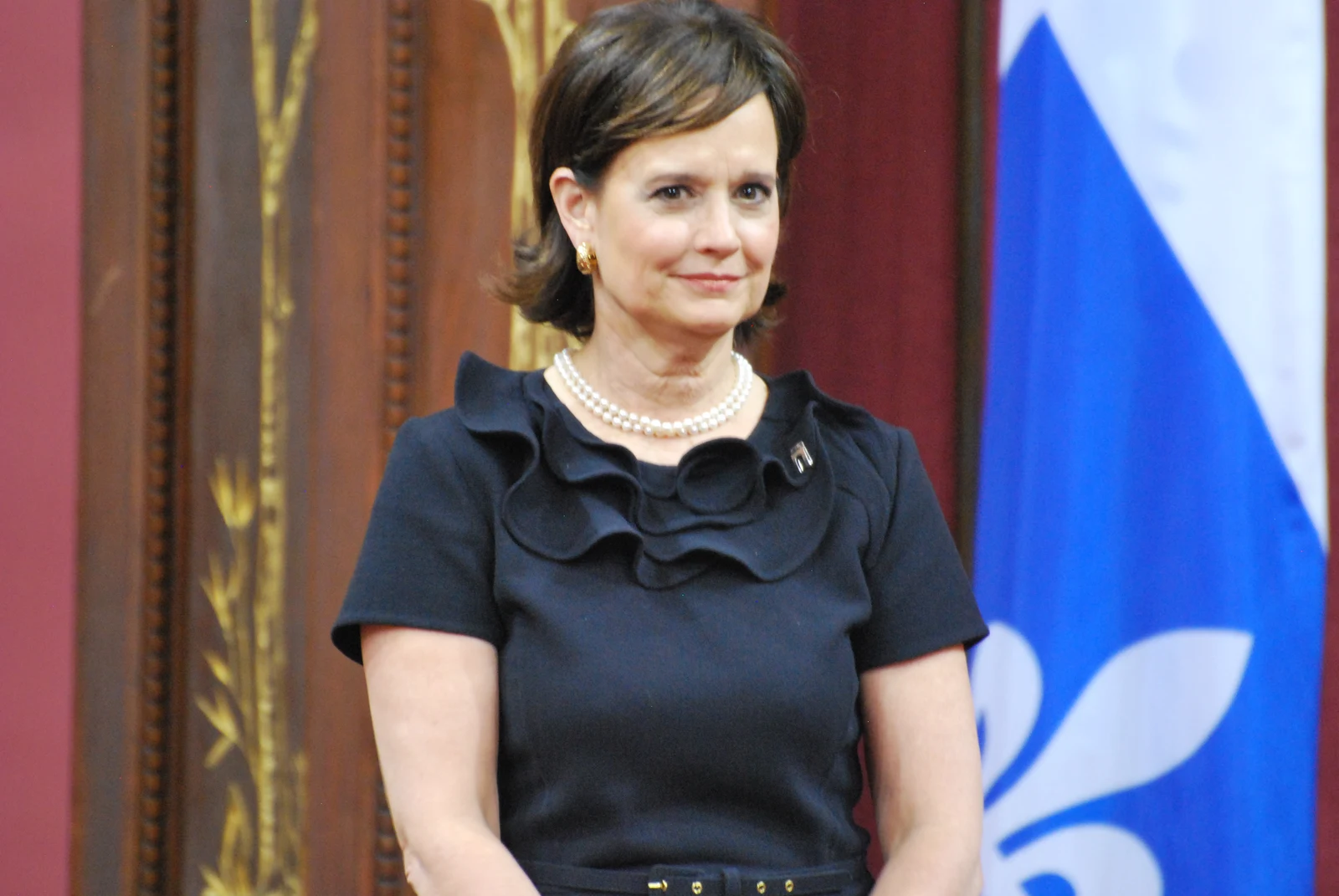
Born 1955
Hélène Desmarais
CEIM founder and business-institution leaderHélène Desmarais developed a career around institutions supporting entrepreneurs, education and applied technology. She helped establish CEIM in 1996, became the first woman to chair HEC Montréal’s board in 2003 and was a founding leader of the Canadian SCALE AI consortium. Her work also brings public-funding and governance responsibilities into view.Read biographyQuick answers
Common questions
- Was 2018 the beginning of all SCALE AI organizing?
- No. It marks the federal selection and subsequent contribution agreement; preparation for the supercluster competition had already begun.
- Did SCALE AI receive the whole $950 million?
- No. That was the announced envelope for the five-supercluster initiative. The December SCALE AI release identified a $230-million federal agreement.
- Are SCALE AI and IVADO Labs interchangeable?
- No. The December release describes connected support and an implementation role for IVADO Labs, while SCALE AI is the broader industry consortium.
- Do the 2018 job forecasts prove later success?
- No. Launch forecasts were expectations for the wider programme. Later spending, deployment and economic results require separately dated evidence.
Primary and institutional sources
How this history was checked
Dated federal, budget and consortium records distinguish the competition, February selection and December agreement. Independent reporting and the budget officer’s preliminary study provide scrutiny beyond launch publicity. Figures retain their original programme or institution scope; no current funding eligibility, current performance total or personal legal finding is inferred. This article was reviewed on 23 October 2026.
- Department of Finance CanadaBudget 2018, chapter 2: competition and regional specializations
- Innovation, Science and Economic Development Canada15 February 2018: the five superclusters selected
- The Canadian Press / Castanet15 February 2018: five superclusters share the federal initiative
- SCALE AI15 February 2018: consortium partners and expected agreement
- SCALE AI6 December 2018: contribution agreement and Québec support
- Francis Halin / Le Journal de Québec11 May 2020: related organizations, grants and withdrawal policy
- Francis Halin / Le Journal de Montréal16 May 2020: ministers’ response and reported non-participation
- Office of the Parliamentary Budget Officer6 October 2020: preliminary analysis of the overall initiative
- The Canadian Press / CityNews28 October 2020: minister’s response to the spending watchdog
- Simon Villeneuve / Wikimedia CommonsHélène Desmarais01.jpg: sole full original, 10 June 2013
- Creative CommonsAttribution-ShareAlike 3.0 Unported licence