
The short answer
What did financing without giving up equity actually mean at Clearbanc, later Clearco? It did not mean a free grant or the absence of repayment. The company developed a model for financing online businesses, raised capital for itself and then restructured as market conditions changed. Following those separate transactions explains both the appeal and limits of its proposition. This is business history, not current borrowing or investment advice.
Chronology
A timeline of the turning points
Four-person founding team
Michele Romanow, Andrew D’Souza, Charlie Feng and Ivan Gritsiniak establish Clearbanc.
E-commerce focus develops
The business moves from earlier platform-worker finance toward merchant financing.
Clearco name and equity raise
The company announces its rebrand and US$100 million Series C equity financing.
Retrenchment
Layoffs, reduced international operations and leadership changes follow tighter financing conditions.
Present titles checked
Clearco lists Andrew Curtis as CEO and Romanow as Co-Founder, Observer.
The company and its customer proposition evolved after 2015
Clearbanc was co-founded in 2015 by Romanow, D’Souza, Feng and Gritsiniak. BetaKit’s retrospective describes earlier financial services for platform workers before the company concentrated on e-commerce. The later merchant-financing product should not be projected unchanged back onto every activity in the founding year.
The problem it addressed was capital for businesses selling online, including spending intended to generate sales. Such businesses might have revenue but limited access to traditional equity investment. The company’s response was one commercial financing option, not proof that banks or venture capital were universally unsuitable for every customer.
No equity did not mean no cost or no repayment
Reuters’s April 2021 account describes a model in which merchants received funding without surrendering an ownership stake or a board seat, then repaid it through revenue-linked payments and fees. That explains the historical meaning of non-dilutive: the transaction did not dilute the founder’s shares in the same way as issuing equity.
The merchant still had obligations. Fee amounts, payment schedules, contractual conditions and the consequences of weak sales matter to the economic cost. Historical revenue-sharing descriptions are not a current rate card. A reader evaluating financing today would need the actual current agreement rather than assume that a 2021 description applies to every later Clearco product.
Clearco’s own fundraising was a different transaction
The April 2021 announcement included US$100 million of equity financing for Clearco itself. Reuters separately reported debt capital associated with the round. The company could issue shares to its investors while offering a non-equity product to merchants: the two statements concern different recipients and contracts.
Osler’s transaction record distinguishes that April Series C from a separate US$215 million SoftBank-led investment announced in July. Adding every headline amount into one undifferentiated total can confuse shareholder capital, lending capacity and money actually advanced to customers. None is automatically Romanow’s personal income, nor a measure of how successful any particular merchant became.
The 2021 rebrand expressed a broader ambition
Clearbanc became Clearco in April 2021. D’Souza’s company blog framed the new name as extending beyond a narrow financing identity toward helping founders grow. That is useful evidence of management’s intended positioning, not independent proof that every additional service achieved its advertised results.
The rebrand did not establish a second company founding in 2021. It also did not eliminate the need for underwriting, adequate financing and customer repayment. Changing the brand can communicate an expanded offer, while the underlying business still depends on capital costs, customer performance and the ability to manage operations.
Restructuring tests the limits of the growth narrative
Romanow became CEO in 2022, but the company soon cut staff and reduced international activity. In January 2023 Andrew Curtis succeeded her as CEO while she became executive co-chair. BetaKit and Canadian Press reporting document substantial further job losses, placing the transition in a retrenchment rather than a routine promotion story.
The current company directory checked on 23 October 2026 instead lists Romanow as Co-Founder, Observer. Industry coverage also describes later changes to products and financing facilities. Those developments reinforce the article’s limit: Clearco’s history explains how a model changed, not what every present customer is offered or whether borrowing is suitable. Growth, fundraising and durable profitability are different questions.
Continue the chronology
Related history guides
Biography context
Explore Canada through connected lives
Connected biographies
One of the four co-founders
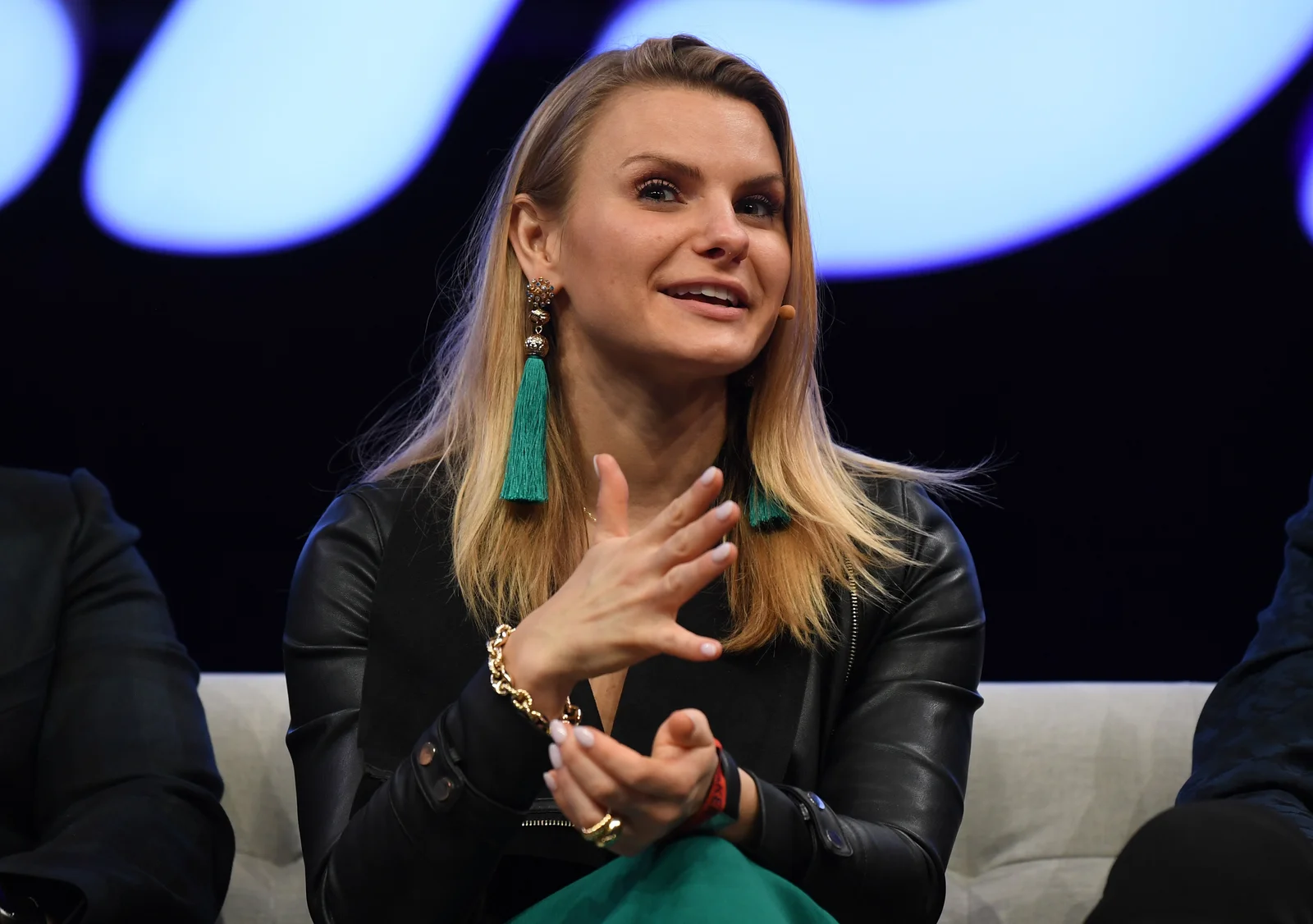
1985–present
Michele Romanow
Entrepreneur, Clearco co-founder and Dragons’ Den investorMichele Romanow is a Canadian entrepreneur whose ventures include SnapSaves and Clearbanc, later renamed Clearco. A Queen’s engineering and MBA graduate, she joined Dragons’ Den in 2015 and later served as Clearco CEO before its 2023 leadership change and restructuring.Read biographyQuick answers
Common questions
- Why did Clearbanc become Clearco?
- The April 2021 rebrand presented a broader growth-support ambition. It was a change in brand and proposition, not a new founding date.
- Was the financing free because it did not take equity?
- No. Historical products involved repayments and fees. No equity means no ownership dilution under that transaction, not no economic cost.
- Was Clearco’s US$100 million Series C customer funding?
- It was an equity investment in Clearco itself. Corporate fundraising, debt facilities and customer advances must be distinguished.
- Is Michele Romanow the current CEO?
- No. Andrew Curtis took that office in January 2023. The October 2026 company directory lists Romanow as Co-Founder, Observer.
Primary and institutional sources
How this history was checked
Company announcements establish the rebrand and financing claims; transaction counsel separates equity rounds, while Reuters, BetaKit and Canadian Press provide independent reporting. Historical terms are not presented as current financial advice. This article was reviewed on 23 October 2026.
- BetaKitJanuary 2023: founders, evolution, layoffs and CEO change
- Canadian Press / CityNews16 January 2023: corporate retrenchment and succession
- Andrew D’Souza / ClearcoApril 2021: management’s rebrand rationale
- Reuters / MarketScreener20 April 2021: customer financing and corporate equity/debt
- Clearco / PR NewswireUS$100 million Series C and rebrand announcement
- OslerSeparate April and July 2021 equity financing transactions
- ClearcoCompany history and current executive/observer directory
- National Crowdfunding and Fintech Association of Canada18 August 2026: later company and financing-model snapshot
- Stephen McCarthy / Collision / Sportsfile / Wikimedia CommonsComplete 2019 photograph and reviewed CC BY 2.0 grant
- Creative CommonsAttribution 2.0 Generic licence