
The short answer
How were animation direction, live-action direction and visual effects coordinated?
Read the evidence
Sources, interpretation and production roles
The records answer different questions about this work. The final exercise is an original teaching model.
| Record or question | Supported reading | Boundary or contrast |
|---|---|---|
| BFI career account | Williams was an animation director with a sustained studio practice. | He was not the credited director of the entire live-action feature. |
| Registry production discussion | Distinguishes camera/contact/light integration and screenwriting. | A visible result does not reveal one exclusive maker. |
| Rights negotiations | Permissions made cross-studio character appearances possible. | A licence is different from an animation or effects task. |
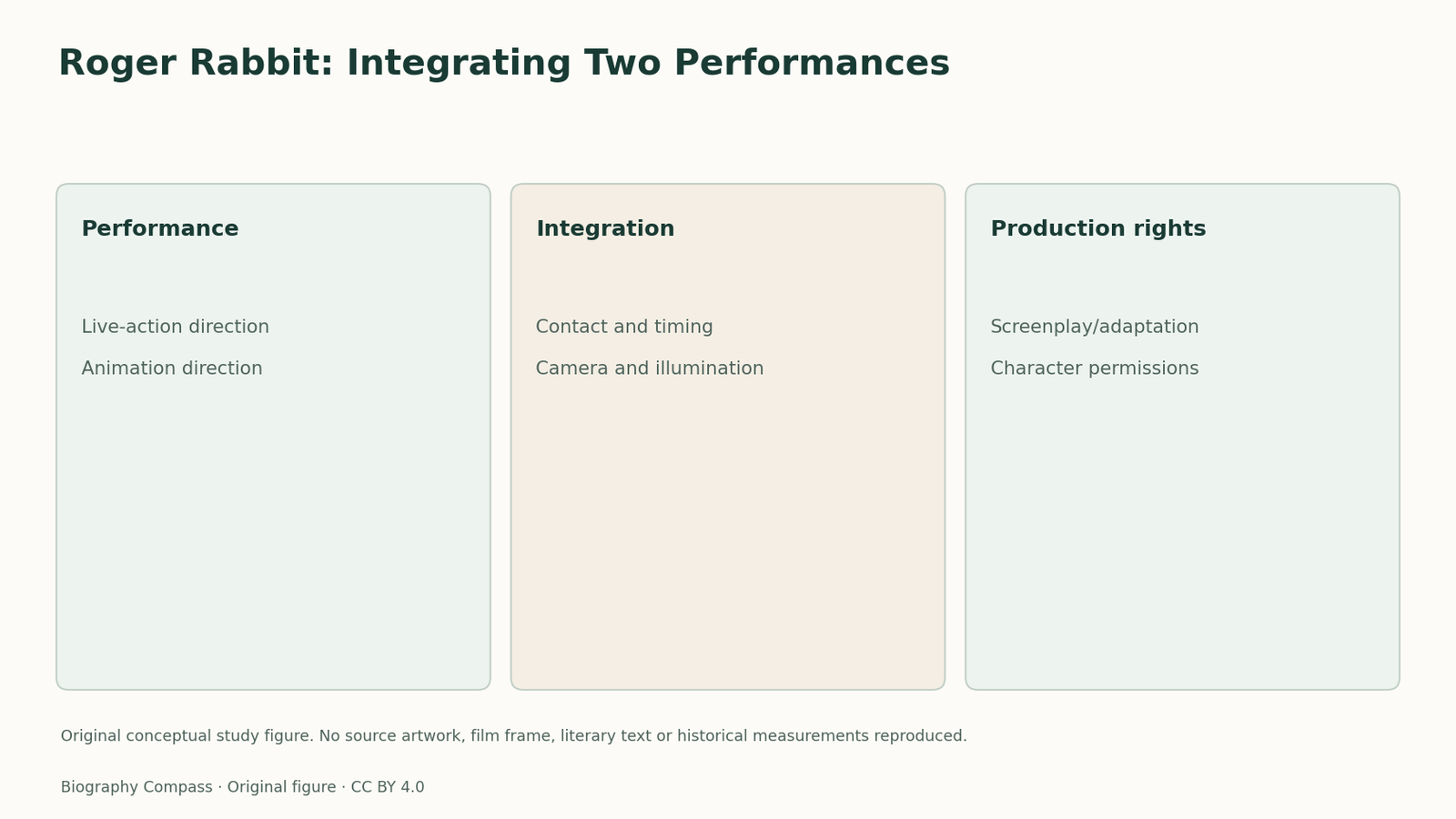
One image contains different performances
Who Framed Roger Rabbit (1988) joins live actors and drawn characters within an imagined 1940s Hollywood. The Library of Congress essay identifies Robert Zemeckis as director and Richard Williams as animation director. Those complementary credits are the starting point for understanding the achievement. A photographed actor must leave space for something that will be added later; an animator must give that added character a performance that responds to the photographed action. The completed image hides the order of those operations. Studying the production restores it, and avoids treating the presence of a convincing cartoon figure as a self-explanatory technical effect.
Integration involves contact, time and light
The Registry essay discusses moving cameras, apparent contact with objects and changing illumination. These are separate coordination problems. If a camera moves, the drawn figure must remain located in the same apparent space. If a physical object moves because a cartoon character supposedly touched it, its photographed motion must match the later animation. If a light changes, the added figure needs a compatible visual response. These categories explain why an effects credit and an animation-direction credit should not be collapsed. The BFI’s account places Williams’s work within a much longer practice of character drawing and animated sequences rather than presenting the feature as his sudden invention of mixed-media cinema.
The rights agreement is another production system
A cameo by a familiar cartoon character also required permission. The Registry account credits executive producer Steven Spielberg with negotiating access across different rights holders. This legal and commercial work made appearances possible, but it did not supply the acting or draw each movement. The same division applies to the screenplay, which the essay attributes to Jeffrey Price and Peter S.Seaman from Gary K.Wolf’s novel. A useful production map therefore includes creative direction, technical integration and rights clearance as distinct relationships. None of these fields alone explains everything visible in the frame, and no shared credit establishes equal involvement in every shot.
Sources for this section: [2]
An original coordination exercise
Imagine a new, unrelated scene in which a photographed actor pushes an empty cup toward a future animated character. Make a three-column checklist: what must be photographed, what must be animated, and what must agree between them. A reference answer places the cup’s trajectory and the actor’s eye-line in the first column; the character’s reach, grip and reaction in the second; and contact position, timing and illumination in the third. An added licensing check would be necessary if the character belonged to another rights holder. This is a conceptual exercise, not a reconstruction of a Roger Rabbit shot. Its point is that integration is a set of negotiated dependencies, even when the audience experiences only one continuous action.
Continue the chronology
Related history guides
Biography context
Explore United Kingdom through connected lives
Connected biographies
People and related creative practices
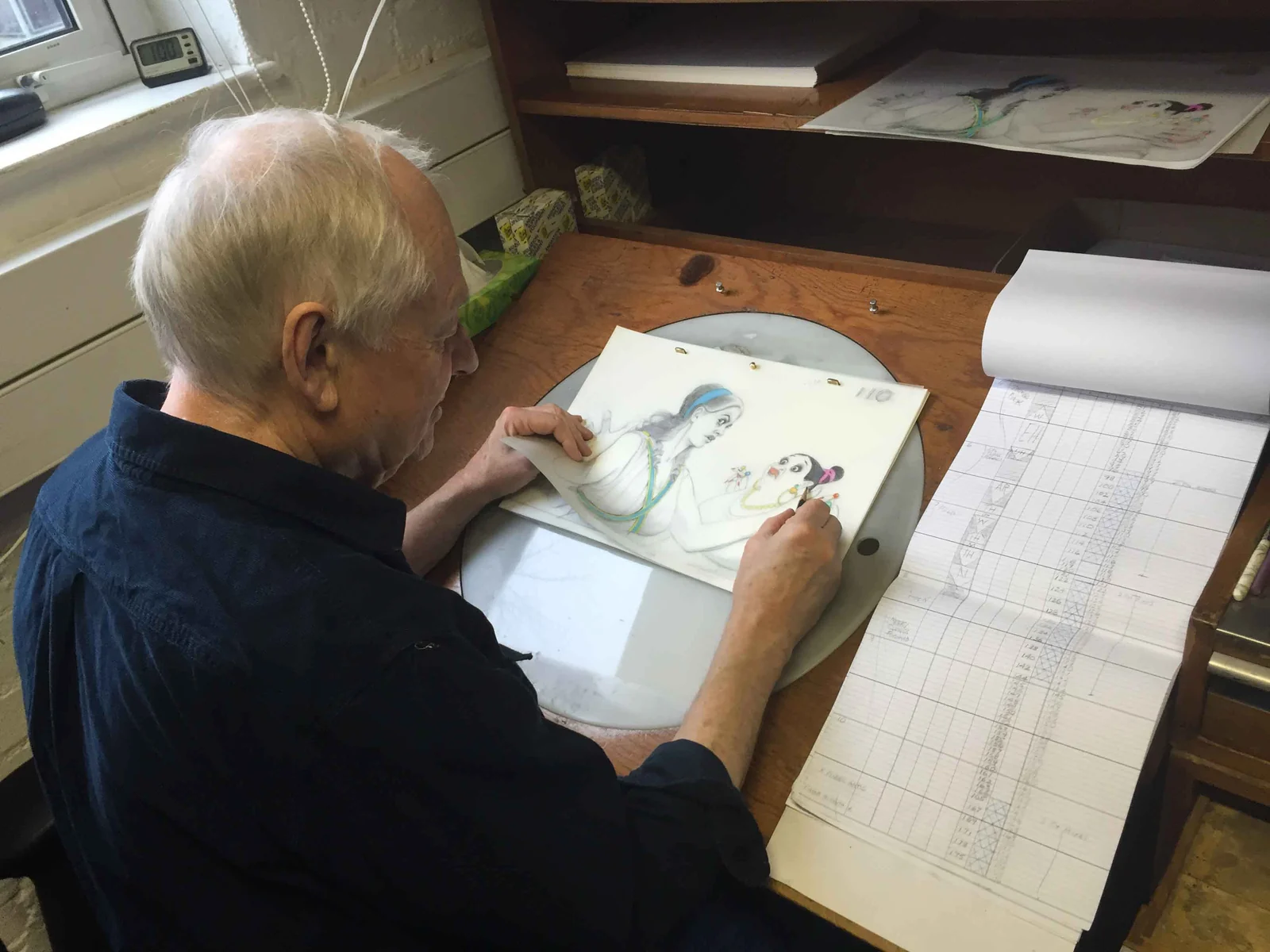
1933–2019
Richard Williams
Animator, animation director and teacherRichard Williams built a British animation career through advertising, title sequences and ambitious personal films before directing Roger Rabbit’s animation.Read biography1901–1971
Ub Iwerks
Animator and photographic-effects innovatorUb Iwerks helped shape the earliest Mickey Mouse films before running his own animation studio and later returning to Disney as a technical specialist. His career moved from drawing characters to developing ways of combining and reproducing images.Read biography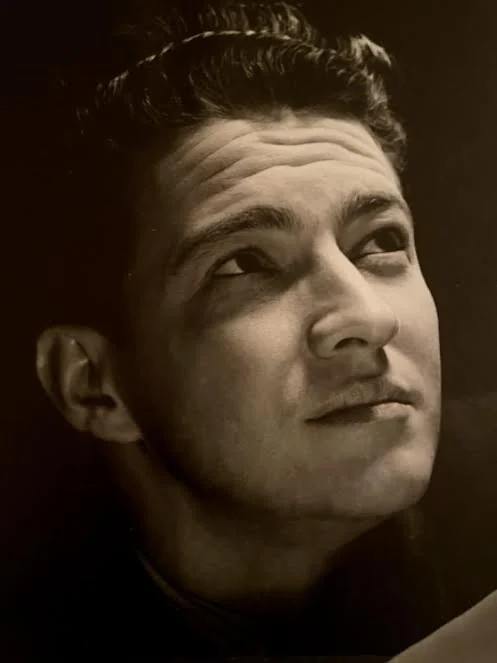
1914–1977
John Hubley
Animation director and studio co-founderJohn Hubley moved from Hollywood studio design to independent animation, working with Faith Hubley, musicians and the recorded voices of their children.Read biographyQuick answers
Common questions
- Why distinguish animation from effects?
- Animation gives the drawn characters performance; effects and photography help join that performance to the photographed space.
- Did permissions alone make the cameos work?
- No. Rights clearance made appearances legally possible; drawing, voices, staging and integration were additional production work.
Primary and institutional sources
How this history was checked
Sources include production records, institutional collections and the specifically identified passages discussed here. Interpretations and teaching models are distinguished from credits and publication facts. This article was reviewed on 7 November 2026.