
The short answer
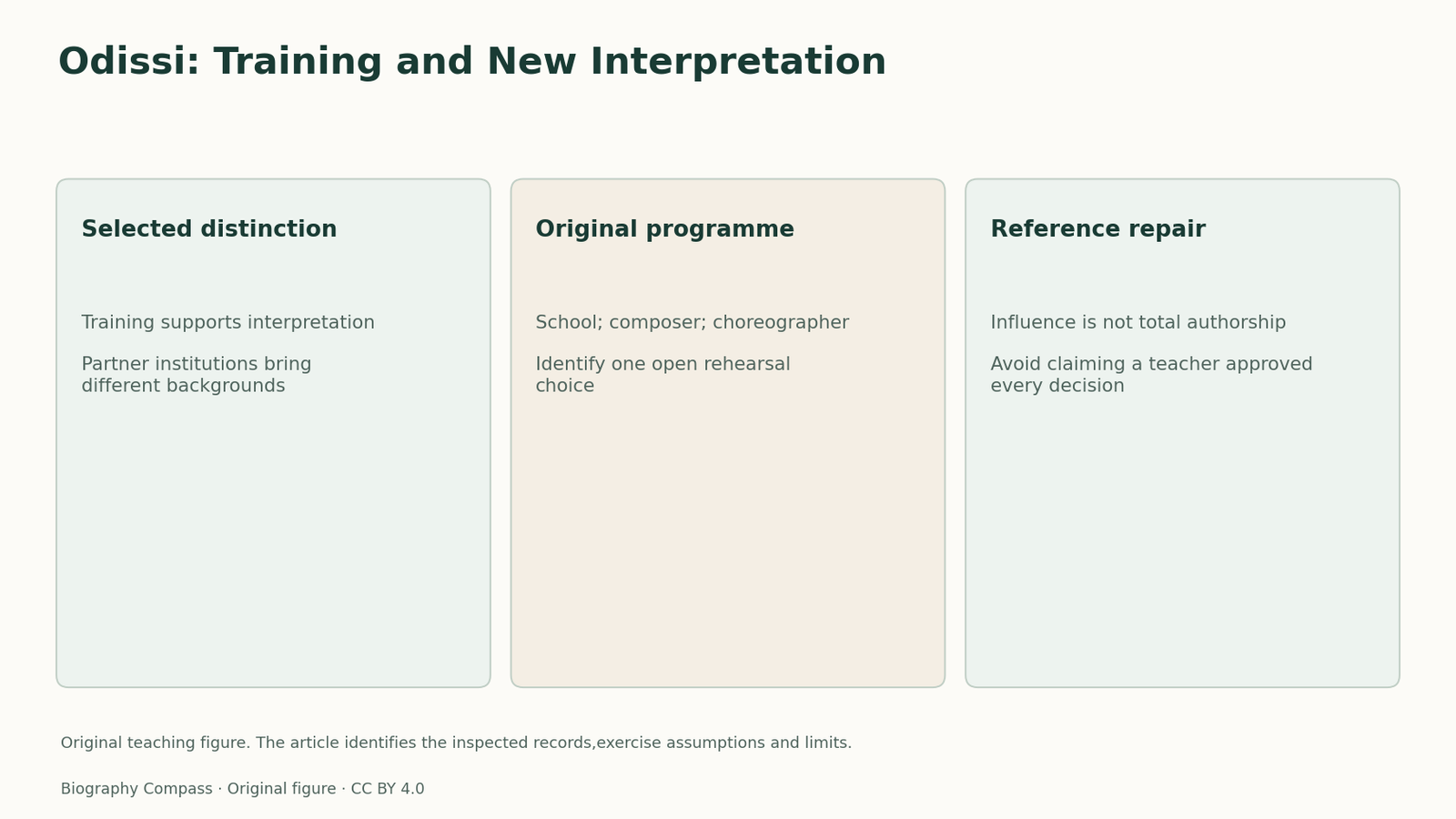
Learning a form and deciding what to do with it are connected activities, but they are not the same credit. The two consulted conversations make that distinction useful for a new programme note.
Decisions and their practical consequences
Compare the working choices
The left column identifies the consulted account; the right proposes a new task.
| Decision | Selected account | Original proposal |
|---|---|---|
| Lineage | Named teachers and forms | Credit learned practice. |
| New work | Different partner backgrounds | Name the current decision-makers. |
Chronology
A timeline of the turning points
Written interview
Training and interpretation.
Joint event
Odissi on High.
Interpretation grounded in training
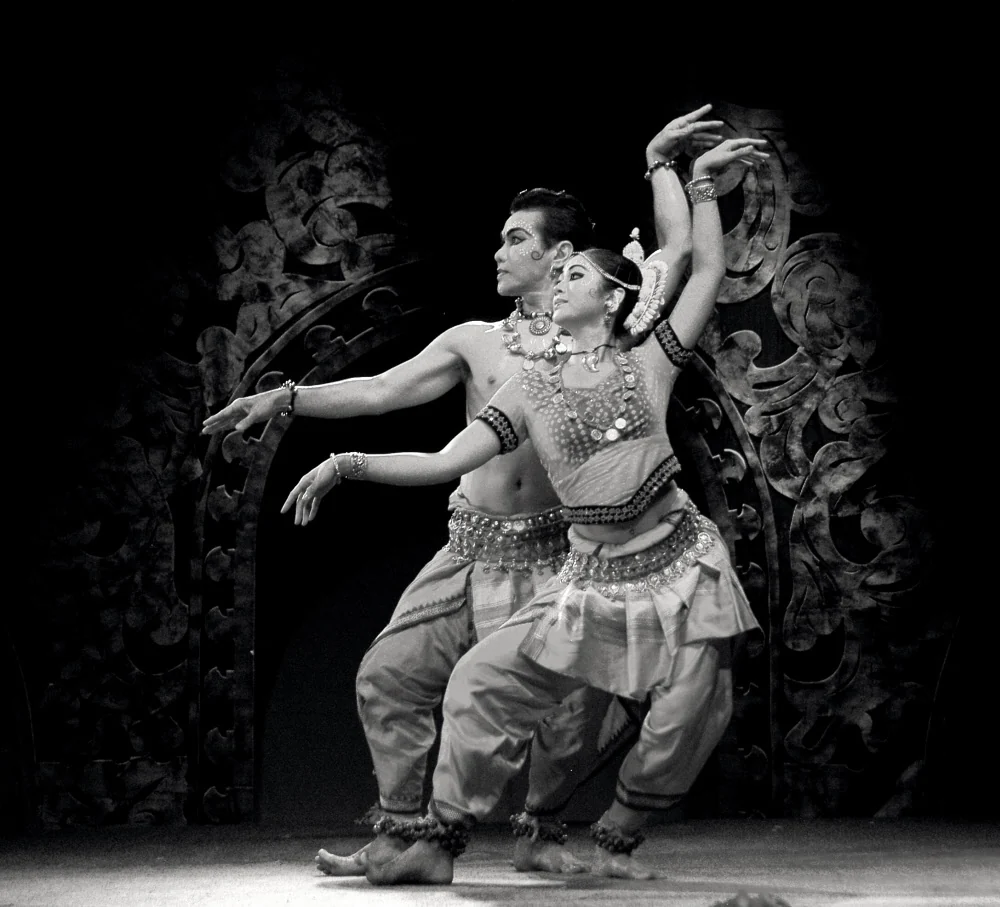
Ibrahim described his teachers and several trained forms, then explained that an Odissi musical basis could receive contemporary layering. He referred to Pallavi in discussing that distinction and resisted leaving the work entirely to critics’ categories.
The 2019 Odissi on High report names Sutra and Rudrakshya as partners with different training backgrounds. It also identifies the two masters honoured by the production. Collaboration and lineage are therefore more specific than a single label such as “fusion.”
Separate three kinds of statement
A training statement names a source of learned practice. A making statement names a decision in a particular work. A style label proposes how an audience might classify the result. None automatically proves the other two. An artist may use a learned technique in a newly arranged sequence, while an outside critic may describe the result differently.
A clear programme does not need to choose between inherited practice and new authorship. It can name both at the right level: who taught, who composed or selected material, who choreographed, and who performed. It should avoid presenting a master’s name as approval of every later decision unless there is evidence of that approval.
Sources for this section: [1]
Original programme repair
Imagine a new work with three stipulated inputs: performers trained in a named but fictional school, music supplied by a separate composer, and staging newly arranged by a choreographer. Repair this draft: “The school created everything you will see, and the composer’s rhythm determines every movement.” Write three short credits and one sentence identifying an open rehearsal decision. Do not reproduce an existing dance step, rhythm or score.
Sources for this section: [1]
Reference answer
The credits should distinguish performer training, music and choreography. The school’s influence does not make it the author of every new staging choice, and the existence of a rhythm does not establish a one-to-one movement instruction. A remaining rehearsal decision might concern where a performer faces during a transition or how a group enters. Those are invented options, not descriptions of the consulted performance.
A final programme sentence can acknowledge the learned foundation while naming the new maker’s responsibility. The useful test is whether a collaborator can recognise what was actually credited to them. “Everything is traditional” and “everything is new” can both conceal important working relationships.
Sources for this section: [1]
Continue the chronology
Related history guides
Biography context
Explore Malaysia through connected lives
Connected biographies
Follow the working life
Quick answers
Common questions
- Does a style label assign every credit?
- No. Name the actual contributions separately.
Primary and institutional sources
How this history was checked
The earlier interview explains interpretation; the later reported collaboration identifies distinct partner backgrounds. This article was reviewed on 31 October 2026.