
The short answer
A statute can grant voting and candidacy rights together. The dates on which people first exercise them or win office need not coincide.
Evidence and interpretation
What each record can establish
Read each record in the context in which it was produced.
| Record | Evidence it supplies | Limit of inference |
|---|---|---|
| Bill and parliamentary record | Formal voting and candidacy change | Who ran or won later |
| 1944 general election record | Use of the expanded franchise | A female candidate in that election |
| Later by-election records | Candidacy in 1947 and election in 1961 | The start date of voting eligibility |
Chronology
A timeline of the turning points
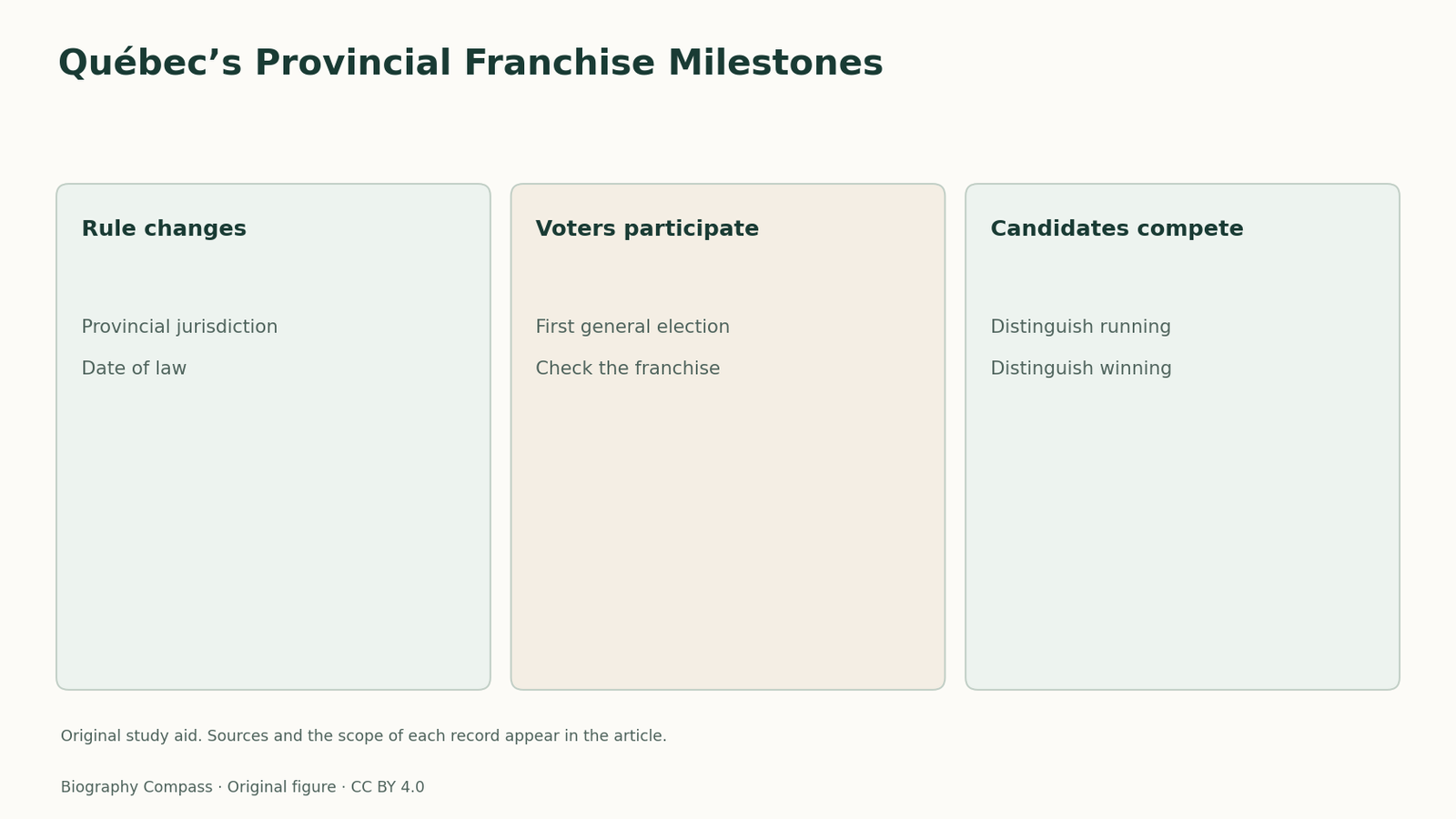
Bill 18
Provincial voting and candidacy rights are extended.
First general election
Women can vote at a provincial general election.
Candidacy
Mae O’Connor contests a by-election.
Election
Marie-Claire Kirkland wins a provincial by-election.
Read the stage and jurisdiction
The Assembly library displays Bill 18 alongside records of the campaign. Élections Québec distinguishes passage in the Legislative Assembly from the 25 April 1940 milestone for the law. Record the stage when using a date. The change addressed the provincial franchise; it should not be used to date the federal vote in Canada or every local electoral qualification.
Separate voting and standing
At the general election of 8 August 1944, women were able to vote under the new provincial rules. Élections Québec reports that no woman stood in that election. The available right to stand and an actual nomination can therefore occupy different columns. The election record supplies evidence about the use of a right, while the bill and law establish the legal opening.
Sources for this section: [3]
Candidacy is distinct from election
The electoral authority records Mae O’Connor’s candidacy in the Huntingdon by-election of July 1947. She did not win. Marie-Claire Kirkland’s victory in a 1961 by-election was another milestone. The chronology is longer than a campaign narrative ending in 1940. It distinguishes the change in formal eligibility from the routes that allowed someone actually to take a seat.
Repair an ambiguous anniversary label
Suppose a display says “Québec women entered the legislature in 1940.” Prepare a corrected label with separate dates for law, a general election at which women could vote, a candidacy, and a first victory. Attach one type of evidence to each date. If the label also claims a change for another jurisdiction or for every class of elector, identify the additional legal records required.
Continue the chronology
Related history guides
Biography context
Explore Canada through connected lives
Connected biographies
People behind the records
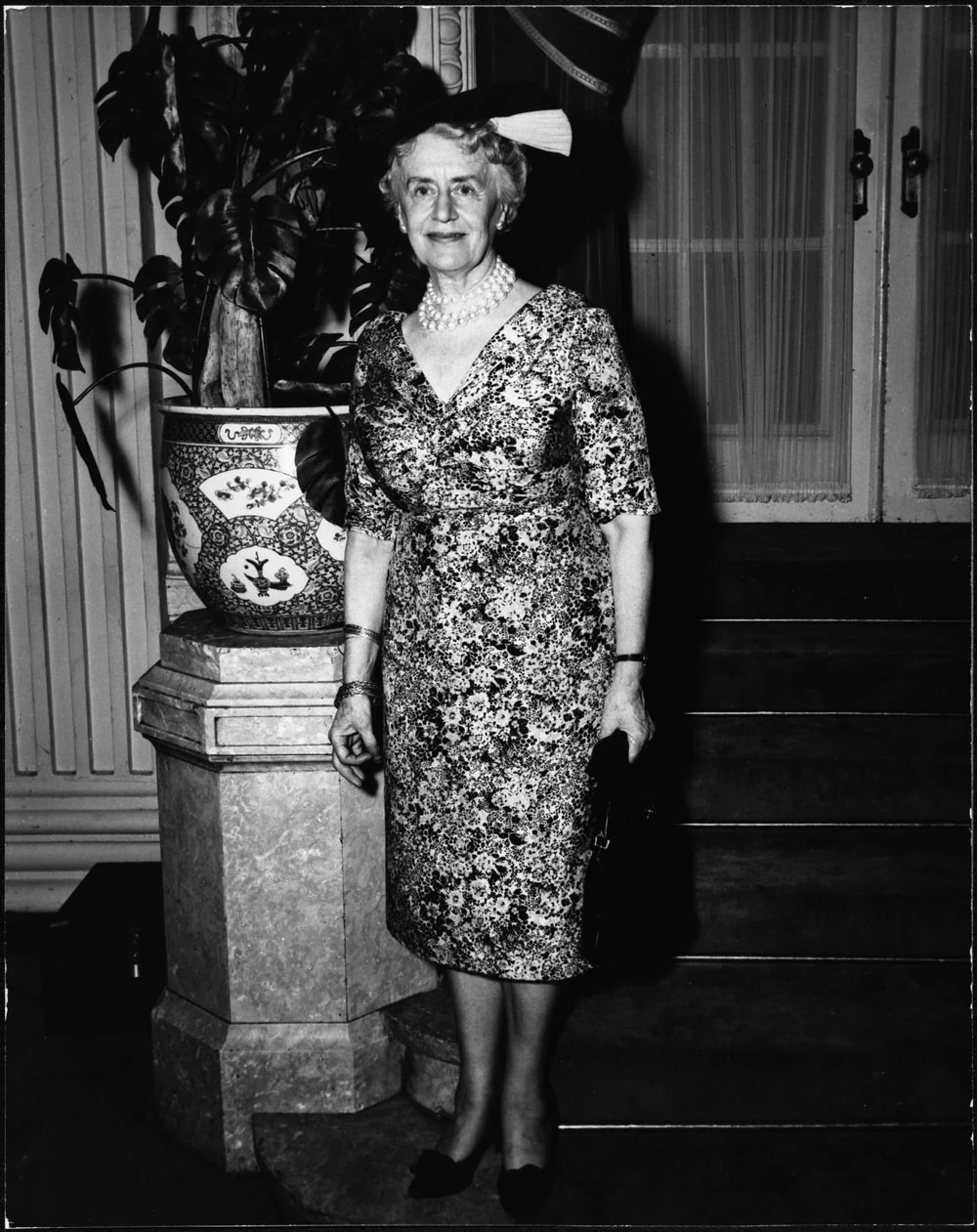
1896–1981
Thérèse Casgrain
Suffragist, social reformer and senatorCasgrain organised for provincial voting rights and continued in party politics and public service.Read biographyQuick answers
Common questions
- Was a woman elected at the 1944 provincial general election?
- Élections Québec records no woman candidate in that election. The first woman elected entered in 1961.
Primary and institutional sources
How this history was checked
The records below support the chronology and the evidence comparison. The reading exercise is original. This article was reviewed on 5 November 2026.